
7 Creative Ways to Organize Your Bookshelf
A simple how-to guide with pictures and tips

If you’re an avid reader like me, your bookshelf is probably overflowing and in need of some organization.
But organizing your bookshelf can be overwhelming if you don’t know where to start. That is why these seven creative ways to organize your bookshelf will not only make it easier to locate books on your shelf but also make your space look more inviting and aesthetically pleasing.
1. Organize Your Books Alphabetically by Author Last Name

This is the organizational style you’ll find at bookstores and libraries. And there’s a reason it works; it’s very simple!
If you’re familiar with the authors on your shelf, it can make it much easier for you to find the books you’re looking for. And, if you have a lot of books by the same author, they will all be together in one place.
The alphabetical method is most useful if you have a lot of books because it is probably the easiest to help you locate a specific book.
2. Organize Your Books by Color

Organizing your books by color is probably the most aesthetically pleasing. Even though it can be one of the most time-consuming methods (speaking from personal experience), it is also one of the most rewarding.
Look at all of the spines of your books and divide them into color categories. Then, line them up on your shelf in a gradient.
There are a lot of variations with this method depending on where you put your colors. You could go for a rainbow look and have the colors be in the ROYGBIV order (red, orange, yellow, green, blue, indigo, violet) either horizontally, vertically, or in a diagonal.
You can also experiment with grouping the warm and cool colors together, like in the image below.
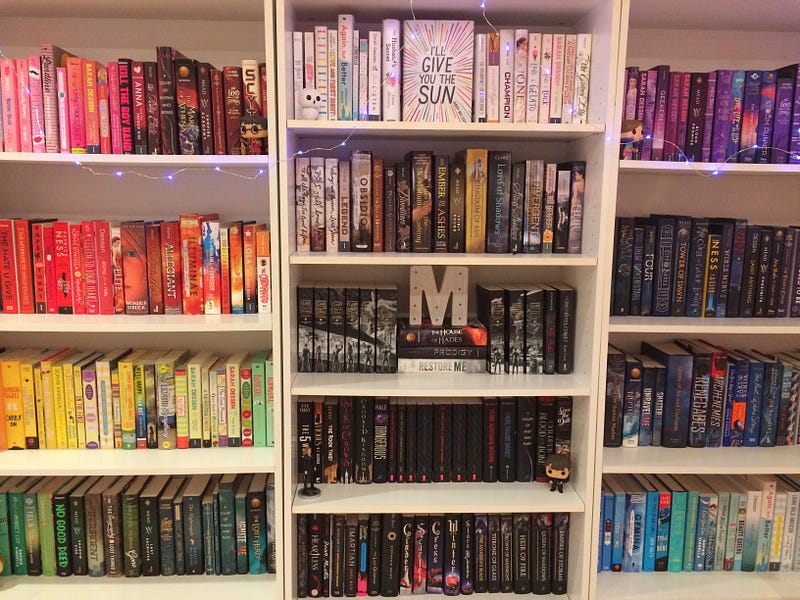
If you like keeping your series and authors together, then this organizational style is probably not for you. But if you enjoy the aesthetic look of a rainbow and colorful bookshelves, this could be a good method to try.
3. Organize Your Books by Genre or Subject
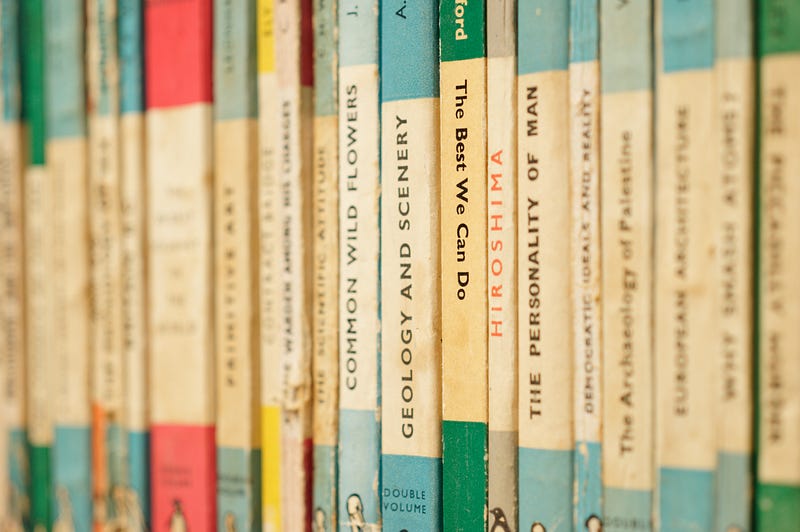
Organizing your bookshelf by genre or subject is a great method if you are someone who reads about a variety of different topics or enjoys different genres.
To do this method, separate your books by their individual genres and then organize them on the shelf. Some people find it helpful to dedicate each shelf to a different genre, such as having one for science-fiction, one for nonfiction, and one for classics. If you don’t know which section a particular book would go in, you can check the Goodreads page to see what category it falls under.
This organizational style is also a great idea if you are trying to figure out what book to read next. If you’re in the mood for a mystery story, for example, you can simply go to that section of your shelf and pick out a book you want to read.
4. Organize Your Books by Read and Unread

Chances are if you own a lot of books, there are some you haven’t read yet. And if they’ve been sitting on your shelf for a while, it can be easy to forget about them.
If you want to prioritize those unread books, sometimes it’s easier to see them all together so you know what you have.
To do this, pull out all of the books on your shelf that you haven’t read or want to reread. Then, dedicate a section of your bookshelf to those books. This way, every time you look at your bookshelf, you know exactly which ones you have left to read.
Tip:
If you’re running out of space on your shelf, try stacking your books horizontally as well as vertically. This is a great way to save space and fit more books on your shelf.
5. Organize Your Books by Series and Standalone
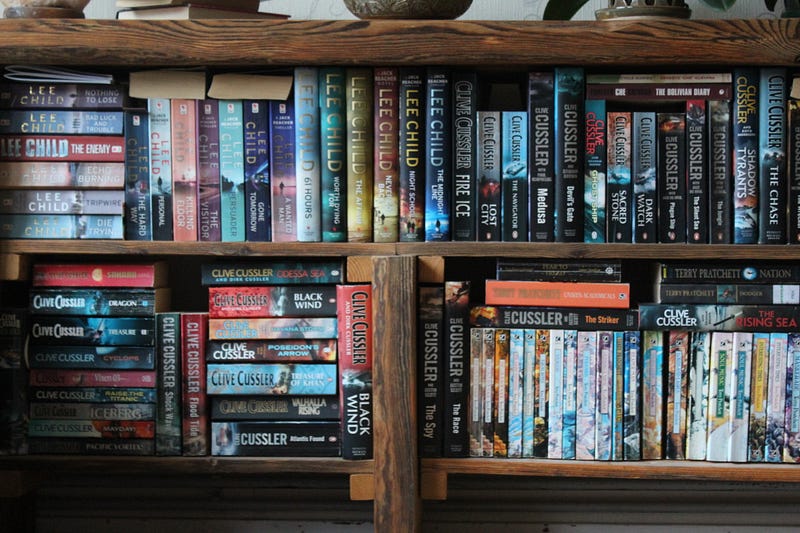
A standalone book is a book that has no sequels, like The Book Thief by Marcus Zuzak or The Great Gatsby by F. Scott Fitzgerald. In contrast, a series is something with multiple books which you read in order, such as The Hunger Games by Suzanne Collins.
As someone who reads both standalone books and series, I enjoy organizing my shelf so that they are divided into separate sections. You can place all your trilogies and longer series on one shelf, and then put your standalones on another shelf.
This method is a great way of keeping track of the series that you’ve read and having them all together in one place!
If you have collections of certain books, such as a collection of classics in the same edition, you could also separate those so that they are lined up on the shelf together.
6. Organize Your Books by Height

If you’re looking for an organizational style that will make your books look neat and tidy on your bookshelf, try grouping your books by height.
One quick way to do this is by dividing your books between hardback and paperback.
When you have all the books lined up together with similar heights, the bookshelf immediately feels cleaner and more organized.
Tip:
Don’t be afraid to have more than just books on your shelf. You can add bookends, knickknacks, and other objects to fill the space if your books don’t take up the entire shelf. This also makes your shelf more aesthetically pleasing.
7. Organize Your Books by Publication Date

This organizational method is best if you have books that were published over several decades. If you have a lot of classics and also enjoy contemporary books written and published recently, this is a great way to try having your books.
Pull together your books and organize them by publication date. You can find this by either looking it up online or checking the copyright page in the front of the book. Then, order the books from oldest to most recent.
If the publication date is too specific and time-consuming to find for each book, you could divide your books by century or time period, such as the Victorian Era or the Modernism movement.
Try it Yourself
I’ve tried each of these organizational styles with my bookshelves and enjoyed each in its own way. Don’t be afraid to try more than one method, such as organizing your books by genre and then alphabetizing by the author within those genre categories.
Currently, I have my shelves divided by read and unread and then further separated by genre. But, I’m sure in a few months I will get the itch to try something new.
How do you organize your books? Have you tried any of these methods for your bookshelves?
If you liked this article, you can sign up for free emails whenever I publish something new. And if you want to support my writing, you can become a Medium member through my referral link for $5/month. I receive a small commission at no extra cost to you — and you can read thousands of stories ad-free on Medium from me and other writers.


