
7 Blogging Lessons You Can Learn From Casey Neistat
#6. Don’t let the tail wag the dog
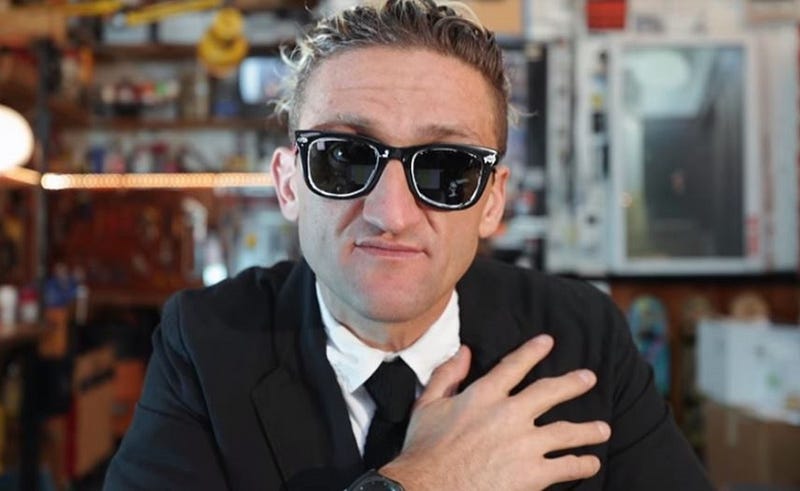
Blogging has changed.
It used to be that to blog, you had to set up a WordPress page and an email newsletter — but today, that’s all old-school.
The way to blog in 2020 is to use platforms like YouTube, Medium, and TikTok to build a relationship with an audience.
Casey Neistat is probably the most famous internet filmmaker of today’s age. He has more than 11 million followers on YouTube, and he has been creating a daily vlog on YouTube for many years.
I’ve been following Casey for a while, and — even though I don’t create videos myself — I learned a great deal from him about modern blogging. I always loved the free-spirited way in which he creates his content.
The principles of blogging on YouTube and Medium are pretty much the same. In this piece, I’ll share with you the lessons I’ve learned from Casey about blogging on YouTube, Medium, and beyond.
1. Focus Only on What’s Important
In the SXSW keynote, Casey talks about getting his creative start after producing an award-winning show for HBO with his brother, “The Neistat Brothers.”
But he soon got sick of the bureaucracy, the meetings, and everything else that goes with being a maker of a successful Hollywood show.
“I wasn’t really happy trying to be this big-deal Hollywood producer type…I thought if I’m going to be unhappy in my career, fuck it, I’ll go back to Connecticut and wash dishes. I arrived at this place where I love telling stories.
That’s all I want to do — tell stories.”
The modern platforms and tools allow creatives to focus only on what matters — creating content while not thinking about other aspects of the process.
Medium and YouTube invest heavily in recommendation algorithms to help creatives build audiences. Tools like Substack also make email newsletters extremely easy — allowing writers to write and not worry about the technical side of the process.
If you’re an aspiring writer, you don’t need to go on the same path you would have gone down 30 years ago. Most successful writers on this platform wouldn’t have had careers just 20–30 years ago.
It used to be that your art had a filter it had to go through. If you’re Woody Allen or Martin Scorcese, maybe that filter is less. But the internet — and the modern platforms — erased that filter.
We live in a great age. If you’re creative, use modern platforms to focus on what’s truly important: creating high-quality content.
2. Produce as Much as You Can
A lot of creatives want to create work, but they don’t know where to start. The key is just to start.
The best advice that Ira Glass — the famous radio personality and host of “This American Life” — gives creatives is “do a lot of work.” Going through a volume of work is key to becoming better at anything: whether it’s YouTube videos or Medium articles.
When Casey turned 34 years old, he told himself he’d create one video per day, every day, no matter what. It’s been more than five years, and he hasn’t stopped.
“The only thing that I can say, the only advice I ever give is: ‘Don’t think. Consideration will not yield success on YouTube.’
It’s purely based around action. Some other things that I push for is: quantity matters. It’s not just the quality of the work, but it’s also the quantity of the work.”
Following Casey’s route, I developed a rule for myself six months ago: write one piece per day on Medium, no matter what. So far, this rule has helped me increase my audience and start monetizing my writing through Medium.
Everyone wants to create high-quality art. But if you’re just starting, focus on quantity. Produce, design, and ship — every single day. That’s how you become better.
You build a relationship by showing up.
3. Build Trust
Your Medium or YouTube followers don’t matter. They’re not your friends. It’s just a number.
The biggest asset that a creator builds — besides the volume of content, of course — is the relationship with the audience. Contrary to conventional wisdom, when people go on YouTube or Medium, they’re not looking for high-quality films or polished articles. They’ve got Netflix or the New Yorker for that.
When people come on platforms, they’re looking for relationships. People are looking for a real, human connection. And sometimes, raw content with typos can connect better than a well-edited piece.
In an interview with Tim Ferriss, Casey says:
“People look to YouTube not to find great, well-made films; they look there for relationships. [trust] Vanity Fair is turning out this incredibly high-production, star-studded content. Nobody’s watching it. Nobody gives a shit. That’s not why people watch YouTube. There’s no relationship there.”
When you spend a month obsessing over one piece on Medium, no relationship is built. You’re using perfection to hide from your audience. The best pieces I’ve published were all from the heart, honest, and personal.
4. Find Your Path
Because platforms (e.g., YouTube or Medium) are completely egalitarian-based and democratic, everyone can be on them. There’s extreme competition.
The way — the only way — to be seen is to follow your unique path. You can’t expect success by copying what somebody else is doing.
“YouTube [or Medium], unlike filmmaking [or book-writing], is not a one-way street. It’s this reciprocal, symbiotic relationship that your content has with a very specific audience, and that that audience has with your content. So, to succeed within there is very challenging. And I think the only way to do it is to find your own path.”
And recently — with the advent of Medium’s mute feature and increased curation — it seems that going niche matters more. Don’t write general self-help articles, don’t copy others, and don’t try to appeal to everyone (you’ll end up appealing to no one).
We’re looking for your unique perspective. Focus on your specific content niche and dominate it.
The best way to do that is to be honest.
5. Be Honest
When I was just starting out blogging, I often wondered, “What should I do if I don’t want to write?” — especially since I’ve started putting out content daily. The right answer is, of course, to write about that.
If you don’t want to write, write about what is bothering you. If you’re angry or upset, create a video about that. No matter what happens, just don’t stop creating.
“I think that what YouTube uniquely possesses in its audience over any other distribution outlet is that the audience is so fine-tuned to bullshit.
Their bullshit detectors are so highly refined that even the slightest amount of bullshit will set off their alarm, and then you’ll be rejected; the audience, the community will reject you immediately.
So a great place to start is one of honesty, one of frankness.”
When you’re just starting out creating videos or writing articles, chances are, you’re terrible. And that’s fine — everyone is. The best thing about platforms is that you don’t have to have an audience to create on them, and you don’t have to be an expert writer or a filmmaker to publish your content. It’s enough to be honest about your insecurities.
When Casey started vlogging every single day, he was afraid that his content would be dull. His life was ordinary: there was nothing in particular going on. So he opened up to his audience and, in one of his first videos, said, “I am afraid that this might not be interesting.”
And that’s also where being prolific pays off. When you’re bad and honest about that, focus on creating a lot of content, and you’ll become better.
If your only asset is trust, then the way to build it is through honesty. There’s no other way.
6. Don’t Let the Tail Wag the Dog
Recently I’ve had a dilemma. Should I change the way I consume my content to make my writing more interested? I realized that I could be watching more documentaries and writing about them. I have a weekly newsletter where I write about books, but sometimes I feel like I don’t have enough content to publish. But — being pressured to send one email per week, I force myself to read something so that I can write about it.
But then the question is, “Is the dog wagging the tail, or is the tail wagging the dog?” You shouldn’t change your life for content because then you’re dishonest.
Casey had a similar dilemma. He used to think of his blog as a diary of his life. And he was afraid that — being forced to vlog daily — he’d run out of things to show to his viewers since his life was pretty much ordinary.
“I realized that YouTube is not a diary of my life. Instead, it’s this outlet for whatever it is that interests me.”
Your content is not your diary. It’s whatever you want it to be.
For Casey, his vlog became a place where he posts explainer videos, explaining how things work. Sometimes it’s his diary. Other times it’s a platform for documentaries or exclusive brand-sponsored videos. And occasionally it’s his outlet for speaking about his filmmaking passion.
The best approach to blogging (the most honest one) is to treat it as a creative outlet for anything you might be interested in.
7. The Ultimate Recipe For Blogging Success
Taking all of the lessons above into account, what’s the ultimate success formula for blogging on platforms like YouTube and Medium in the 21st century?
A combination of three things:
- Honesty— being yourself, because the audience will sniff out your BS a mile away.
- Quantity— because that’s how a relationship is built, and that’s how you’ll be able to get better. Create something every day.
- Passion — what are you genuinely interested in? What motivates you? Talk about that and make it your “niche.”
But, as I always do, don’t listen to what the person says. Instead, look at what Casey is doing. He is honest. He is prolific. And he is disciplined. Do that, and creative success will find you.
Thank you, Casey, for these lessons.


