
7 Ancient Civilizations That Vanished Into Thin Air
Ghosts of the past — Mysterious civilizations that have stumped archaeologists.
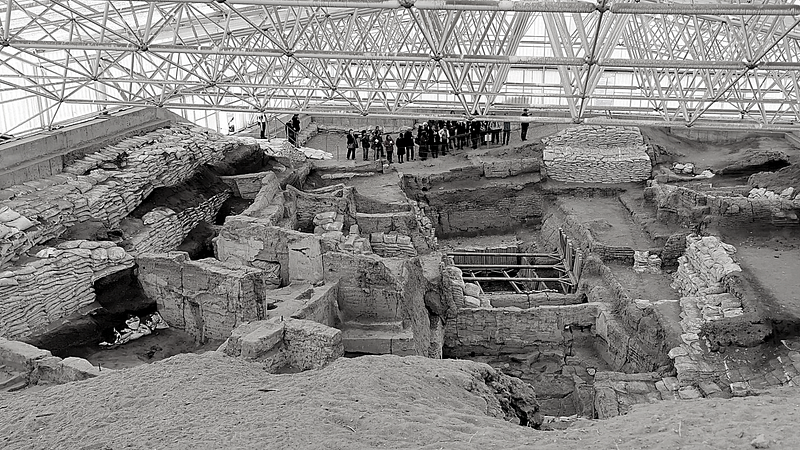
Throughout history, there have been many civilizations that seemingly vanished without a trace.
What could have happened to these mysterious cultures? What caused them to suddenly disappear?
In this article, we will explore seven of the most mysterious civilizations that suddenly vanished overnight, and discuss the theories behind what could have caused their disappearance.
Read on to discover the mysterious stories behind some of history’s greatest vanished civilizations!
7- Ancestral Puebloans — A Window Into Their Worldview
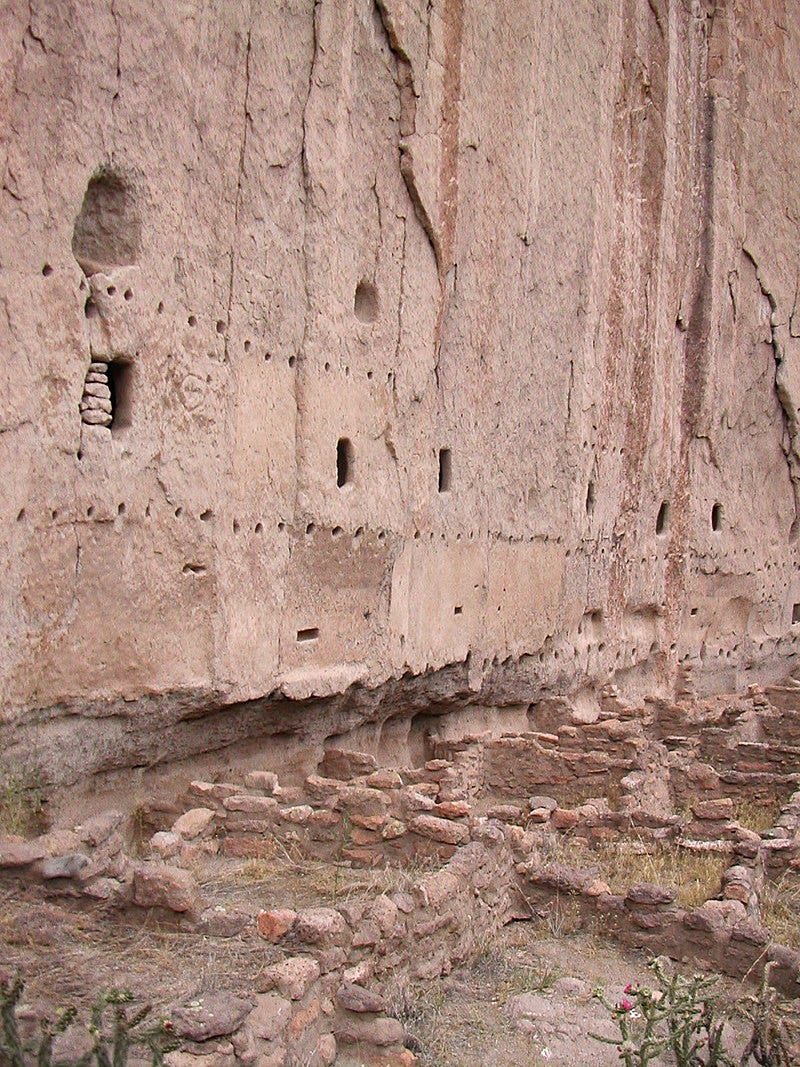
The Ancestral Puebloans were one of the most mysterious civilizations that vanished overnight. They were a Native American culture that lived in what is now Arizona, New Mexico, and Colorado from about 600 to 1300 AD.
They built elaborate stone structures called “great houses” which have puzzled archaeologists for years. The reasons behind the disappearance of the Ancestral Puebloans are clear.
Some suggest that drought or climate change drove them away, while others believe there was a social upheaval or internal conflict among the people.
Whatever the cause, the Ancestral Puebloans disappeared suddenly and without a trace, leaving behind an incredible archaeological record.
6- Skara Brae — A Deep Dive Into The Enigmatic Scottish Site
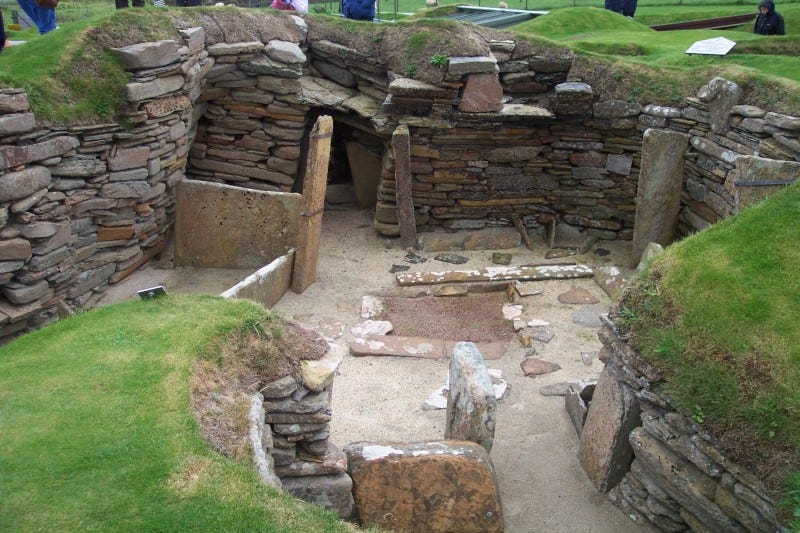
Skara Brae is a prehistoric settlement located in Scotland, believed to have been occupied from 3180 BC to about 2500 BC.
The site contains a group of 8 clustered dwellings that were built with stone walls and roofed with thatch and turf.
It is considered to be the best-preserved Neolithic village in Europe and has been called the “Scottish Pompeii” due to its excellent state of preservation.
The dwellings at Skara Brae were arranged in two parallel rows, with each house consisting of a single room and an entrance passage.
Each house had a stone dresser, benches, beds, and storage boxes made out of stone. The people of Skara Brae used nearby sources of flint to make tools and weapons, and they likely cultivated crops like barley and wheat.
It is not known exactly why the people of Skara Brae abandoned their settlement. It is possible that a lack of resources or climate change caused them to leave.
Whatever the cause, the mystery of why this once-thriving village was suddenly deserted remains unsolved.
5- The Easter Island — A Journey Through Time
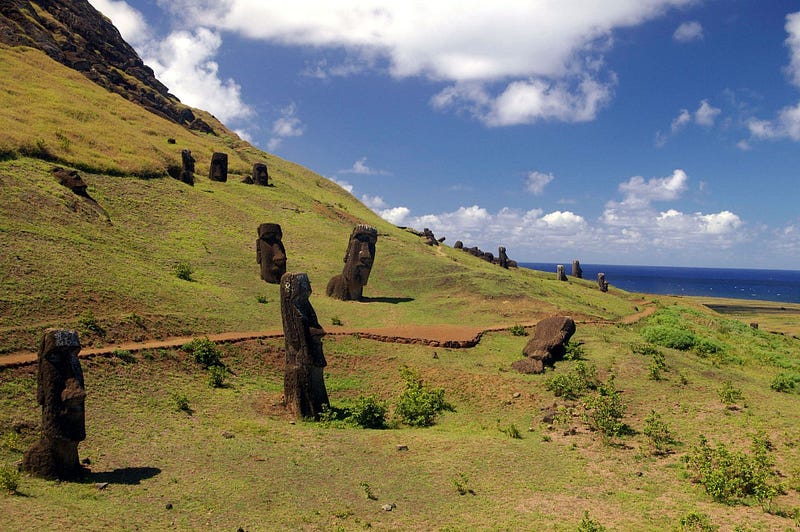
Easter Island is a Polynesian island in the Pacific Ocean’s southeastern Pacific. It is most famous for its 887 monumental statues, called Moai, which were carved by the early Rapa Nui people between 1100 and 1680 CE.
In the 19th century, the population of Easter Island declined dramatically and the Moai fell into disrepair. Today, researchers are still trying to unravel the mystery of what happened to the Rapa Nui people.
Some theories suggest that overpopulation and deforestation contributed to their downfall, while others propose that a long period of drought or an environmental catastrophe could be to blame.
The truth remains elusive, however, making Easter Island one of the most mysterious vanished civilizations in history.
4- The Olmec Civilization — A Blueprint For Later Mesoamerican Societies
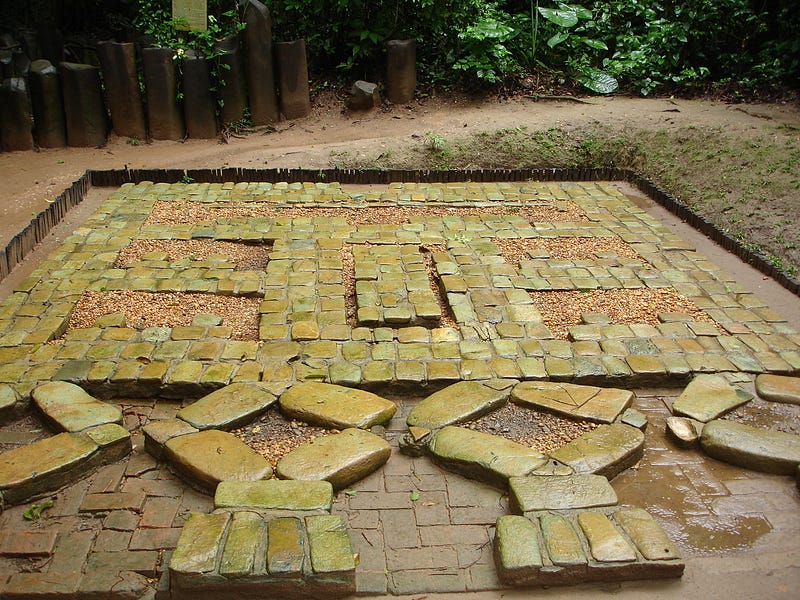
One of the earliest civilizations in Mesoamerica was the Olmec, which dates back to 1200 B.C. It is known for its large-scale ceremonial sites, art, and architecture.
They also developed one of the first writing systems in the Americas. The Olmecs had a great influence on the development of other cultures in the region such as the Maya and Aztecs.
The Olmecs were known for their massive sculptures, some of which were more than two meters tall. They created the sacred twin volcano site of La Venta which is now considered a UNESCO World Heritage Site.
The Olmecs also built large pyramids and other ritual centers. The Olmecs disappeared from history suddenly and mysteriously around 400 B.C., leaving behind their incredible monuments and artifacts.
Archaeologists and historians still do not know what led to the collapse of civilization.
Possible theories include population decline due to environmental degradation or a shift in religious practices that caused a break in traditions and values. Whatever the cause, the Olmecs left a lasting legacy in the form of their art, architecture, and writing.
3-Cahokia — The Lost City Of North America
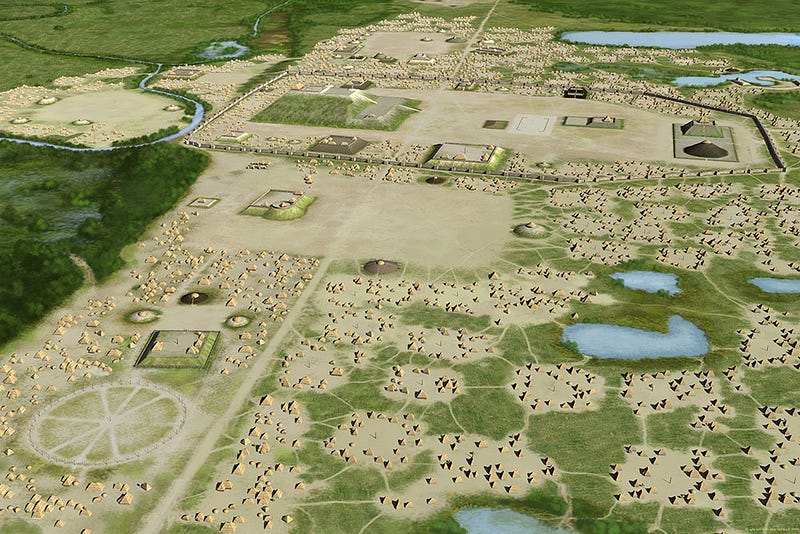
Cahokia was a thriving pre-Columbian city located near modern-day St. Louis, Missouri. It was occupied from about 1050 to 1250 CE and was the largest settlement in the North American Mississippian culture.
It had a population of around 15,000 people and was larger than London at the time. Cahokia had earthen mounds for temples and other important buildings, a complex road network, a well-organized urban plan, and many artworks that still stand today.
Its most impressive feat was the construction of Monk’s Mound, an immense earthen pyramid over 100 feet tall.
The city went into a rapid decline in the late 13th century and by 1300 it had been abandoned. The reasons for its fall are still unknown but there are several theories.
One is that the city’s population outgrew its resources, leading to overhunting and deforestation. Another is that disease spread through the densely populated city, killing many of its inhabitants.
There may have been other factors as well, including political unrest and invasion by outside groups. Whatever the cause, Cahokia was suddenly and mysteriously abandoned overnight.
2- Çatalhöyük — A Look Into Ancient Anatolian Civilization
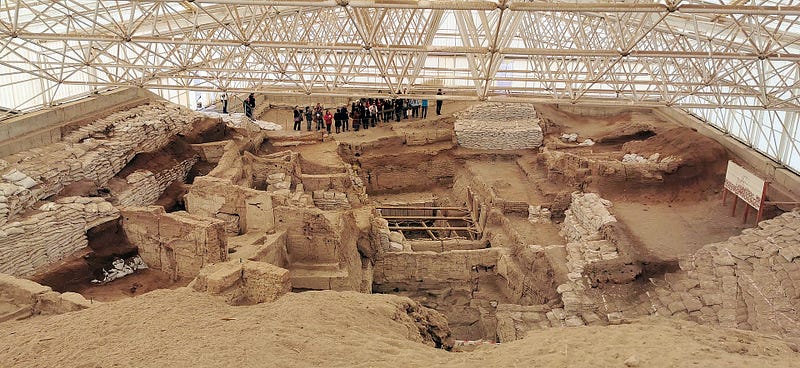
Çatalhöyük was an ancient city located in the Anatolian region of Turkey. It was discovered in the 1960s and is estimated to have been inhabited from around 7500 BC to 5700 BC.
This mysterious civilization has no written records, but its unique architecture and artifacts tell us a lot about its lifestyle. The city was comprised of mud-brick houses that were all built next to each other in clusters.
Archaeologists have uncovered evidence of elaborate wall paintings, religious sculptures, and jewelry which suggest that the city had a well-developed art culture.
The people of Çatalhöyük relied heavily on agriculture and animal husbandry for sustenance. They had access to a variety of resources including copper, obsidian, and clay which they used to craft tools and other items.
The mystery surrounding Çatalhöyük lies in the sudden abandonment of the city. There are several theories as to why this might have happened, such as changes in climate or a catastrophic event like an earthquake or volcano eruption.
In any case, it’s clear that the inhabitants of this ancient city left behind many artifacts and mysteries that remain unsolved to this day. This makes Çatalhöyük one of the most fascinating vanished civilizations.
1- Gobekli Tepe — The World’s Oldest Temple
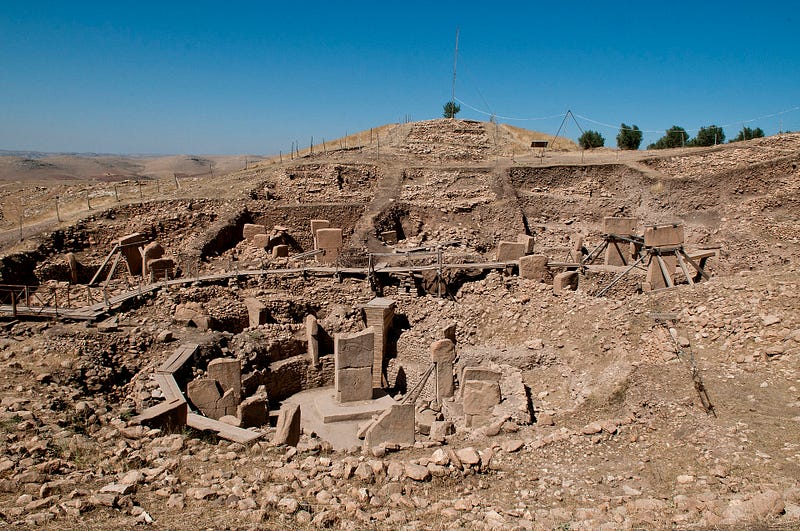
Gobekli Tepe is an archaeological site located in southeastern Turkey that was discovered in 1994. It is believed to be the world’s oldest temple, dating back 11,000 years.
The ruins have revealed structures made of carved limestone pillars and are surrounded by large stone circles that contain intricate reliefs of animals.
What makes Gobekli Tepe so mysterious is the fact that it was constructed at a time when humans were not yet agriculturally advanced. Its building materials would have been incredibly difficult to transport, suggesting a large labor force was involved in its construction.
Despite this, researchers have found little evidence of a settlement in the vicinity, leading some to theorize that the site was used for seasonal or ritual gatherings.
The sudden disappearance of the civilization responsible for this complex structure is still a mystery. Some believe it was due to natural disasters, while others suggest a more spiritual cause such as drastic changes in religious beliefs or cult practices.
Whatever the reason, Gobekli Tepe provides a glimpse into a civilization that vanished from the earth overnight.
Points To Ponder
Throughout history, there have been civilizations that have mysteriously vanished overnight. While it is impossible to know the exact reasons for their disappearance, many theories attempt to explain why these advanced societies fell apart.
From the Ancestral Puebloans of the American southwest to the sophisticated citizens of Çatalhöyük in modern-day Turkey, these cultures left behind a plethora of artifacts and architectural remains that still leave us wondering what could have happened to them.
In the end, it is up to historians and archaeologists to continue piecing together the puzzle of our past and uncovering the secrets of these mysterious civilizations.
Join Medium Today
More from the author:


