
6G: The New Frontier or An Evolutionary Process?
The “new” 5G gets sidelined by the “newer” talk of the town. Are we prepared for it?
“5G goes beyond the regular operator business; it’s a business revolution.”
Börje Ekholm — Ericsson CEO
And a business revolution indeed. No, wait. Not just a business revolution, but a social revolution as well.
Those aforementioned words were made at the 2017 Mobile World Congress in Barcelona. And I think we should all look at it with amazement. One year ago, the idea of a 5G network remained as just another revolutionary idea. An advancement in telecommunications technology that will significantly enhance connectivity to the world in a rate much greater than what 4G was able to do. In late 2018, the term ‘5G’ entered the general spectrum. Two years later, 5G networks popped up everywhere.
However, we need to understand that despite its seemingly “long” development cycle, the widespread use of 5G networking came rather recently. 2020 was the year where 5G became “active”. We welcomed 5G with open arms but wary hearts. It looked as if 4G had become totally obsolete.
But we humans are complicated apes. We are always dissatisfied with what we have.
Not even a year after the full rollout of the 5G network, China has already taken its first steps towards 6G networking.
Yes, you read it right. 6G is coming.
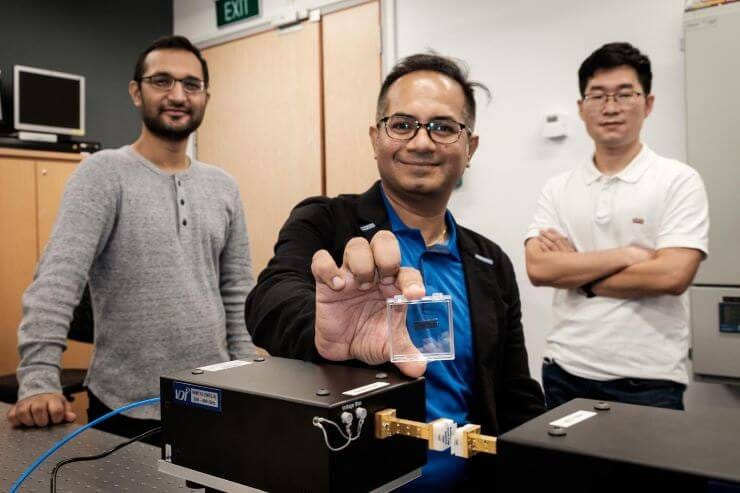
In fact, all the talk and mumbo-jumbo about 6G has been circulating the science and tech community even before 5G became widespread. In August 2020, a team of researchers from the Nanyang Technological University in Singapore in collaboration with Osaka University created a chip that was able to transmit data at a rate of 11 gigabits per second (Gpbs) compared to the theoretical rate of 10 gigabits per second for a 5G network. It even has the ability to stream a 4K HD video in real-time.
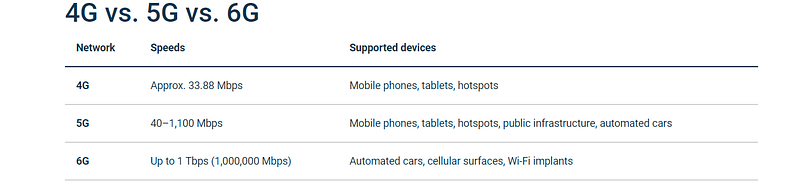
6G is estimated to be 100 times faster compared to 5G — an astounding level. Dr Mahyar Shirvanimoghaddam from the University of Sydney even came up with an estimate that is truly hard to believe — 1Terrabit per second (Tbps). Or 8000 Gigabits per second.
Fast enough to download 142 hours of Netflix in a second. For those who love to binge on Netflix, this will definitely sound appetising to your ears. But yet again, this is just an estimate. The final say come be from the International Telecommunication Union (ITU), the one responsible for the standardisation of the 5G network.
But hey, there’s no wrong in estimating. Anything that moves faster than what our current network providers had given to us is good enough.
Even though 6G remains as an idea on the table, for now, there is no reason to doubt that 6G will significantly enhance not only in telecommunications but in other spectrums as well.
From smart devices to Augmented Reality systems to AI technology, the 5G network has enabled the kind of connectivity we all wished in our dreams. Laborious jobs in the agricultural and manufacturing sectors are adopting new technologies infused with 5G technology to stimulate production and economic growth. Internet of Things has become even more possible as the low latency and 5G speed enables greater sensor connectivity, thus linking all related devices under a simplified control. Industries like healthcare, automotive, and even public safety will benefit greatly with 5G connectivity.
So, why are they important when it comes to the subject of 6G? Isn’t it supposed to be a next-gen thing that will replace 5G entirely?
Yes, and no.
While 6G boasts everything great about itself compared to its current predecessor, 6G, as it stands, will remain as an improvement of 5G and not the replacement. 6G will have lower latency and bandwidth, resulting in greater speeds. There are even talks about 6G being used to make devices as “antennas”, thus “decentralising network” and making users less reliant on network providers. This means that device-to-device connection can be made possible and possibly for free.
The Jacobs University Bremen in Germany also added that mobile technology will soon be driven by artificial intelligence, and 6G will enable such integration to create new applications for machine intelligence.
And 6G might open up new opportunities in previously untapped sectors. This includes involving 6G as a “sixth sense” for humans and machines.
With the potentially lower latency and higher speed, it is also possible that 6G’s network coverage could be extended across the sea and into space. Although this seems too far fetched at the moment (even 5G couldn't do this), such potentials are not impossible. It would be wonderful if it does. Explorative research to understand the Earth and the Universe could be multiplied significantly.
The benefits of 6G are clear-cut. And this provides greater impetus for nations and network operators to fully invest in making this a reality. So far, the expected commercial availability of 6G is expected to come around 2030. Countries like South Korea, China and Japan are showing their interests while companies like Samsung, Huawei, Nokia, Ericsson and Apple are keen to capitalise on this network of the future.
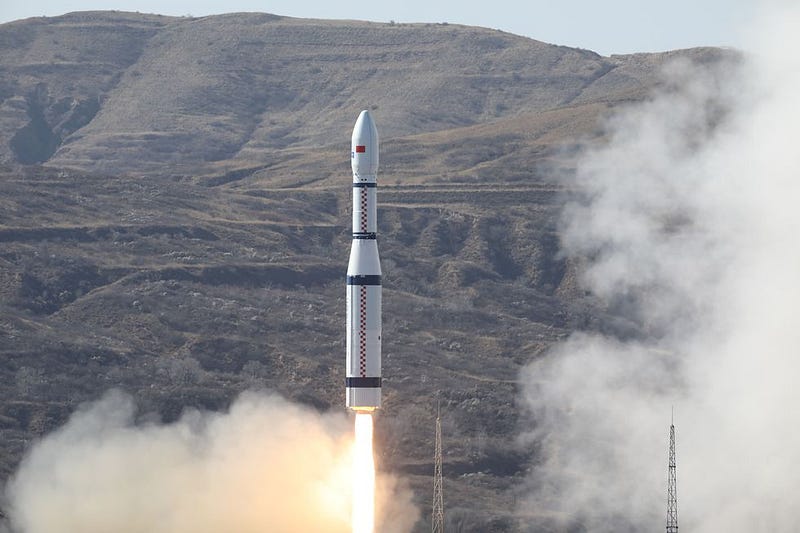
In early November 2020, China sent an experimental satellite into orbit capable of 6G networking. It was sent via the Long March-6 rocket platform and will be used to monitor crops, forest fires and environmental data.
The UK invested more than $260 million into TeraView to study the potentiality of 6G networks and even set their regulations for communications to 100 to 200GHz range, the spectrum considered to be within 6g network’s connectivity.
The University of Oulu in Finland is currently conducting studies under the 6G Flagship Project.
Japan invested $482 million to support the development of 6G, which also involves building a facility that will enable operators and researchers to conduct scientific research. The facility is planned to be available in 2025.
American telcos like AT&T, Verizon and T-Mobile are making a joint initiative called the Next G Alliance to boost research towards 6G.
With that, a new question arises — who will reach the top?
5G is still relatively new to the general public. Even though the aforementioned benefits of 5G are obvious, the limitations of 5G are present. And 6G’s developmental process will definitely be about addressing those limitations.
5G’s commercialisation comes at a time where a majority of the world’s smartphones still function under the 4G framework. While there are already smartphones on the market that are designed to adapt to 5G, issues regarding the network had already popped up. The most common one is the connectivity issue. 5G works faster than 4G, which means that 5G functions in a different wavelength compared to 4G. However, 5G’s shorter wavelength means that its range is limited compared to 4G.
This means more investment towards replacing or building new cell towers and antennas to transmit the signal. And that includes replacing fibre optic cables or redirecting connection elsewhere. Such upgrades are expensive and will take months or years to do so.
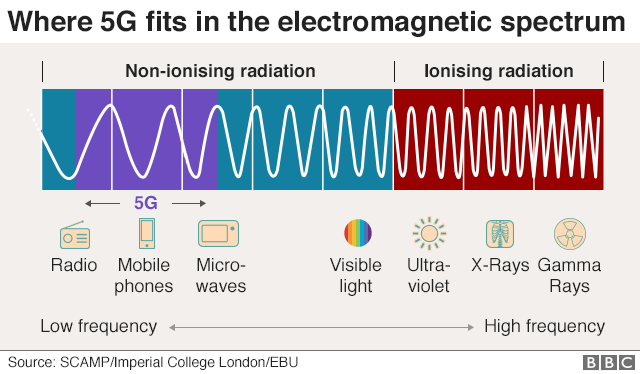
In fact, there were fears that 5G could potentially affect one’s health. The concerns circled 5G’s radiofrequency radiation could cause cancer and other types of diseases related to radiation. Despite radiation from mobile phones are not capable of causing cancers, some researchers and scientists demanded the delay of 5G rollout.
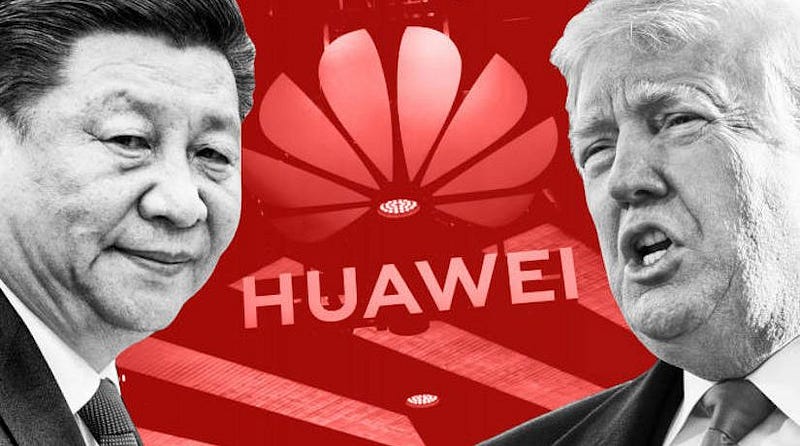
Given the development cycle of 5G that took nearly a decade and the rollout that seemed to bulldoze its way into the general public without repercussions, the future rollout of 6G might be similarly chaotic. The rollout of 5G itself triggered numerous conspiracies and even political upheavals. The Trade War between China and the US under the Trump administration caused a split between world powers, and Huawei, which was and still is one of the key players in 5G development, was caught in between. Reasons for national security were prominently shared between the UK, Australia and the US as they banned Huawei from their respective countries. This includes future 6G studies.
The events of 2020 proved that even the 5G rollout can be politicised with great fervour. Even though Biden’s administration looks to fix the mess created by Trump, the effects of the Trade War will affect the rollout of 6G in the future as Europe plays a more cautious approach towards China.
Issues of national security and privacy protection will once again be at the forefront. The aforementioned “decentralised network” might potentially be used for data theft and espionage and will make network providers lose out. Although the idea of a “decentralised network” may not be possible in the future, the potential capabilities of 6G network will trigger a lot of unknowns.
Should we fear 6G then? Or embrace it with open arms but wary hearts like how we accepted 5G?
5G is still new, and with around a decade before the next one rolls out, it will be interesting to see what 6G can do once it is commercialised. For now, we can only judge based on the current 5G network.
It is truly amazing to see how far we’ve gone. The world has never been this connected. And 6G might potentially open the doors for great discoveries and innovations.
And that is the reason why we should embrace the change.