Is Donut Dunking Still A Thing With The Gen Z?
"Frankly, my dear, I don't give a damn." — Clark Gable
Memory Lane
Does anyone actually do donut dunking anymore?
Donuts always bring back memories of my childhood. I remember I would always have a hard time picking which one to get in a box of 12, where each one is unique. So I always end up with either chocolate frosted or chocolate-filled donuts.
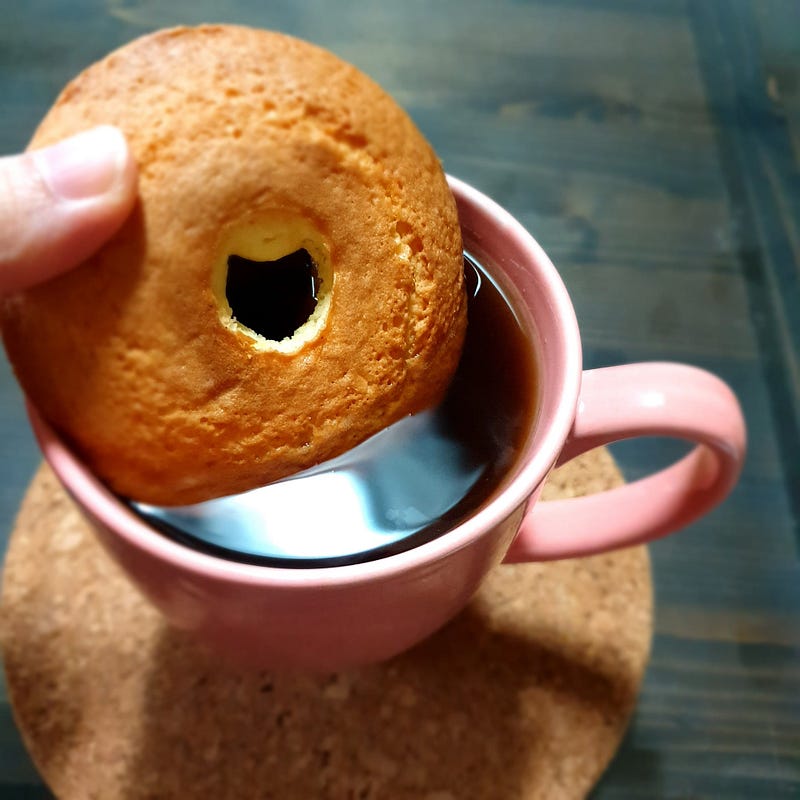
Isn't it amazing how food like music takes us back in time, and we would reminisce an extraordinary moment, like the day I discovered that I loved dunking my donut on my coffee?
Who doesn't like doughnuts?
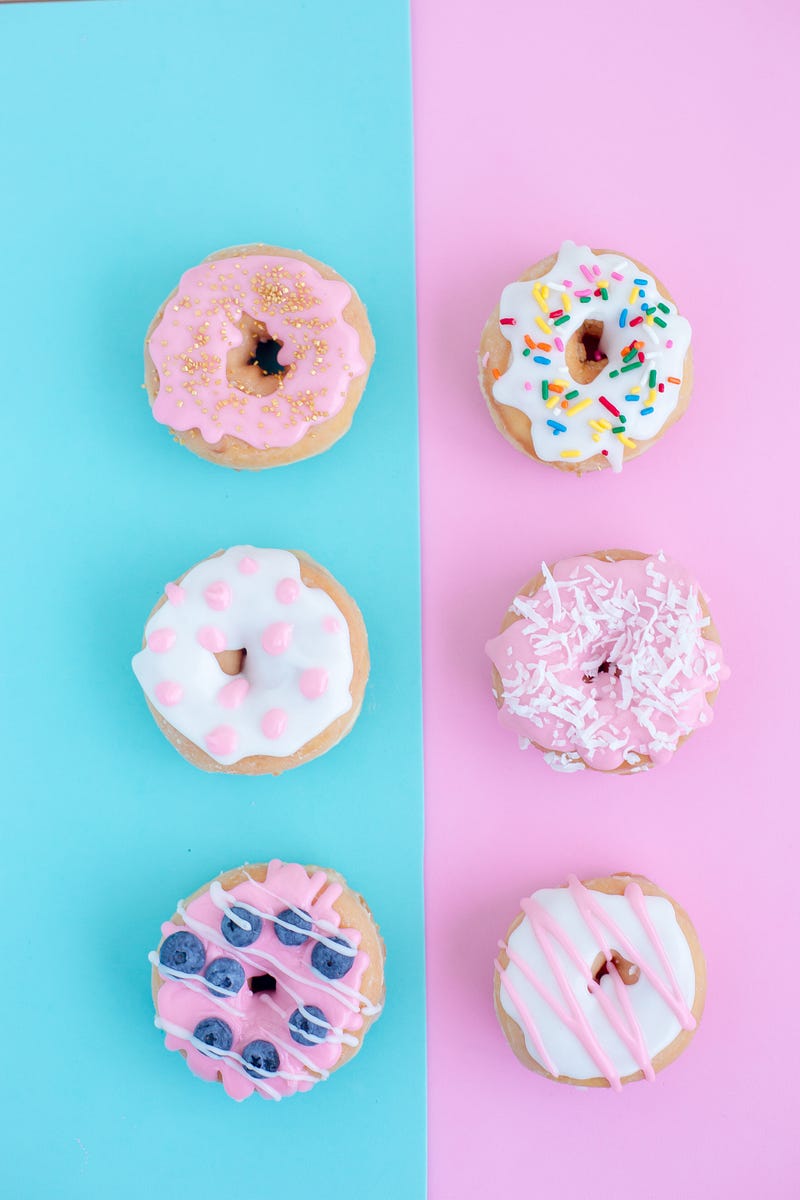
A person with a sweet tooth will love doughnuts. They are round, deep-fried pieces of dough that are then coated in either sugar or frosting. However, some people might not like doughnuts because they are too sweet for their taste buds.
But not so long ago, it was a staple in American life, and it has a rich history, and I'm here to share some of the things I found out recently about doughnuts.
A little bit of history
Like any other food, its origin is well — subject to who is talking. And while we have seen variations of cakes being fried in history, which is what a donut is all about, from prehistoric to the Dutch who has a word for it, olykoeks and to one of my favorites, which is the legend as to how the doughnut got its hole.
An article from Smithsonian Magazine describes, "Doughnuts in some form or other have been around so long that archaeologists keep turning up fossilized bits of what look like doughnuts in the middens of prehistoric Native American settlements."
Because of New York's Dutch past, this sweet delight has been introduced to America, and the Dutch even have their word for oily cakes, "olykoek," which if America adapted its name, donuts as we know it wouldn't be too famous.
And there is a story of a mom who wanted her ship captain son to have something to eat while on a voyage, and one stormy night, Captain Gregory, with a donut on his hand, skewered one of his mom's doughnuts on a spoke of his ship's wheel.
And later on, Captain Gregory had this to say about the legend of the doughnut hole.
In an interview with the Boston Post at the turn of the century, Captain Gregory tried to quell such rumors with his recollection of the moment 50 years before: using the top of a round tin pepper box, he said, he cut into the middle of a doughnut “the first doughnut hole ever seen by mortal eyes.”
Why is the donut better with the hole?
The best thing that ever happened to the doughnut is to have a hole, and it has to do with the donut being evenly cooked. The problem is when you fry it, the middle part will be uncooked, and if you fry it too long, the rest will be burned, so having the hole makes a "hole lot of sense."
Rosenberg cashed in $1,500 in war bonds and borrowed an additional $1,000 to start a business serving coffee, pastries and sandwiches to factory workers. He opened his first coffee and doughnut shop, called the Open Kettle, in Quincy in 1948. The name was changed to Dunkin’ Donuts two years later.
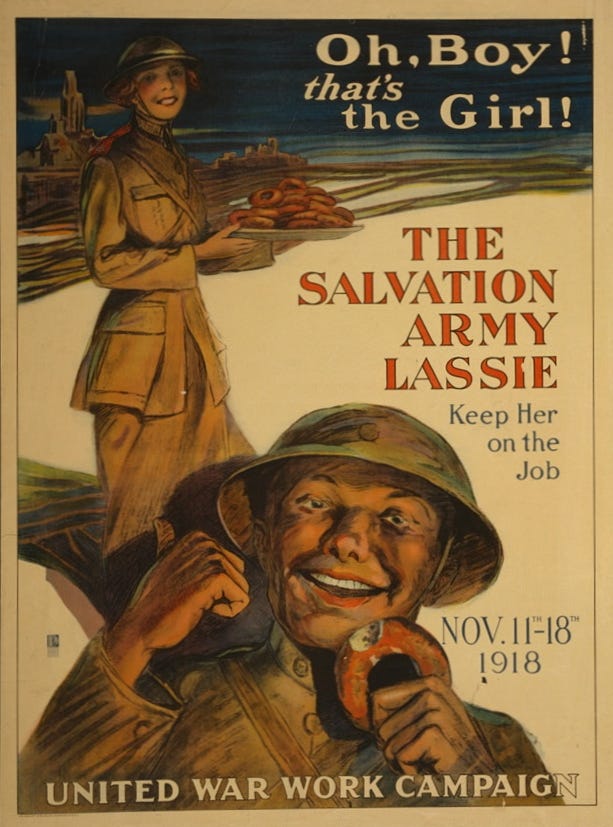
Donuts also made history during WWI.
When American soldiers were given a taste of something sweet by French women during WWI, they missed the doughnuts after the war, or did they miss the French women?
Women volunteers also served soldiers with donuts coffee, and I even found a song, well it was from a different time, so today it wouldn't be politically correct to be even singing it — Don't Forget The Salvation Army (My Donut Girl.
Adolph Levitt and his donut machine.
But it wasn't until the roaring 20s when donuts hit their sugary high with the invention of the machine that can mass-produce donuts, which was "a hole in one" for Adolph Levitt, a Russian immigrant.
And I can already see how kids and adults were mesmerized by the sight and smell of freshly made donuts as they peek through the glass window of Levitt's bakery.
And to know more about the history and Adolph Levitt, this one from NYT's time machine.
My grandfather put it in the window of his bakery and became the doughnut king overnight. He multiplied the cake with the hole, part of the New World he had come to, until just about everyone had coffee and doughnuts for breakfast. Later he put a machine in a bakery on Times Square, stopping traffic.
At the 1934 World's Fair in Chicago, doughnuts were advertised as the "food hit of the Century of Progress" and became an instant hit at a nickel apiece.
How to Dunk Doughnuts
Everyone knows that dunking is the best way to eat a doughnut. All you need is a glass of milk. Then, take the doughnut and dunk it in the milk or coffee until it's fully submerged. It should stay there for about 10 seconds.
It happened one night — Donut Scene.
“Frankly, my dear, I don’t give a damn.”
— Clark Gable
In movies, there are what you call product placements, like the Nike self-lacing shoe in Back to the Future and donuts figured in one scene in a very old Clark Gable movie, It Happened One Night. Still, it wasn't product placement, but it was at a time when eating donuts for breakfast was very much part of the American way of life.
Where did you learn to dunk, in finishing school? Now, don’t you start telling me I shouldn’t dunk. Of course you shouldn’t. You don’t know how to do it. Dunking’s an art. Don’t let it soak so long. A dip and — plop, into your mouth. If you let it soak so long, it’ll get soft and fall off. It’s all a matter of timing. I ought to write a book about it.
And there is even a discourse on its etiquette, and Emily Post had to chime in;
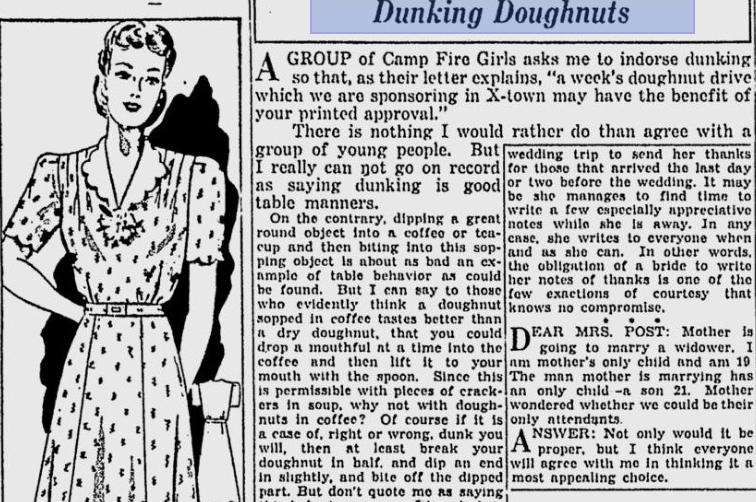
“On the contrary, dipping a great round object into a coffee or teacup and then biting into this sopping object is about as bad as example of table behavior as could be found. But I can say to those who evidently think a doughnut sopped in coffee tastes better than a dry dougnut, that you could drop a mouthful at a time into the coffee and then lift it t your mouth with the spoon.” — Emily Post
And there was a time when there was a National Dunking Association. They had an office in New York and claimed to have as many as 3 million members among them celebrities like Johnny Carlson, and one day they wrote NYT, on why a cruller isn't a donut and all because their members can't do a proper dunkin'.
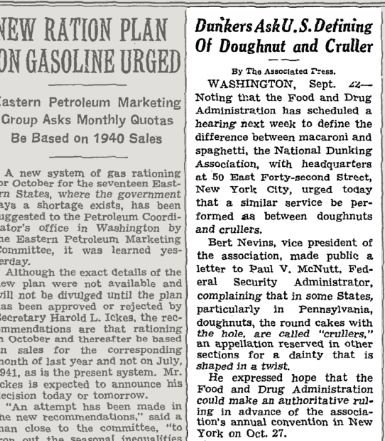
Donut Dunking
There is much to learn about donuts and much to read about their history.
From how it all came to be, from myths and legends, some even say, Mae Murray, an actress, discovered dunking donuts by accident. Or that a long time ago, a donut with a handle to make dunking easy is something you can find on the menu.
Final thoughts on Donut Dunking
Food like music gets me back to memory lane. And as I get older, it is natural for me to look back in time. But, not all memories will be happy some are better left in the past.
But donuts and dunkin' donuts will always bring back good memories and the times when I would dunk it on my coffee and plop it in my mouth, the chocolate dripping inside my mouth, the joy of being it sometimes messy, and the times when all it takes is this sugary treat to get me back to embrace life with hope and gratitude.
“As you ramble on through life, Brother, Whatever be your goal, Keep your eye upon the doughnut, And not upon the hole.”
― Margaret Atwood
Does anyone dunk their donuts? Please leave me some comments below.
Thank you for reading:
Also, I'm happy to share this story on Potato.
If you happen to enjoy this story and aren't a Medium member yet, you can sign on to my affiliate link, and if you do, I get compensated.


