
62 Days of Lockdown in Wuhan, China: Tragedy, Heroism, and Real Life Stories at Ground Zero of Coronavirus Pandemic
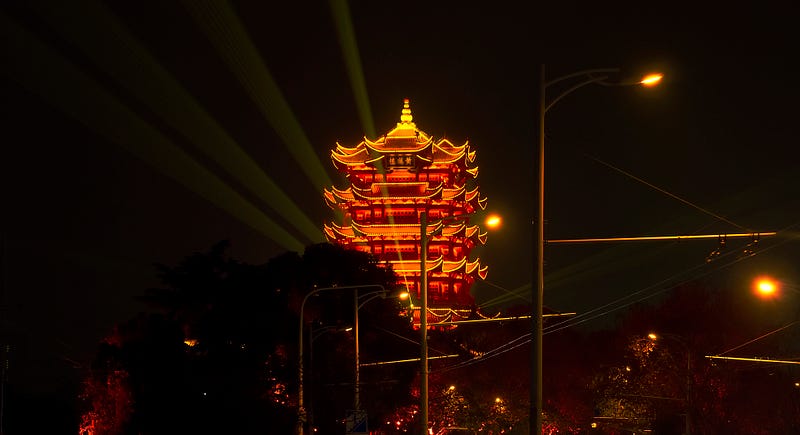
When I flew to my hometown Wuhan from New York City on January 18th to visit my family for Lunar New Year, I didn’t expect to spend 62 days indoor, witnessing the lockdown of 10 million residents and our battle against a previously unknown coronavirus.
The epidemic almost exploded out of nowhere. Overnight no one was allowed to enter or leave the city. Then no one was allowed to leave their homes (except critical roles such as medical workers and police). The city was divided into residential blocks and all resident needs are managed by block administrators. Unlike “stay-at-home” order in other countries, we can’t go grocery shopping, jog outside, walk our dogs or take public transportation. The whole Hubei province with 60 million people (similar to Italy’s population) was in complete lockdown like its capital city Wuhan.
Since the entire city was quarantined, we survived a long period of complete isolation, anxiety, and psychological trauma. We witnessed the bright and dark side of humanity. Many of us lost loved ones or saw first-hand how a family collapsed overnight. Too many tragic stories happened to people we know, way beyond the scale of published death toll. At the same time, a lot of people acted with dignity and kindness in the crisis, extended a helping hand in the darkest hour.
Everyone has a different view about the lockdown, depending on our own situation, if we are inside or outside Wuhan, if our loved ones are affected, if we have enough food on the table, if we lost our jobs, if we can pay our mortgage, rent, or credit card debt. Although it had unintended consequences, I am still proud for what the city and whole country have accomplished in a short time to contain the epidemic. It was a hard-fought battle to test and quarantine all suspected cases and treat all patients.
On March 19th, no new coronavirus cases was reported for the first time. As Wuhan get ready to gradually reopen and resume normal life, we finally see an end to this crazy ride. Although we are still concerned about infection resurgence and potential virus carriers, the worst is behind us. It’s a huge relief.
Those early days seem like a distant memory now, except when I watch it replay in other parts of the world. Although motivated by different values and influenced by different political systems, humans somehow end up making the same mistakes when facing a previously unknown virus. It seems to take some celebrities contracting COVID-19, NBA season suspension, or Disney closure, for people in Western countries to take it seriously.
The whole world is going through this stressful situation and many countries are entering various forms of “lockdown”. I wanted to share my first hand experience at ground zero and observation from people I know, to commemorate the tragedy and heroism, the real life behind each data point. Rumors and misinformation travel faster than truth in a crisis, even faster than virus transmission. People acting in their own self interests, on their own beliefs, sometimes exaggerate or distort facts. But virus does not respect borders, nor distinguishes between classes or political systems. It punishes our arrogance and ignorance fairly. As the global pandemic and economic crisis is unfolding, our lives will be changed forever.
Last 96 Hours
The public was not too concerned about coronavirus when I arrived home on January 19th. It felt much like United States in the first week of March. No official alert yet. We didn’t know everything about the virus but we’d like to think (and act like) that we were doing fine. Some information was spreading in small groups, but most people did not take it seriously. Wuhanese people were almost offended by outside comment that some new virus emerged in our city, as if it’s conspiracy theory and personal attack.
I went out on January 20th, had breakfast at my favorite restaurant, cut my hair, and enjoyed a facial treatment. Everything seemed fine.
On the same day, the most renowned epidemiologist who lead China’s combat against SARS in 2003 publicly announced the novel coronavirus can spread between people and urged government to take actions.
On January 21st and 22nd, we still had group dinner with friends and family as a Lunar New Year tradition. I was very excited to see my 93-year-old grandfather and newborn niece. More news emerged about coronavirus, so we were more cautious and reduced social gathering. But we did not fully understand the threat, nor that our life was about to change forever.
Last 8 Hours
When I woke up at 6:30 AM on January 23rd, I was flooded with frantic messages from friends. Apparently government announced at 2 AM that Wuhan would be locked down at 10 AM and nobody can leave the city.
A childhood friend immediately bought train tickets, packed up in two hours with her parents and 3-year-old daughter, hailed a taxi, rushed to the train station, and jumped on the train at 9:30 AM. When she messaged me at 9:45 AM, I could sense she was finally able to breathe as the train was departing. She wore face mask and sunglasses to protect herself from potential infection, and was anxious the whole ride till she reached her apartment in ShenZhen city.
Airport, train station, and highway entrance were packed with anxious travelers. Some were taking planned trips for Lunar New Year holiday, the largest human migration each year, while others were escaping the epicenter of coronavirus outbreak. Living a comfortable life, we’d never imagine our people fleeing like refugees.
I was debating at first if I should join the rush but decided to stay. My whole family is here and I can better help them navigate this emergency if I am home. I was monitoring group chat and social media from dawn to dusk. I read all gas station would be shut down on January 23rd, to stop people from driving out of and even inside the city, then I urged my parents to fill up their tank. Line at gas station was over an hour long. It turned out to be a rumor.
In addition to Wuhan, other cities in Hubei province followed the lock-down, then all provinces declared public health emergency one after another. Panic quickly spread to the whole country.
For the first time we spent Lunar New Year’s Eve in anxiety and depression. We’d usually eat a huge dinner like Thanksgiving celebration then watch TV with full stomach. China Central Television’s annual gala never reported “bad news” before, but now it put on a whole program about coronavirus outbreak and praised self-sacrifice of Wuhan to lock down a city and protect the whole country. Like a “victim” in the wartime, I was not sure what’s ahead of us. As a tradition we always stay up past midnight to welcome the new year, but this time I fell asleep watching the gala at 10 PM.
Anxiety
The first ten days after the lockdown was in chaos. Government announced new rules literally at the 11th hour, so everyone was reacting, sometimes overreacting, to published news or rumors on social media. Each “heads-up” triggered panic crowd gathering, where the virus quickly spread.
At 4:15 PM on January 25th, I read news all automobiles will be banned in city center after midnight. My mom immediately went shopping before the supermarkets close and drove to my grandfather’s place to deliver some grocery. I later found out supermarkets all over the city were flooded by panic shoppers during the day, and many contracted the virus there. We were lucky to be one step behind and avoided the crowd. At the same time I was grateful that I happened to be checking news on January 25th, had I put my cell phone away we’d have missed the window.
On February 4th, Wechat groups started to spread a message that Wuhan city will be handed over to military control on February 10th, again everyone rushed to supermarkets to hoard groceries and household items. That turned out to be a rumor.
For at least two weeks, although no toilet paper outage, it was hard to find baby formula in the city. We were all anxious over basic supplies, rising number of infections, and how to keep our family healthy till the end of this.
My family started tracking personal temperature twice a day to monitor our health condition. Initially my temperature was always over 37 degrees Celsius, sometimes reaching 37.3. I didn’t show any symptoms but the temperature still scared me. I was afraid that I would be sent to the quarantine center. It haunted me for about two weeks till I decided to google “the appropriate use of mercurial thermometer” and realized I kept it under my armpit for twice as long as the recommended time… No wonder it got too warm. I was SO relieved.
Any sign of health issue triggered overwhelming anxiety. My grandfather had heart surgery a few years and has been living with my uncle. One night my uncle called my mom that grandfather caught a cold and was running a fever. My mom called up her doctor friend for advice and my uncle stayed up all night to monitor his condition. In normal times we would rush him to the hospital for a full checkup, but now we had to avoid any chance of cross infection especially knowing hospitals were on the brink of collapse. The next day, after making like a hundred phone calls we managed to get some emergency medicine and a 200 pound oxygen tank delivered to his place; without an elevator in the building, my uncle carried it up four flights of stairs. Eventually his fever was gone. We survived this 24 hour panic attack, but other families in Wuhan with elderly members or pre-existing conditions were not as lucky.
Tragedy
As the first epicenter of the coronavirus outbreak, Wuhan was unprepared to say the least. Healthcare system almost collapsed in just a few weeks. Patients with respiratory symptoms, difficult to tell if they were infected by flu virus or the coronavirus, all flooded hospitals. They stood shoulder to shoulder in the hallway, sometimes lining up outside for 6–10 hours in cold weather, waiting to see doctors and get examined. Many of them likely contracted COVID-19 while squeezed next to someone carrying the virus.
Hundreds of doctors and nurses were infected due to lack of proper protection and working under extreme pressure. Without basic supplies like masks, goggle, and protective gowns, they are like soldiers fighting without bulletproof vest and arsenal. Each day I came across some devastating message directly from a friend or on social media, “our masks will run out in two days”, or “we are using raincoat and plastic bag as protective gown”. Many wore diapers to work 6–8 hour nonstop shift in contagious zone without eating or drinking, and only had a few hours of sleep. They had to live away from home to protect their families from potential infection.
In the first 20 days of the lockdown, while state media tried to report just positive messages, social media was filled with SOS. Patients were crying for hospital beds, while healthcare workers were desperate for protective gears and medical equipment.
Death toll is much higher than published number. One friend’s wife and mother were in ICU for 20 days, when he told us first-hand report from hospitals and the scale of infections, we were all shocked. When hospital beds and testing kit were in short supply, infected patients had to self quarantine at home, infecting other family members sometimes even the whole family. Many evolved from mild to severe or even critical stage, eventually passed away at home or on an ambulance when it finally arrived. Those people never made it to the official count. Some inpatients died before they could be tested, so they were not included in COVID-19 report either.
Corpses were rushed to crematorium in piles and their family won’t receive the ashes till the epidemic is all over. They couldn’t hold a proper funeral or even see their loved one off. Seeing those devastating videos and messages, their grief hit me in the face. My tears fell too often those days. I was eager to uncover the facts but almost scared to look at it closely.
People would do everything they can to get a hospital bed. Our pursuit of civilization and equality is almost like a joke when facing a real crisis. Government was responding to social media pressure like never before, and it seems whoever made the most noise got the best chance of survival. Much like rich kid Batman buying super gear and poor kid Spider-man relying on miracle gene mutation, the upper class get better medical treatment with their resources while the commoner post emotional story on social media or “make a scene” for priority access. No rules, just pure human survival instincts. It was sad to watch and taught me so much about humanity.
When a friend’s father was infected, they were hospital hopping for a whole day looking for a bed. Already exhausted, they were even more devastated seeing patients overcrowding everywhere. I could feel her desperation and anxiety when she posted in our group chat and asked who may have a connection to admit her dad to a hospital. If patients can’t get hospital bed, they have to go to the hospital every day to get treated, waiting in a crowded hallway with high risk of cross infection, and much less medical attention. In a city with no public transportation, if you don’t have a car this could also mean hours of walking, biking, or in someone’s case dragging his old mother on a trolley.
A high school alumna lost her parents. She studied and worked overseas for years, then flew back to Wuhan in early January because her mother was in critical condition after being diagnosed with late stage cancer. She and her father were both infected and could no longer visit her mother. After seeking help on social media they were eventually admitted to hospitals. She recovered and was released after 10 days. Since recovered patients are known to carry antibody, she donated her blood to save her dad, only to find out her dad was sent to ICU the next day and passed away in a few hours. She did not get to see her dad for the last time or hear his last words. On the other hand, her mom at one point lost essential treatment because that hospital was about to be converted to infectious ward; she passed away five days after her father died. Now she was left by herself. It broke my heart to hear her story, knowing what a happy family she used to have, and it all collapsed in just a month. We studied at the same campus, probably even sat in the same classroom at one point. This could happen to me too.
Suicide happened. A friend’s neighbor was infected and in severe condition, block administrator tried for several days but still could not get her a bed at any hospitals; her mother already passed away, both her husband and daughter were sent to quarantine centers. After waiting in desperation at home, she eventually gave up her life.
Weibo (China’s Twitter) was filled with such tragic posts. In addition to COVID-19 patients, patients with other diseases also lost access to their lifeblood like chemotherapy and hemodialysis, when all medical resources were poured into combating coronavirus. They were sacrificed in this wartime.
This tragedy truly hit home. Everyone in Wuhan probably knows somebody that lost his or her life, or a loved one. So many middle-class families were on the edge of collapse. My dad’s colleague in his early 30s just invited the whole team to his son’s one month old celebration in early January, then he contracted coronavirus and passed away. We felt helpless that there’s only so much we can do. To the world it may be a data point on the death poll, but to family and friends, a real person disappeared. Our lives all changed forever.
Locking down a city at the center of an epidemic outbreak minimizes impact on the rest of the country, but it also means sacrificing its citizens, each at varying degree. While everyone outside was posting “Hang on Wuhan! This crisis will be over soon and we shall enjoy the spring season together!”, victims trapped in this city were thinking “yeah spring may arrive eventually, but some of us will never see it again”. I think Wuhan citizens especially need psychological assistance afterwards.
Hardest Fought Battle
Initially when hospitals were overflowing, only patients in most severe condition were admitted, while the rest were “quarantined at home”. However COVID-19 is so contagious that a virus carrier can easily infect the entire family even the neighbors; case numbers grew exponentially so did critical cases. Then the government mobilized all resources to build two new hospitals, a dozen field hospitals, even converted hotels and college dorms to quarantine centers, in order to create 10,000 beds to isolate all confirmed and suspected cases.
Wuhan mayor gave a three day deadline to identify all infected cases and those in close contact among 10 million residents, and send them to these locations. This is just impossible, I thought.
All residential blocks built temporary fences and only left one exit as the checkpoint. Block administrators had to cover all buildings and knock on all doors in the neighborhood to check every resident’s temperature. All government employees were sent to assist with block administration and on call 24/7. They did not have a day off since the city lockdown.
42,000 healthcare workers from other provinces left their home and came to the front line to fight coronavirus. Manufacturing capacity in the whole country ramped up to produce protective gears, and Chinese organizations searched all international suppliers to meet dire needs in Wuhan city as well as Hubei province.
The fast reaction and deployment of state power can be a triumph of nationalism, or criticism against “authoritarian” government. No doubt it was addressing the most critical issue to contain the virus, however the tank also ran over other innocent lives as it marched forward. When 25 hospitals were converted to treat COVID-19, inpatients with other diseases were forced to exit. Many non-coronavirus patients couldn’t visit the doctor. Because of the lockdown, a friend could not visit her grandmother who had late stage cancer and lived in another district.
As medical resources poured in from all over the country and Wuhan implemented stricter lock-down rules, we saw less SOS from patients and doctors, but more from the other 90% of the inhabitants who can not step outside their home at all. Household needs became a critical issue, like groceries, prescriptions, and baby formula.
Heroism
While the city was hit by the tragedy, she was also protected by her people, brave soldiers on the front line, and generosity from all around the world. We saw so many shining moments of human kindness.
As others rushed to escape virus in Wuhan, over 40 thousand doctors and nurses from other provinces moved in the opposite direction. They brought hope to healthcare workers and citizens in Wuhan, and prevented over-stretched hospitals from falling apart. Working for state owned hospitals, they are far less well-off compared to American doctors who can charge a few hundred dollar for 5 minutes of face time. Medical workers fought tirelessly to save lives under extreme pressure.
Other provinces donated vegetables and meat for citizens in Wuhan and soldiers on the front line. One company sent over 100 tons fruits and vegetables, which were enough to feed 5000 medical workers for one month. Just imagine how much food supply the city need to come up with to feed 42,000 healthcare workers from other provinces and over 100,000 local medical staff.
During the strict lockdown, employees in critical roles still need to come to work to keep the city functioning, like sanitation workers, supermarket clerk, and property management staff. Some quit because of the increased workload and fear of virus exposure. But more chose to stay at their posts. A city electrician walked 20 hours to return to Wuhan from his hometown as all public transportation was closed and he didn’t have a car, just to ensure proper maintenance of electricity supply. Thousands of delivery men stepped up to keep supply chain running and send groceries to residential blocks. I can even order medicine delivery.
Residential block administrators, community workers, police and urban administrative officers are heroes too. They worked 24/7 to implement the extreme quarantine measures, maintaining social order, serving various needs of residents, searching for patients and transporting them to hospitals and quarantine centers.
When the government ordered all residential blocks to self quarantine and prohibited people from even going to the grocery store, residents had to rely on their block administrators and property management staff to arrange grocery and meet emergency needs. Imagine a few staff attending to hundreds of families. People could not always get what they want and some started complaining on social media. I didn’t fully appreciate their work till I volunteered myself. Shopping for 50 families was not easy. Each family requested different items and different brands. We ended up searching in the supermarket for 2 hours and spent another 3 hours distributing to each family. I could even feel some anxiety of medical workers when I put on mask and gloves and stepped into a supermarket nearby, where I know many people contracted COVID-19.
Organizations and individuals searched globally for essential equipment such as masks, protective gowns, medical gloves, ventilators, and alcohol. As medical supplies poured into Wuhan, the most critical issue was to distribute them to local hospitals as soon as possible. People were increasingly skeptical about the efficiency of the Wuhan Red Cross who was the main recipient of donations but left supplies in its warehouse for weeks without proper inventory management. Bureaucracy was the enemy. Volunteers quickly self organized on social media to bridge the gap, connecting donors with doctors pleading for gears, and delivering them directly to the hospitals. It involved many phone calls, filtering messages on social media, even unfamiliar areas like researching medical equipment requirements, but we were excited to fight the virus together with our doctors and nurses on the front line.
Some friends polled our money to send birthday cakes to some medical workers drafted from other provinces. They left home to help us, so we wanted to thank them and make them feel at home. Spontaneous actions like this happened all over the city. When public transportation was cut off, at one point some doctors and nurses had to walk a few hours between home and hospital. Imagine walking from Wall Street to Bronx after a full day shift. Volunteer drivers formed a crew and sent them to work every day. When news came out that hundreds of homeless people were trapped in the city and lost source of income, volunteers went to feed them. Some hot food and comforters helped them survive the cold weather.
Since local administration could not attend to all needs during the emergency, especially in the early days when the state was still mobilizing resources from other provinces, volunteers filled in. It’s a lot of people, including self organized residents, temporary visitors like myself, even people living in other cities who drove to Wuhan on their own.
All residents in Wuhan are heroes. No riot, looting or social unrest. Everybody cooperated and stayed indoor for two months, self sacrificed for the common goal, and helped each other go through this extremely challenging period.
Everyday Life
None of us has been locked indoor for so long. Since the government announced strict quarantine measures across the city in early February, except occasional food delivery pickup or medical emergency, most people can’t leave their homes, visit family or friends, go to work, jog outside, stroll around neighborhood, nor walk their dogs. Staring at the same view outside the window every day, I badly miss fresh air and the freedom to walk into sunshine. While everyone is going stir-crazy, especially parents dealing with kids at home now schools are closed, or pet owners unable to walk their dogs for months, we also need to survive our anxiety over food, infection, and bad news.
Top priority for every family during the lock-down is to get food on the table. Some supermarkets open reservation for grocery delivery at odd hour, like 9 AM, 10 PM and midnight. All spots are gone in a minute sometimes just a few seconds. People with smart phones are anxiously refreshing the apps when the reservation window opens. It’s almost a miracle to ever get one. The others have to rely on group order arranged by residential block. Neighbors formed Wechat groups and a core team volunteered to handle all logistics. From searching grocery suppliers to distributing to each resident, it’s easily a full day job. While we are grateful for secured food supplies when the city is locked down, some people are complaining that the group orders have limited options and are more expensive than normal, especially those who are used to pick their own apples in the grocery store. One guy had to pay for feminine products in a “prix fixe” menu offered by the supplier when he wanted to buy toilet paper.
Second order of business is checking news. Most people live on their phones anyway, but here our eyes are fixed at the screen literally the whole time we are awake. I read every piece of information on TV and social media, almost obsessed with refreshing Weibo and Wechat groups. I read science papers about coronavirus and educational materials. I constantly chat with friends in Wuhan, exchanging information about where to get food, situation in hospitals, and which residential block identified new infection cases. After a while, I had to force myself to cut it off. As an escape from information overflow, I started using TikTok and playing mobile video games, which I used to make fun of as “big trap for teenagers”.
Because of the long incubation period and possibility of asymptomatic, we are nervous about close contact with anyone, even the delivery man. You never know who may be carrying the virus. When my dad returns from work every night, I spray 75% alcohol all over his clothes and shoes, although I wasn’t even entirely sure if this would kill it all. I urged him to follow strict protocol each time — wash hands as soon as he gets in, put his clothes in the balcony where fresh air takes away virus hopefully, take off mask, turn it inside out before disposing in the trashcan, then wash hands again including his face and glasses. I make sure our family get enough protein, immune booster, water, and sleep. My mom thinks I am overreacting. No one knows exactly how to deal with this new virus but I’d rather follow every piece of advice that sounds about right.
For 90% of the families in the city who are not concerned by any diseases, when anxiety is less overwhelming, this is also an interesting experience. Away from distraction of social life, we get to spend more time with our loved ones and explore our own potentials. My family started daily workout routine after years of unsuccessful attempt, watched movie together at home, and reorganized family albums. Since restaurants are all closed, cooking becomes a survival skill. Some people live on instant noodles and preserved vegetables. Others start to improve their cooking talent. The most popular posts on social media are homemade dishes. Even myself, a typical “New Yorker” who dines out all the time, practiced cooking all sorts of traditional Chinese food following online tutorials.
Seeing viral videos of Italian residents singing beautifully on their balconies in early March, we were joking our two nations have different talents. When you lock up an Italian, the person becomes an artist; when you lock up a Chinese, the person becomes a cook.
We were pulled closer and connected better with people around us. My family have lived in the same neighborhood for years but I never made an effort to meet the neighbors, especially since I grew up and moved away. After I volunteered to arrange group grocery delivery for our residential block, formed a group chat, collected orders from everyone, learned about different personality, found out the seniors living alone who need extra assistance, I finally knew them at a meaningful level and built personal relationships.
Social Media
At the onset of the epidemic, like many people in Wuhan, I can’t help wondering why it broke out in our city and hit the people we know, out of all the places in the world. We started to question where the new virus originated, if the government could have acted differently and saved more lives. Citizens were filled with anxiety, helplessness and anger with no way to release; we were all looking for someone to blame. It exploded on social media.
Many accused local government and health ministry officials of covering up, or at least too slow in alerting the public and taking necessary actions, when first few cases were identified last December. Because everyone was still acting business as usual, many events and gatherings took place across the city in January ahead of Lunar New Year holiday, when the virus quickly spread. It made the headline that 40,000 families in a residential block held their annual group dinner on January 18th. After the city was locked down, more people were openly criticizing the government’s handling of the crisis, even on details such as the mayor of Wuhan wearing a face mask upside down during a news conference.
It turned into a war on bureaucracy.
For the first time, public administration happened over internet and government responded to outcry on social media very quickly. Trending posts on Weibo and widely circulated messages on Wechat were often addressed within 24 hours. The head official of Wuhan City and Hubei Province were replaced on February 13th.
The city was caught off guard and had to play catch-up to many issues that gave way to the coronavirus battle. Social media became a platform to alert the officials of various “unintended consequences”, like patients with other diseases that lost access to essential treatment, the elderly and disabled that need special assistance to live through the lockdown, visitors trapped in the city without family support, or migrant workers who ended up sleeping on the street as their budget accommodation choices were all closed. Government soon acted to help them out after their experiences were widely discussed on the internet.
At the same time, too much misinformation and conspiracy theories were floating around, like the coronavirus was released from a lab in Wuhan, or carried over by Americans during Military World Games last October. When WHO declared the coronavirus outbreak in Wuhan as international public health emergency on January 30, and Trump banned foreign national who has traveled within China in the last 14 days from entering the United States, some even started arguing that US is leveraging this opportunity to “sanction” China and remove it from international economic activities… Inflammatory statements travel too fast. We’ve also seen discrimination against people who fled Wuhan before the lockdown, and anyone carrying a state I.D. from Hubei province. Anti-Chinese Racism emerged in other countries as well, as they started to go through this stressful situation.
Through this crisis, social media has profoundly changed our personal life and civic engagement in China.
Debate over the “Chinese solution”
In early February, a few friends in New York City asked me if there’s any social unrest in Wuhan. Surprisingly no. I was amazed how cooperative the citizens were in a national emergency. It might be difficult for someone living in western countries to imagine sacrificing personal freedom and quality of life, staying indoor 24/7 without income for two months. Pursuing personal interests is important, but Chinese value was influenced by few thousand years of history of “big picture” and common goal.
People still debate over the best solution to address this public health emergency and combat a new virus, individualism vs. collectivism, economic cost vs. value of life, if other countries could have better leveraged this window that Wuhan created for them and reacted faster, or if they are taking the best approach for their own political system and citizens. Every voice carries varying degrees of self-interest.
The reality is Wuhan was hit by a previously unknown epidemic and no one had the perfect solution. After two months of lockdown and 50,000 clinical treatment, now we have learned the virus is most life threatening to the elderly and people with pre-existing conditions, mortality rate is around 1% with a functioning healthcare system, and most patients suffer mild symptoms then recover. But in mid January, we were like playing the game on its hardest difficulty.
It was like “a time of war”, some lives had to be sacrificed. 90% of the 10 million citizens remaining in the city are luckier than the other 10%, and we are fortunate to be part of the 90% . None of our family members were infected nor contracted other diseases, yet. However I am a little concerned about the upcoming Ching Ming festival, a traditional Chinese festival when people worship their ancestors and grieve for the dead. Thousands of families lost a member and have been suppressing their grief for this national battle against the coronavirus. Funerals are not held yet. How would they react on that day?
China took an unprecedented approach and effectively contained COVID-19, albeit at great cost. State media are now focusing on resuming economic activity, heroes in the battle, and global efforts to combat the pandemic. We may be celebrating our victory over the coronavirus soon, but it’s not a success by any means. Official report alone recorded over 40,000 infections, 5000 critical patients , 2000 deaths; and many more families in Wuhan city and Hubei province were impacted. A real person and a whole world around him or her is lying under each data point. Like the National September 11 Memorial at the World Trade Center site in New York City, I hope Wuhan can build a memorial to publicly recognize and grieve the lost lives, including the official coronavirus death toll, all those people who passed away before they had a chance to be tested, and patients with other diseases that died prematurely because of hospital overflow. We have as much reason to celebrate our accomplishment as to remember the tragedy.
What I’ve learned
As the financial market turmoil and this unprecedented global pandemic unfolds, my usual work would be studying industry trend and geopolitical dynamics to identify the best professional opportunity and asset allocation strategy. However I am almost overpowered by this close interaction with tragedy and observation of humanity to even focus on investment, innovation, markets, or money. This has been an education to reevaluate what matters most to us, like the people we love, food on the table, a healthy body, and freedom to walk on the street without fear. Staring at handbags, perfumes, and bank accounts, I find them less useful in a real crisis.
When I ran diversity events for my company to promote gender balance, I often called for male allies, and created dialogues where they can better understand and sympathize with the challenges female colleagues face at work. However it seems difficult for them to truly “get it”, until they start thinking about the future of their daughters. Even for myself, as an overachiever and perfectionist, I tend to think my way is the best way, and have to purposely remind myself of other people’s situation and style during our interaction. Sympathy doesn’t come easily nor naturally. If we get out of the COVID-19 crisis with one takeaway, I hope we can slow down and try to put ourselves in others’ shoes even if we can’t directly see them or feel them. Support each other in difficult times, regardless of nationality, race, age, or belief.
The real challenge is we still don’t know everything about this new virus — how reliable the test is, how many recovered patients are still virus carriers, which treatment is most effective, how long an ideal quarantine period should be, etc.. Each government may take a different approach to combat the pandemic, and their strategy may or may not work from our own perspectives. But it also presents an empowering opportunity where our personal choice would profoundly impact our life and that of others, more so than ever. We can choose to exercise strict social distancing and hygiene protocols, make best use of this rare solitary time or family bonding time, connect virtually with people who need someone to talk to, try to fact check before retweeting misinformation or simply stand up against hateful messages on social media. We can choose to help others live through this challenging time to the best of our ability, help medical workers and front-line personnel get essential equipment, look out for neighbors that may need assistance getting groceries or medication, donate to those groups who are more vulnerable to such crisis, or just leave extra roll of toilet paper on the aisle for the next person.
Maybe COVID-19 will change our lives in a good way. We can come out the other side with a better version of ourselves. More love, less hate.