
6 Ways to Stop Being “The Worst Customer Ever”

You’re not the worst person on Earth, right? I mean, you’re not threatening nuclear war or discriminating against entire cultures or genders in your down time. Good job on that, by the way. You’ve learned how to act properly in society on some level, at least. So, why do you lose your entire mind and act like a complete monster the second you enter to the consumer environment? You need to stop that.
For most of my adult life, I’ve had either a primary or secondary job in which I served in some customer service capacity, and I am convinced it is the one atmosphere in which we see the ugliest side of people. The frightening thing is that people don’t even recognize it in themselves the vast majority of the time. Take the gentleman in the interaction below, for instance.
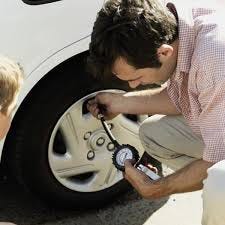
The man glared at me across the desk, tiny muscles in his face twitching with frustration. I returned his gaze with confusion. Neither of us spoke for a handful of seconds. Then, he repeated himself, “You need to fix my tires!” I sat there, stunned that he would say it again, then collected myself before I began repeating myself to him. Shortly after our conversation started, I knew it would end the way that it eventually did. “The customer service here is terrible!” he insisted halfway out the door and on his way back to his car. I rubbed my head and watched through the window as he drove away angrily in his freshly-washed car riding on four tires that had been inflated to the proper amount of pressure, all at no cost to him.
The “terrible customer service” (from his perspective) to which that gentleman was referring was based on his frustration that we could not keep the air in his tires from expanding and contracting during rapid and significant changes in atmospheric air temperature. In northeastern Ohio, we face those conditions a few times a year. On those occasions, dealerships flood with customers who are concerned about their tire pressure monitoring system warning lights. A surprisingly small number of those customers is comfortable with the very valid explanation that dramatic changes in air temperature can cause changes in tire pressure.
“In addition to being fellow human beings, they are also consumers in their own down time, and they are looking out for your best interests far more often than you think.”

When the gentleman in question entered the dealership that day, he did so with frustration-fueled gusto. He’d apparently gotten into his car that morning and found that his tire pressure warning light was illuminated. As he later explained to me in exasperated tones, this had happened to him (he presumably envisioned himself as the sole victim of this atrocity) on a number of occasions over the past few years since he’d purchased his car. The vehicle he’d owned for 15 years prior to purchasing this vehicle never had tire pressure issues, he informed me.
I had attempted to sympathize with the man and to assure him that everything was alright immediately after he burst through the door and exclaimed that his tire pressure light was on again. I had barely gotten the first few words out of my mouth about how the air temperature had changed drastically overnight and that a good number of people had already called with a similar discovery when his face brightened to a fiery red and he interrupted me loudly and decisively, “I don’t want to hear about how it’s the temperature outside! Just fix it so that it doesn’t do that anymore!”
I stared at him, dumbfounded. Fix… air? Was he asking me to fix the physical properties of air so that it did not expand and contract with temperature change? That seemed a bit beyond my capabilities as a mortal, and certainly beyond my capabilities as a service advisor in a car dealership service department. Always anxious to provide a viable solution, though, I pointed out to the gentleman that using alternative gases to fill his tires could reduce the fluctuation in air pressure caused by ambient air temperature. When he learned that there was a cost to inflating his tires with these alternative gases, though, he scoffed, rolled his eyes, and insisted that he was not paying for anything.
Ultimately, I was not able to assure him that his tires would not gain or lose air pressure with temperature change if he did not fill them with an alternative gas, and he determined that he, as a customer, had been treated extremely poorly. His only complaint, according to the negative survey he submitted, was that we had not permanently rectified his concern. That, in his mind, was a failure of customer service. It was our job to make him happy, and the only way to make him happy would have been to keep the air in his tires from ever expanding or contracting again without charging him for filling them with an alternative gas. What’s more, he never even suggested that he would have preferred to have his tires filled with a gas less affected by temperature at no cost. Instead, it was quite clear that he wanted us to make the amount of air pressure currently in his tires stop changing.

So, how you can avoid being that guy or some equally terrible customer? I’m glad you asked. Here are six easy steps for a good consumer to avoid at all costs:
1. Stop Assuming that A Person’s Job Defines the Entire Person
Your waitress probably has a life outside of the restaurant, and you probably don’t know anything about it. Maybe she’s in medical school, working her way through college and will someday be your doctor. She may be brilliant and just a few short years away from discovering a cure for a disease. During my time in the Air Force, I worked with (and was one of) a number of young people who were analyzing national intelligence during the day and working retail jobs at night.
You don’t know why people are working the jobs they are working, and you don’t know what hidden talents and abilities they have. If you assume you’re somehow superior to the cashier at the grocery store, you’re being an elitist jerk. Treat everyone with kindness and respect. Everyone deserves it, and there is no room for your assumptions or judgement.

2. Stop Confusing the Employee for the Corporation
Don’t scream at a customer service person for adhering to a corporate policy. Yes, it is possible that the policy is senseless or unfair. Your customer service worker has nothing to do with that, and probably does not have the power to change it.
I once had a customer demand that I (a service advisor at a local car dealership) explain to them why the Ford Motor Company had designed a particular model of vehicle in a certain way. When I tried to explain that I didn’t know what the reasons behind the corporation’s engineering strategies were, she raised her voice in irritation, “Well, you work here, don’t you?!”
3. Stop Adopting Such an Adversarial Attitude
All that people in customer service positions want is for their interaction with you to go as smoothly as possible. They actually want to help you, if you’ll only let them. In addition to being fellow human beings, they are also consumers in their own down time, and they are looking out for your best interests far more often than you think.

I once had a customer argue with me (the waiter), insisting that our restaurant was serving a roast beef sandwich that was not on the menu. She thought that she had seen one on someone else’s plate on her way through the dining room and would not take my word for it that she was mistaken. Why did she think I was arguing with her? Did she assume I was hoarding all of the roast beef sandwiches for myself and only the customers I deemed worthy?
4. Stop Assuming You Know Their Job Better Than They Do
Maybe you do. Maybe you’ve actually spent an entire career as a cobbler, and now you’re buying a pair of shoes. In those instances in which you are not a trained and experienced professional, though, try considering that maybe the person who does that job for forty hours every week knows a little bit more about it that you do after having thought about it for thirty seconds.
It is true that some things do seem like “common sense” from the outside. I’m asking you to consider that maybe there’s a little more to them that hasn’t necessarily occurred to you. There’s usually a reason why the hostess chose to seat you where she did. With almost every job, there are little intricacies that aren’t immediately apparent to everyone. Try assuming that instead of assuming that you know better than the people who get paid to do those jobs.

5. Stop Trying to Be the Exception to Everything
Some people take a special pride in wrestling any sort of special treatment from a retailer or service provider. Stop that. Try instead being the pleasant but nondescript customer who just carries out their transaction in a normal fashion.
Stop angling for special price breaks. Stop pushing to see how much extra service you can get. Stop demanding special attention. Stop taking up an inordinate amount of the employee’s time. A lot of adults really are like small, spoiled children in this way; they simply are not satisfied unless they believe they’ve been given some type of special treatment not afforded to most other customers.
6. Stop Acting Like Your Patronage is a Special Personal Gift
We had an ongoing joke when I worked at Home Depot about people who would threaten to go to Lowe’s. I’ve got bad news for you, folks. Most retail workers in big chain stores like those don’t make commission, so it doesn’t hurt their paycheck or their feelings one bit when you take your business to the competitor.
What’s more, huge corporate retailer chains won’t even notice your absence. The Walton family isn’t losing sleep at night because you got mad and spent your $15 at Target instead.

A free market economy is set up in such a way that consumers have the right and the ability to decide where they purchase their goods and services. If you can get it cheaper and better somewhere else, then by all means go do that. There’s no point attempting to use that decision against an employee who doesn’t benefit from your patronage anyway.
If you’ve read this and feel comfortable that you never do any of these things, I applaud you. Most people do at least some of them to some degree, though. The good news is that it is not really your fault. American companies have tried so hard to please you over the years, that they have gradually convinced you that no consumer behavior is unacceptable. I’m suggesting we dial it back a little bit. Honestly, you probably can get away with acting like a complete beast in most consumer settings, but just because you can doesn’t mean you should.