
6 Signs That You Are Falling Out of Love

Love is a battlefield. Love is blind. Love is an open door. Love is many things. But in psychology, love is a triangle.
The triangular theory of love was first proposed by Robert Sternberg in his 1986 paper A Triangular Theory of Love and is the most widely researched model of love that there is. It states that love is comprised of exactly three components: intimacy, passion, and commitment. Intimacy is the feeling of closeness we have with the people that we like. Passion is the feeling of excitement we have for someone — be it emotional or sexual. Commitment is the conscious decision to stay with someone and continually work on improving the relationship.
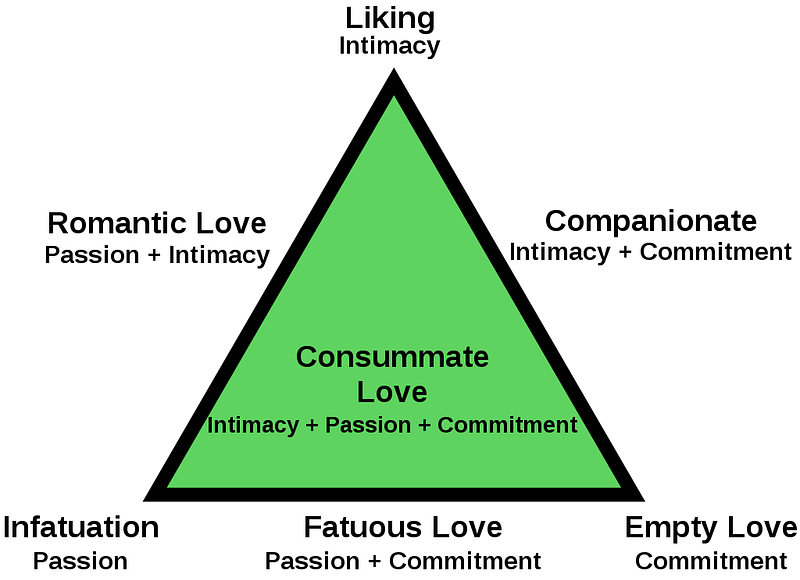
Just as when you fall in love, falling out of love happens slowly, and then all at once. In that period of slowly falling out of love, there are common signs that these three components are breaking down.
Falling out of Intimacy
You feel like they can’t hurt you anymore
When we are intimate with someone, there is a sense of vulnerability that comes along with it. We hold their opinion of us in high esteem and we rely on them for support. But when we fall out of love, that disappears.
In one of my relationships, one of the key moments that made me realise that I had fallen out of love was when when I found myself hoping that my partner would break promises and treat me poorly. Because I cared so little about what she thought or did, I knew that I was invincible to anything she could do to me. So when she did do something I didn’t like, I delighted in the ability to hold her accountable and gain the power associated with a moral high-ground.
It feels easier to hide things from them than to be open about your feelings
Understanding one another is a crucial aspect of love. It is only when we feel understood that we can truly express what we mean to say. But expressing yourself to another person is hard work. Once the love starts to fade, a rift starts to appear. Misunderstandings and secrets become more frequent and genuine communication becomes less frequent. When we stop liking someone, it starts to become more work that it’s worth to express yourself, so you keeps things to yourself instead.
Falling out of Passion
Attending to their needs feels like a chore
Do you remember when you were first in love? Your passion for your beloved was a seemingly infinite source of energy. When they needed something, it was not only something you were willing to do; it was something you wanted to do.
This, of course, will have it’s ups and downs. No one actually has infinite energy to take care of anyone else, no matter how strong their love is. But what will not change is that deep down, a motivating force behind what you do is that you want what is best for the one you love and it brings you joy to bring them joy.
When you fall out of love that energy slowly fades. When your partner tells you about their problems, you tune out. When they want to do something together, you look for an excuse to get out of it. When they need help, you wonder why they couldn’t just do it themself.
Falling out of Commitment
Your crushes become fantasies
Crushes are a normal part of a relationship. No matter how much we love the one we are with, sometimes we will meet people who strike our fancy. We find ourselves being drawn to them in conversations and we enjoy it a bit too much when they give us some kind of validation. We are human; we are attracted to attractive people.
But when love starts to fade our crushes start to become a series of “what if?” questions. “What if I asked him out?”, “What if she was my girlfriend?”, “What would I do if he tried to kiss me?”. When we stop being fully committed to someone, we start to think about crushes as possibilities for a better, more exciting relationship.
Your plans for the future stop including them
So much of our time is spent thinking about what the future will be like. When we are in a committed relationship, we think of ourselves as being inextricably linked to our lover. But when we stop being fully committed, how our partner will fit into our plans takes a back seat; we may even start planning as if the relationship won’t last much longer at all.
“Is this worth breaking up over?” is a question that runs through your mind increasingly often
It is inevitable that there will be countless times that your partner does something that bothers you. But when you become less committed in your relationship, you constantly reassess whether or not your relationship is worth being in. So especially after being bothered by something, you think to yourself “Is this worth breaking up over?” What used to amusing quirk or an acceptable flaw is now potential ammo for a breakup explanation deep down you know is coming up.


