
6 Relaxing Life Lessons a Japanese Movie About Tea Reminded Me Of
#5 Savor with all five senses
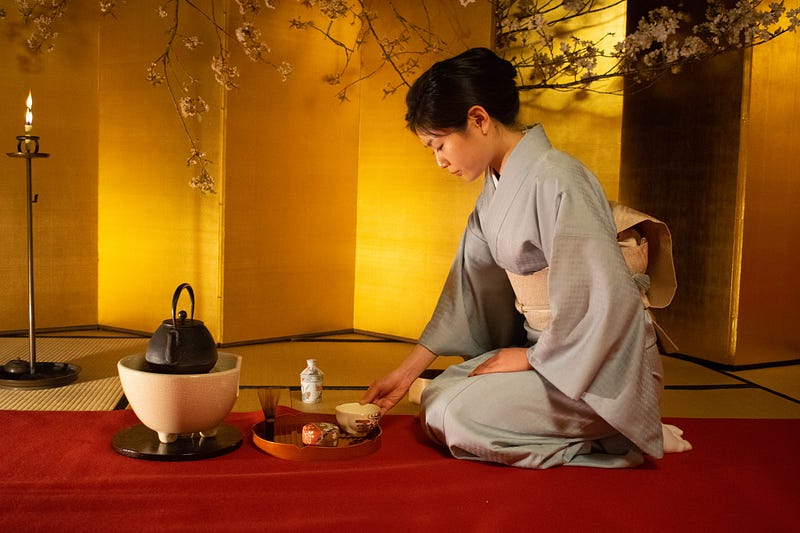
There are lessons hidden in every corner of our lives. The most recent unexpected lessons I learned were when I watched the Japanese movie “Every Day a Good Day”.
It’s a relaxing movie about a young woman who ends up learning sadō (also called chadō), the “way of tea”. This is the name given to Japanese tea ceremonies. The movie spans decades and is a perfect metaphor for how to live our lives.
I finished the movie feeling relaxed and satisfied. Just as I usually do after a good cup of tea.
It also reminded me of lessons we tend to forget. Here are the 6 most important ones.
‘Form comes first’
The tea teacher, Takeda-sensei, quickly explains the basics of learning tea to her students who are struggling.
“Form comes first. It’s the container that you put the spirit into later.”
When a student tries to repeat the order of tasks by heart, the teacher completes her previous statement as follow:
“Don’t think about it. Absorb. Don’t learn. With practice, your hands will come to move by themselves.”
Japanese tea ceremonies have existed for hundreds of years and follow a very specific order of actions. Each tiny part must be handled with care. None can be overlooked because it’s their combination that makes the experience what it needs to be.
In my decade of learning languages, I have followed that mindset many times. Without digging into the many different varieties of greetings possible, I focused on one or two and got used to them before I even noticed it. As I expanded my knowledge, each language became second nature.
Delving into reasons for actions isn’t useful when we start learning something. It’s a dangerous path to overthinking and not improving. Instead, we need to focus on the current task and repeat it until it becomes natural.
‘Forget about Summer Tea’
Seasons pass and winter comes along. Just when the main character started enjoying sadō, the teacher tells her to turn to the hearth for the first time. When asked why it’s different, the teacher replies,
That was Summer Tea. This is Winter Tea. It’s all right. Forget about Summer Tea now.
In sadō, the ceremony changes based on seasons and many other factors. The different rules used for Summer Tea don’t apply for Winter Tea. The student is puzzled and disappointed but she doesn’t realize the struggle she faces is less difficult than when she started from scratch.
What the teacher is putting forth is the importance of focusing on what is in front of her. On Winter tea.
Instead of staying in the comfort of what we’ve learned, we should always get a bit outside of our comfort zone. We should expand from the knowledge we already learned and focus on going forward.
‘This is the Year of the Dog’
When the time comes for the Lunar New Year, a special ceremony occurs, the “Hatsugama”. On that day, a bowl with the sign of the dog is used. At that point in the movie, it’s the year 1994, which is a Dog year in the Chinese zodiac.
When the students notice that, they ask Takeda-sensei if it means she only uses this bowl once every 12 years. She replies yes.
There are things that take time in life. Things we don’t often use. Experiences we believe don’t matter. In reality, everything matters and has an impact somewhere down the road. Every second we live has a purpose.
The real question we should ask ourselves is whether we treasure those or not. Takeda-sensei keeps her bowls in a special area of her house. Are you throwing your seconds onto a pile of other seconds? Or are you cherishing them?
Notice the differences
One day, the main character notices a slight difference between the sound of hot water and cold water. She finds the hot water to produce a deeper sound than the cold.
This happens after years of practice and is something she’s never been informed to learn. She just happens to notice it.
We often complain about not being informed we should pay attention to X or Y. I know I’ve wished many times I had been told what to focus on exactly. In the end, however, we need to notice things on our own to really master them.
It’s by keeping an open mind and continuing to learn that we create the ability to notice nuances, to be amazed by more things.
Savor with all five senses
The main character later understands the real meaning of the expression she saw when she first entered. She puts it in these words:
Listen to the rain on a rainy day. Savor the moment with all five senses, with your whole body. On a snowy day, look at the snow. In the summer, feels its heat. In winter, its freezing cold. That’s what it meant! ‘Every day is a good day.’
After decades of learning sadō and going through hardships, she embraces all the different aspects of the present moment. A fulfilled smile appears on her face as she realizes this. I was overwhelmed by a feeling of calm and peacefulness when I first saw this part.
We’ve heard it many times. From stoics like Ryan Holiday to anybody who meditates, everybody tells us we should spend more time in the present.
This movie felt like a perfect example of the importance of the present. I started watching it like I usually do, meaning while replying to messages, but I quickly dropped everything else and became absorbed in the movie.
We should all savor each moment with all five senses.
Time isn’t equal
My favorite quote of the movie, by far, comes at the very end of the movie. The woman who is now in her late forties understands how powerful the movie she didn’t like as a child, The Strada by Federico Fellini, truly is.
In the world there are things that can be understood directly and those that take time. The ones we understand quickly only needs to be gone through once. But, for the other things, you come to understand them little by little.
We often delve too much into pointless tasks or facts. What we understand quickly isn’t where we should spend our time. What takes time matters more. Let’s forget the “Get X quick!” schemes and turn our attention to “Get X in a long time!” schemes.
Key Takeaways
I couldn’t recommend this movie enough for the peace of mind it brings upon whoever watches it. I’ve already recommended it to 4 friends who watched it and all came back with the same opinion.
But it’s not just a good movie. It’s also a reminder of important life lessons:
- Form comes first
- Focus on what’s in front of you
- Every second has a purpose
- Notice differences
- Savor with all five senses
- Time isn’t equal
Enjoy your life and remember what this movie is all about.
Every day is a good day.