
Hygiene Tips
Why a Bar Soap is a Better Choice for You?
Unknown Facts About The Bar Soaps

Recently, everyone is concerned about how critical washing hands as it is one of the best ways to stay healthy and protect yourself and your family from getting COVID-19. So, this means the soap is one of the necessary things you may always have at home. The two main available soaps are the liquid and bar. Of course, the liquid one may be easier to use and provided with several fancy-scents to be selected. But you may change your mind. In this article, I would like to share why you should switch to use bar soaps instead of liquid ones.
It is Better for the Environment.

Usually, liquid soap always comes with a solid plastic bottle. On the other hands, the solid soap bar comes in a paper or thin cardboard box which is recyclable. If everyone helps to switch to use the soap bars, we can reduce a ton of plastic waste! According to a 2009 Swiss study, the carbon footprint of liquid soaps is 25 percent greater per wash than bar soaps. Liquid soaps require five times more energy to create and 20 times more energy to package in a plastic bottle. Plus, we tend to use more liquid soap per wash than we would if it were a bar. [1]
Will You Get Dry Skin from Bar Soap?

Some people may say that they sometimes get dry hands after using bar soaps. That is true. It is because a conventional bar soap tends to have a higher pH level greater than 9. However, there are more than one type of bar soaps available with lower pH level. Several natural bar soap brands have bar soap with a pH level of ~5.5–6 to help maintain the natural pH balance of your skin moisture organically. In this way, it is better than a liquid soap that contains some chemicals for moisturizing your skin.
Allergy-Friendly!

The bar soaps have fewer ingredients that are eco-friendly and skin-friendly. They are usually produced based on animal fat or vegetable oils. Comparing to the liquid soaps, they are typically petroleum-based with the S.L.S. — Sodium Lauryl Sulfate, a notorious skin allergen, which is often causing skin irritability [2].
Misunderstandings ~ Bar Soap Cleanliness

You may worry that bacteria may be transferred from contaminated soap bars during hand-washing. The good news is that research had confirmed that bar soap is unlikely to transfer bacteria and support the frequent use of bar soap for hand-washing to prevent the spread of disease. [3,4] Additional studies show that environmental bacteria are found on bar soaps, as well as the surface of liquid soap bottles. But, none have shown to be a source of risk of infection. Both liquid and bar soaps are equally cleansing.
Easy D.I.Y. ~ A New Fun Activity
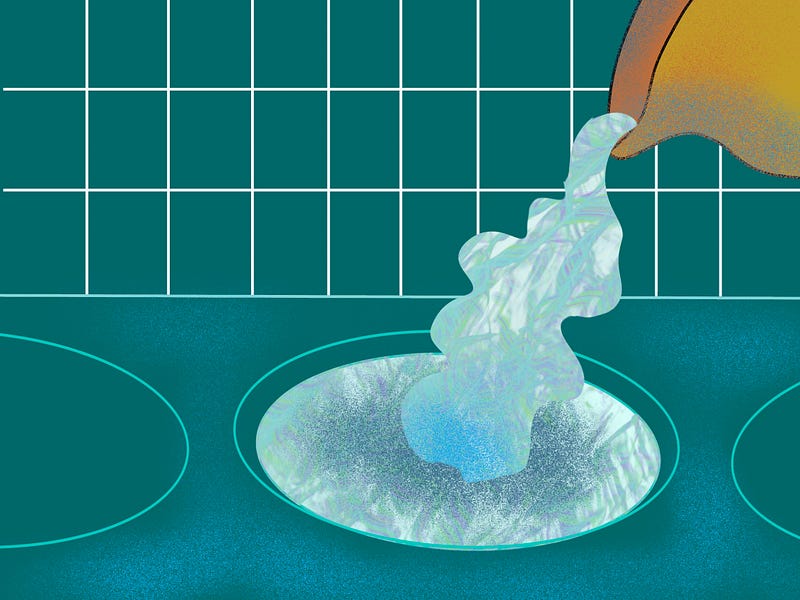
Yes! It is fun to make your bar soap at home! If you have never done it before and have some free time in your quarantine period, you may try this new activity: D.I.Y. your natural homemade soap to use yourself. There are several great instructions on YouTube.
Economics

Bar soap is a saver choice for your pocket! It is cheaper and lasts longer in general. Researchers had concluded that we use almost seven times more liquid soap (2.3 g) than bar soap (0.35 g) on a typical trip to the sink. [5]
About me
Hello, I am Chaeyun Kim. I draw comics and write about lifestyle, COVID-19 information. Please find my other articles here:

Thank you for Reading!
References
[1] LIQUID VS. BAR SOAP: WHICH IS BETTER? OliverThom Bath&Home
[2] Schwitulla, J., Brasch, J., Löffler, H., Schnuch, A., Geier, J., & Uter, W. (2014). Skin irritability to sodium lauryl sulfate is associated with increased positive patch test reactions. British Journal of Dermatology, 171(1), 115–123. https://doi.org/10.1111/bjd.12893
[3] Heinze, J. E., & Yackovich, F. (1988). Washing with contaminated bar soap is unlikely to transfer bacteria. Epidemiology and Infection, 101(1), 135–142. https://doi.org/10.1017/s0950268800029290
[4] Heinze, J. E. (1985). Bar Soap and Liquid Soap-Reply. JAMA: The Journal of the American Medical Association, 253(11), 1561. https://doi.org/10.1001/jama.1985.03350350054018
[5] Koehler, A., & Wildbolz, C. (2009). Comparing the Environmental Footprints of Home-Care and Personal-Hygiene Products: The Relevance of Different Life-Cycle Phases. Environmental Science & Technology, 43(22), 8643–8651. https://doi.org/10.1021/es901236f


