
6 Points to Consider If You’re Thinking About Remote Therapy
An assistant psychologist’s experience of delivering therapy remotely.
The pandemic is having a massive impact on people's mental health. 39% of people married or in a civil partnership are reporting high levels of anxiety, compared to 19% pre-pandemic.
In general, nearly 50% of people are reporting high levels of anxiety. Loneliness is the strongest factor associated with feelings of anxiety during the pandemic in the UK. Also, for people reporting high levels of anxiety, over 1 in 5 people said they are finding it difficult working from home.
These stats say it all — this is just in the UK!
My role is to offer psychological support to family members of people who access our psychosis service on identified problems such as anxiety, sleep, low mood, stress, and self-care.
We are seeing more and more people wanting this support, and right now, this support is delivered remotely.
I’ve read a few stories detailing people’s experiences with online therapy and their thoughts, which have been insightful and incredibly brave of them to share their experiences.
As more people are wanting support and are thinking about online therapy, here are some pros and cons to consider before you enquire or are about to begin remote therapy, from the viewpoint of someone who is delivering therapy.
Compliance Is Better
The number of sessions missed by someone has decreased since switching to remote therapy.
A lot of the feedback I am obtaining from people is that they are finding it easier to schedule their therapy sessions into their day because they are not having to spend time traveling to the location and back.
Ultimately, the more regularly you attend your session, the greater chance you have of noticing positive changes. I’m not saying you will definitely notice changes. For some people, therapy isn’t the answer. But switching to remote therapy has removed travel time, which has increased attendance rates, and the more you attend, the greater the relationship you can develop with your psychologist, which can lead to positive changes.
The first point to consider is:
Online therapy can improve your attendance to sessions because you don’t have to travel to a location. Better attendance may lead to better outcomes.
Outcomes Are Still Positive
One of the biggest concerns with switching to remote therapy was the doubt it created about having the same impact as face to face therapy.
From my point of view, I wondered if people would still feel the emotional connection with me, and if this would hinder their recovery.
I’ve found that the outcomes after, for example, an 8-week intervention on understanding psychosis and stress management techniques, have been astonishing and a lot better than what I thought they would be initially.
People are still utilising the stress management techniques we have worked on together, they are still able to develop a therapeutic relationship with me and they are still able to disclose personal, traumatic, or stressful experiences with me too.
Personally, from the clinician’s point of view, I am thrilled that people are still able to build this connection with myself and it has shown how we can all adapt to a situation when we need to.
The second point to consider:
Remote therapy is still empowering people, supporting them through their recovery. If you had worries about whether you feel it would be beneficial, I can honestly say from the remote therapy I have been doing, it has produced wonderful outcomes for people.
Greater Accessibility
Remote therapy can make mental health treatment more accessible.
It makes treatment more accessible for people with physical limitations as again they don’t have to travel to the session.
It also makes treatment more accessible for people without physical limitations because it can be easier to fit in a session within your daily schedule. You’re not having to go to a specific location and the session is more flexible as the clinician is not having to go to people’s homes or different locations which makes it harder for sessions to be flexible.
The third point to consider:
If you’re considering remote therapy know that it is more accessible for you because the session time is more flexible. You can fit it into your schedule more easily and it’s more accessible if you have a physical limitation.

Poor Internet Connection
“Your internet connection is unstable” — this is probably the worst phrase that occurs during remote therapy!
A breakdown in internet connection has been tough to manage sometimes for both myself and the individual I am working with.
The worst is when you are in a really deep conversation or you are going through different stress management techniques and suddenly you both freeze — that phrase pops up — and the call dies.
You then have to reconnect and pick up from where you left off which can be tricky because we are conveying our emotions at that moment. Once the call cuts off, I can understand how hard it must be to re-convey those emotions after that break.
The fourth point to consider:
Internet cut-offs can be a real pain and can affect how you convey your message or thought processes to your clinician and vice versa. Try to ensure you have a good internet connection or a last resort would be doing a telephone call therapy session (which has been effective too).
No Body Language
Not having access to the non-verbal cues our body displays are a big downside of remote therapy.
A lot of the times it’s not what we say, it’s how we convey the message. Even the way we react can give major clues about how we are truly feeling.
It can be very difficult for both the individual and the clinician when we don’t have access to these cues from our body, which can affect what we’re going to say next or how we convey our message.
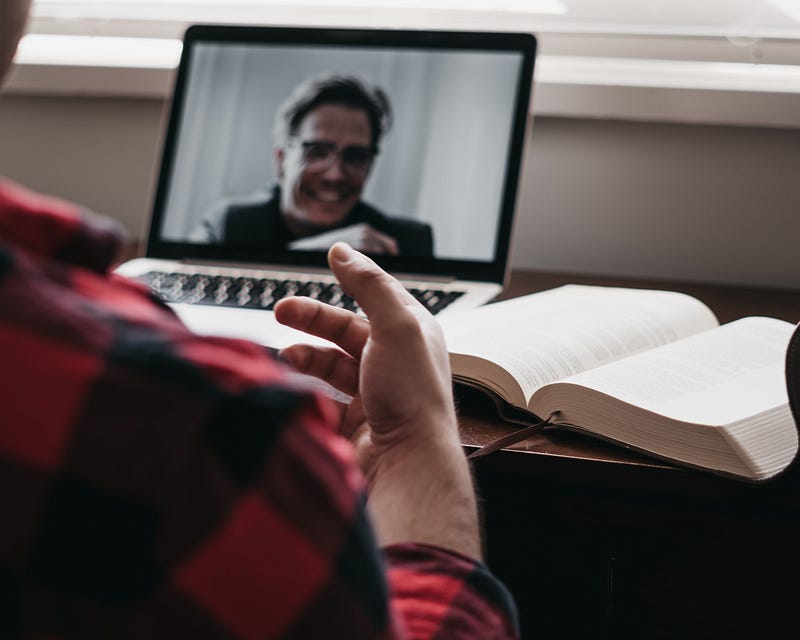
Seeing just a head pop up on the screen eliminates some of the non-verbal communication.
Having said that, there are still about 20 flat skeletal muscles in our face that are involved in facial expressions, so being able to see someone's facial reactions can still help.
The fifth point to consider:
The removal of body language in online therapy can affect our ability to truly convey what we mean when we speak. It can also affect the clinicians’ ability to unravel the true message of the client because they don’t have access to the non-verbal cues. However, try using your facial expressions to help!
Privacy Worries
There is always the worry that someone else in the family will hear your session if you’re not alone.
I have had times where the person I am working with has gone quiet or would like me to talk (as I am on headphones) because their family member is close by.
I completely understand we all want privacy within the session and moving to remote therapy has made this harder if there are other people around you.
Face to face, you’d be in a separate room, alone, with the clinician but now you may have people wandering around the house during your session.
The sixth point to consider:
If you don’t live alone, other people may be able to hear your session. My advice is to ensure you have headphones and try asking your family member to stay in a separate room or if they can, wander outside for an hour. This has helped some of the clients I have worked with.
Final Comments
As you can see, there are different points to consider if you’re thinking of remote therapy and, as with anything, there are pros and cons.
- Remote therapy can lead to better attendance of sessions due to not having to travel to the face to face session.
- It still produces positive outcomes just like face to face therapy and is definitely still worth it.
- It has greater accessibility.
- A poor internet connection can cut you off at crucial points and can be annoying.
- There is less access to non-verbal communication.
- There can be worries regarding privacy as other family members or friends may be wandering around.
Regardless of the cons, I think remote therapy is a great tool and it has certainly shown that we can all adapt to difficult situations when needed and you can still reap the rewards of remote therapy!