
6 Non-Radical Ways To Drastically Reduce Your Phone Usage
No, you don’t have to download another app for it.
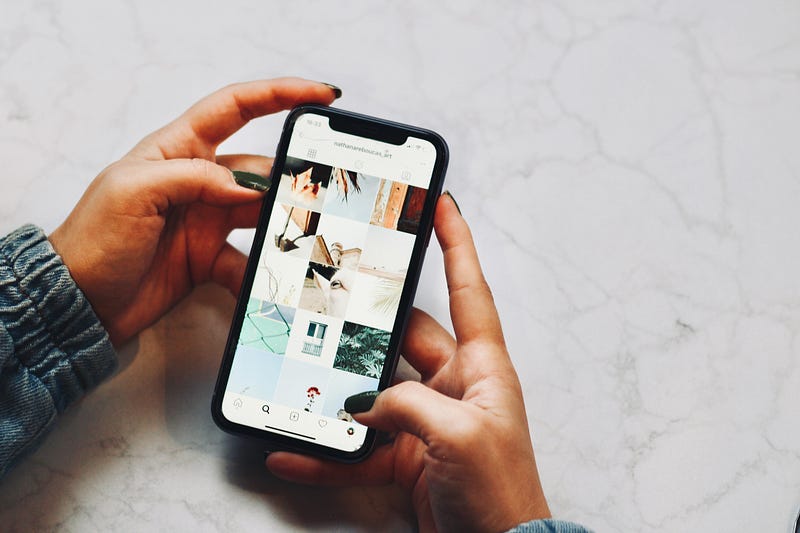
Every day, you either click, tap or swipe your phone about 2,617 times.
But how much of that is really necessary?
More than 70% of our smartphone sessions are less than two minutes long — and compulsive smartphone checking can be fatal to your productivity.
A study by the University of California Irvine found that it takes an average of 23 minutes to continue the deep focus you had on a task once you have been distracted.
I’m sure you are tired of hearing advice such as deleting all your apps or going into airplane mode all day.
Please forget about these radical cuts and approaches.
Here are 6 easy, science-backed ways to drastically reduce your smartphone usage.
1. Deactive Your Email Push Notifications
If you are to turn off only one of your notifications, it should be your email notifications.
Why?
The average worker receives around 120 emails every day. Given an 8-hour workday, that’s a new message in your inbox about every 4 minutes.
Worse than that, 25% of emails that you click on you will open again later.
Thus, you probably looked at them solely due to the notification you got and not because of your incentive to reply right away.
By deactivating your email push notifications, you learn to consciously check and open them only when you plan to work through them.
Even if your phone serves only private and non-work purposes, 55% of your received emails are going to be spam.
Thus, deactivating your push notifications will save you a lot of time getting distracted by useless newsletter or promotion emails.
2. Change Your Colors To Greyscale
Former Google design ethicist Tristan Harris once said that several billion people have a slot machine in their pockets.
Not only does your phone resemble a slot machine because of the immediate reward you get after pulling a lever (“Oh, let me open Instagram to see how many new likes I got”) — but also because of its colorful stimuli.
Just think about it for a moment.
If you scroll through your menu, are you more drawn to open colorful apps like Instagram and Tinder or monotone ones like Uber?
I highly doubt you would say Uber and science does, too.
A 2019 study found that college students who had their phones in greyscale spent significantly less time on social media and internet browsing.
Apple, Google, or Facebook all apply neuroscientific findings of the brain’s response to color and how this can encourage your subconscious decisions.
“Looking at even just the colors of your screen activates a banana-like reward system for chimpanzees. If you just turn that off, it makes a big difference.”
— Tristan Harris
By turning your screen black and white, you can get rid of this subconscious manipulation. You can find a description of how to do so here (iOs and Android).
Once you go grey, your phone will look more like a tool rather than a toy. And that will make it less fun to use.
3. Answer Your Texts Twice A Day
On average, you receive about 27 WhatsApp messages daily.
With so many messages coming in, it makes sense that you open WhatsApp not only daily but multiple times during the day.
If you add other services like Facebook Messenger or iMessage, the numbers are of course even higher.
To decrease this usage, dedicate two specific time slots every day to answer your texts.
Triggers like new messages are known to release dopamine in our brain , a chemical that rewards and motivates behavior. We’re evolutionarily wired to desire dopamine, which explains the high usage of messaging apps such as WhatsApp.
A positive side effect if you answer less frequently is that you get fewer follow-up messages (that — let’s be honest — might not be essential to survival).
If you think about it, 90% of your incoming messages most likely don’t need an immediate reply and can wait a few more hours.
A new message is a request, not a demand.
4. Set A Timer When You Are On Social Media
The danger with social media is not opening the app itself, but the fact that you stick to it once you’re hooked.
According to research, our scrolling behavior is endlessly repeated until some kind of reward is delivered. This demonstrates our desire for dopamine release, a happy hormone linked to our brain’s reward system.
“With every photo you scroll through … you are feeding the dopamine loop which just makes you want more.”
— Susanne Weinschenk, behavioral scientist
Plus, by providing the app giants with a lot of data you get a personalized feed that will make you stick — once again.
A simple solution to escaping this loop is to set a timer for e.g. 15 minutes once you open any app.
You can also directly set time limits for your apps in your Android or iOs settings. With this feature, you will be unable to re-open the app once your time limit is over.
Setting a time limit is truly a lifesaver — no matter how good your intentions are when going on social media without it, the algorithm and infinite scroll design will make you stay there.
5. Go For A Walk Without Your Phone
Do you get nervous when you accidentally leave your phone at home?
If you just nodded, you are not alone.
50% of people report feeling uneasy when they forget to take their phones with them.
Whilst this figure shows the alarming level of phone addiction we have adopted, never bringing your phone again once you leave the front door is not the answer.
Instead, start by leaving your phone at home when you go for a walk and declare it your “digital detox time”.
“Time in nature helps us recalibrate our natural energy patterns. We become more calm and grounded when we harmonize with the sounds and sensations of the great outdoors.”
- Heidi Hanna, American Institute of Stress
Not only will you release tension by immersing in your natural surroundings, but a gentle walk without any devices can help revive your tired eyes that are too often stuck on your screen.
6. When Performing a High-Focus Task, Put Your Phone In Another Room
If you think that having your phone turned on distracts you from working, it gets even worse.
A recent study from the University of Texas found that the mere presence of a smartphone can reduce our cognitive capacity and negatively impact our self-control.
Participants who kept their smartphone in a bag or jacket outperformed those who kept the phone on the desk.
Turning off your smartphone is not enough, as long as it is within your sight.
Therefore, make sure to put it in another room when you are working on a task that requires deep focus such as studying or preparing a presentation.
By that, you will not only decrease your actual phone usage but also significantly increase your work results.
Otherwise, as stated in the beginning, it will take you 23 minutes to get back to your state of deep focus once distracted.
Summing It Up
Despite all the information available on how harmful smartphone usage is to our (mental) health, it can still be very hard to limit the time looking at our screens.
The reason for that is not your lack of discipline, but the fact that your device is built to keep you stuck by applying color psychology and reward-encouraging behavior.
Maybe you have already tried some strategies like deleting all your social media apps — only to fail and reinstall them after a few days.
Fortunately, there are some bearable ways to significantly decrease your screen time.
To recap, the 6 mentioned strategies are :
- Deactivate your email push notifications
- Go greyscale
- Answer your texts twice a day
- Set a timer
- Go for a walk without your phone
- Put your phone out of sight whilst on laser-focus
I know it’s tough, but trust me — you are capable of unlearning your compulsive checking and using your phone more consciously again.
Wanna connect with me? Join my free email-list now!


