
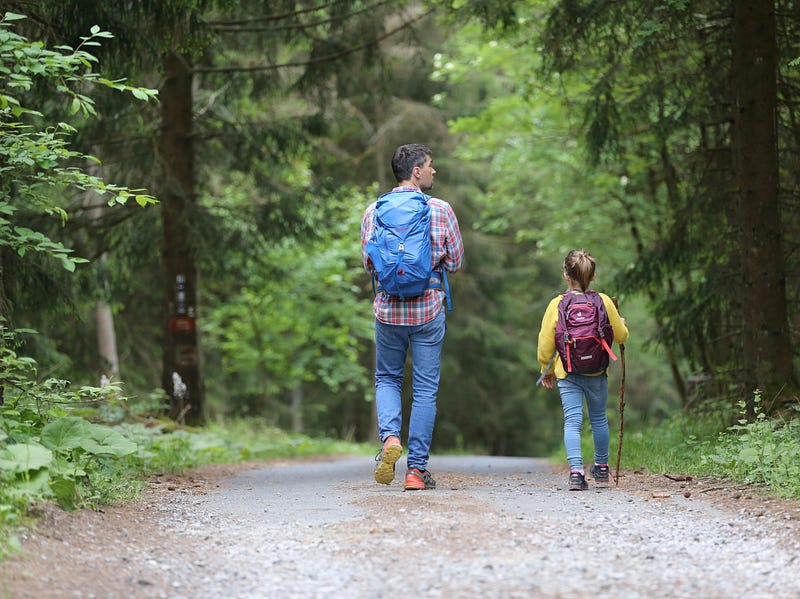
6 New Natural Friends to Make While Hiking in the Pacific Northwest This Spring
Flowers are your friends.
I never stop hiking. Different seasons just mean you need different upper body gear to keep warm and different footwear to ensure you don’t careen down the side of some steep snow slope or slip on a section of icy trail.
Each of the seasons has its particular beauty to appreciate. Here in the Pacific Coast rainforest where I live, one of my particular joys is being welcomed by Spring with its profusion of new green growth and flowers.
And I have to say, I’m always more than a bit surprised at how many people who hike the trails have no idea what they’re looking at. They say things like “Oh, aren’t those pretty yellow flowers!”. It just amazes me that they don’t know what their names are or anything else about them.
I mean, imagine if you walked into one of your favourite cafes with a bunch of people that you see all the time and all you could say if someone asked you who they were is “Oh, that’s the pretty girl with yellow hair and that’s the guy who always wears a purple hoody”…and so forth.
You need to know their name if you really want to make them a friend. And the more you learn about them, the deeper the friendship becomes.
So in that spirit, I thought I’d introduce you to some of my favourite Spring friends; the ones you’re most likely to meet when you’re in the forests up our way this time of year. The ones I extend my heartfelt greetings to every Spring.
They’re some of the most popular. Of course, there are lots more (you may have your own favourites! Feel free to share them with me in the comments) and I encourage you to find out their names too, but these ones are real extroverts and hard to miss. 😄
In no particular order of preference or popularity, here you go.
First up is skunk cabbage also commonly called swamp lantern.
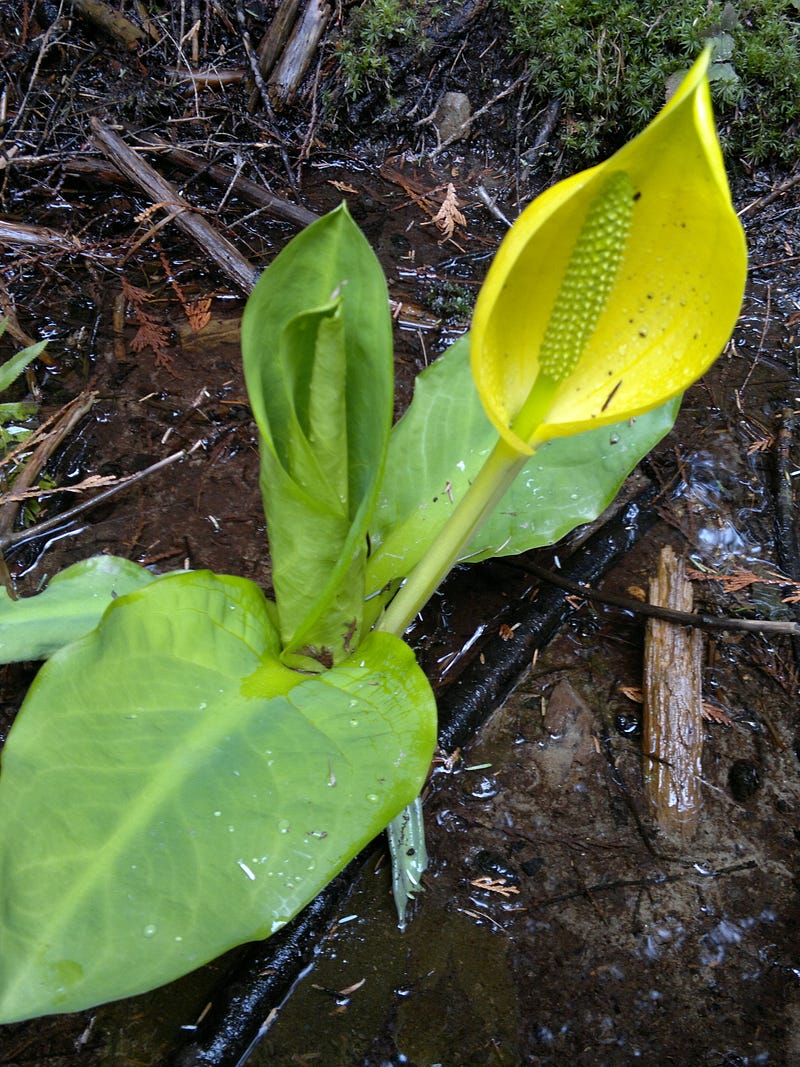
While it IS a pretty yellow flower, I think the name is trying to tell us something! That maybe this is not one you want to get too up-close-and-personal with. Loves wet marshy boggy environs and if you see one, you’re probably going to see a whole lot more in the same area.
Although edible, it is not usually eaten except in dire circumstances. First Nations peoples did use the leaves as a kind of “wax paper for lining their berry baskets, berry-drying racks and steaming pits.”
Next up is Salmonberry.
The flowers range from deep to light pink.
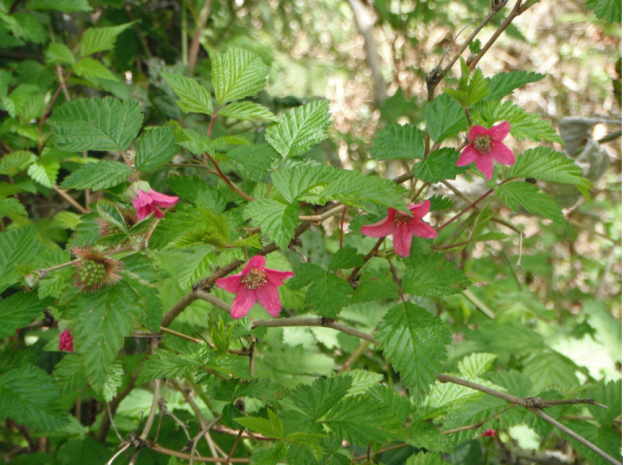
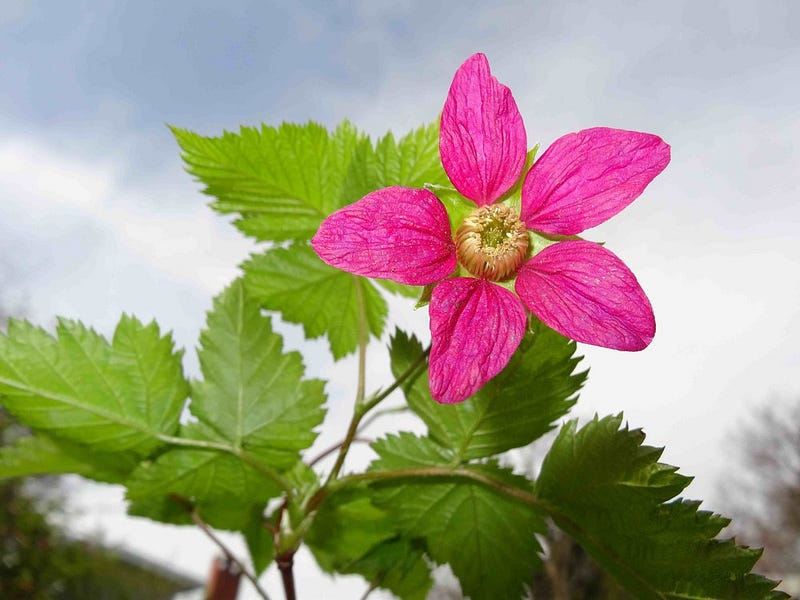
This is a shrub in the Rose Family and a member of the raspberry clan. The mature berries can be red or yellow and are a bit “mushy”. The flavour really ranges from bush to bush and some are just ok while others are deliciously sweet, juicy and succulent. Be persistent. It’s totally worth it when you get some good ones!
Indigenous peoples ate both the sprouts of the new stems and the berries. The fresh sprouts “were peeled and eaten raw, having a sweet and juicy flavour. They were also sometimes steamed…and the berries were often eaten with salmon.” Hence, its popular name, salmonberry.
The first mention of it in our white settler literature is by Meriwether Lewis, of the famed Lewis and Clark expeditionary team. In March of 1807, he collected a specimen on the banks of the Columbia River.
Number three on my list are the Trillium flowers also sometimes called wake-robin because it blooms right around the time robins return.
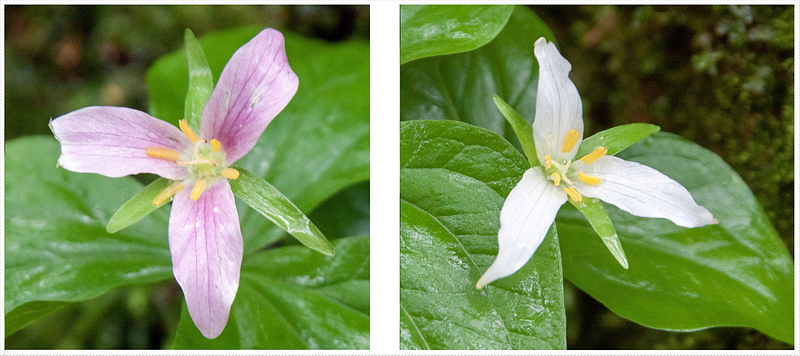
Western trillium is a member of the Lily family. All lilies have their parts in threes or multiples of 3. So you can see 3 petals, 3 sepals, 6 stamens and 3 stigmas on the pistil. What you can’t see in these photos is that there are also leaves in whorls of 3 for each plant.
I’ve shown 2 different colours. In our area, the young flowers are white and turn pink as they age.
Another one of the first flowering shrubs that is a harbinger of Spring in our area is the Indian plum, also known as osoberry.
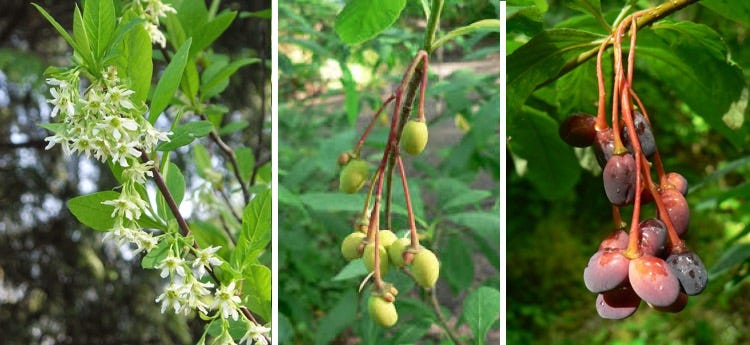
Pojar and MacKinnon (see source below) comment that Indigenous peoples included osoberry in their diets. They ate them fresh, cooked or dried and some groups called them choke-cherries because of their astringency. They made a tea of the bark and chewed its twigs to use as a mild anesthetic for sores and as a mild aphrodisiac. The tea was also used as a purgative and tonic.
Then there are various willow species which we’ll just dump into one floral group, the Pussy Willows. Here’s one example.
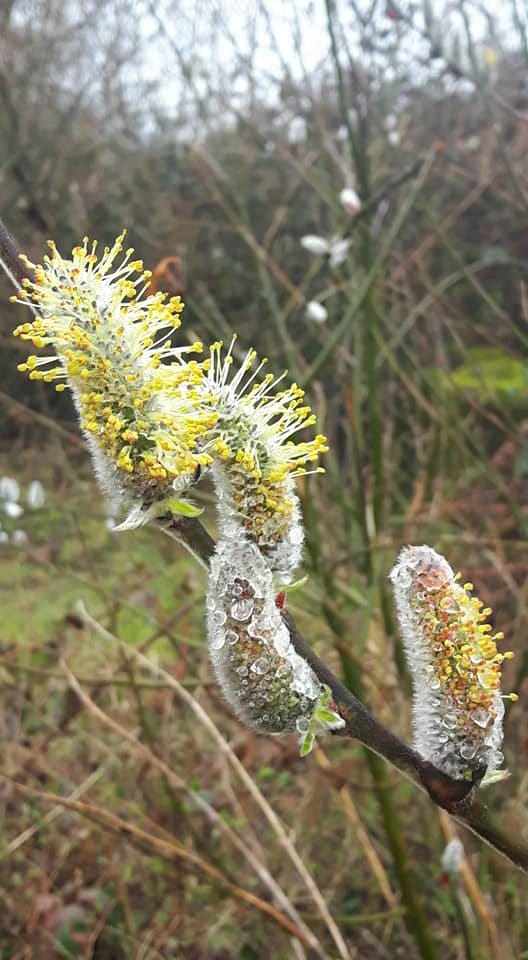
Willows were used in many ways by First Nation peoples. They would peel off the bark and then split the inner part into thin strands and weave it into ropes to use for fishing lines and all sorts of nets. “The bark was used to ‘shingle’ baskets… and the Snohomish and Quinalt made tumplines, slings and harpoon lines.”
The last one I’d like to introduce is Pacific Bleeding Hearts.
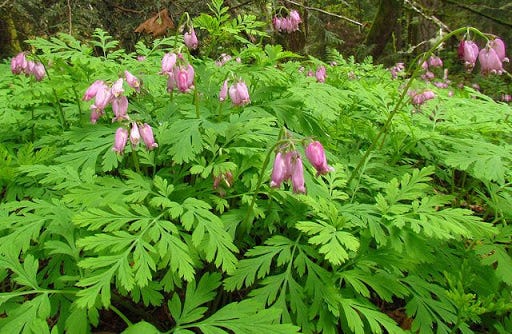
There’s nothing special that I know about this one. I just appreciate its beauty and know that when I see it sometime in Mid-Spring, there’s probably a lot of other flowers starting to appear and enjoy. Like Spring Beauty, Twin Flower, Wild Ginger, Lily of the Valley and so many more.
Maybe I’ll talk about these others in another post as the season “matures” and they drop in to say hello.
I hope you enjoyed this post and are inspired to get out there and make some new floral trail friends.
Until next time,
Rich
Reading this post feathered your nest? Then subscribe to my newsletter and get a free, fun ebook!
My main source for this post is:
Plants of Coastal British Columbia including Washington, Oregon and Alaska by Jim Pojar and Andy MacKinnon (1994)


