6 Life Altering Lessons You Can Learn From Indian PM Narendra Modi
From a common man to one of the world’s most powerful people
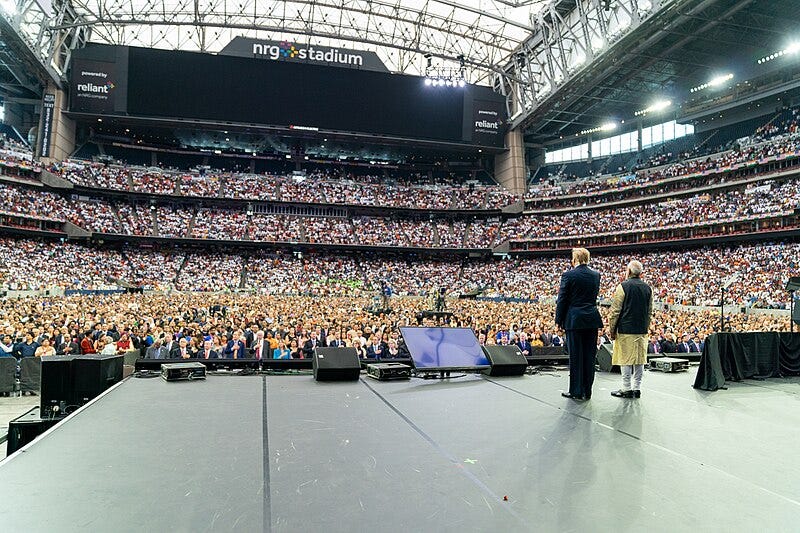
Did you know that the leader of the world’s largest democracy used to sell tea?
Many people would think, “Oh, so the world’s largest democracy is led by an illiterate person”. But do you believe that formal education plays a role in how extraordinarily successful a person is?
He used to sell tea to support his family when he was a kid and such experiences teach you a lot more than education. Although, he does have a master’s degree in Political Science.
And even though you can’t tell what a person is entirely, undoubtedly a few things can be told when you observe someone.
Here are six things you can learn from Indian PM Narendra Modi:
Humility
Humility is the greatest quality anyone can have.
I have seen that people consider themselves to be better than others for funny reasons like race, religion, skin color, nation, size of biceps, cars, hair, clothes, expensive technology, physical strength, and whatnot.
Genuine humility is being open to learning from someone new, even if you’re already an expert on the subject.
Humility means listening and learning from others, regardless of their appearance or physical strength. Like in the gym, true humility is being willing to learn from someone who may seem weaker, and responding politely if you disagree.
I have seen this particular quality in him and people who have met him have the same thing to say about him.
I have heard from several people that he will never let you feel that he is the Prime Minister, one of the world’s strongest leaders and he treats you like you are the most important person right now.
Giving 100%
We all have done jobs, attended lectures, or done things that we absolutely hate. Jobs that made us feel like time paused and lectures that felt like an eternity, but we forget that our decisions have led us to this moment.
People have seen Indian PM Narendra Modi before coming into politics doing basic chores for his party, such as sticking posters in his 50s. He even used to mop the office with a broom but he said that not for one second, he thought that this work was below my means.
He also said that if he was mopping the floor, he would give his 100% attention and for him, it was the most important task.
We all have heard that life is not fair and sometimes we have to do things that we hate and that’s what makes us resilient.
We, as a generation, are so weak that many of us even struggle to exercise for our health. Giving 100% in life means that you have to do things that you hate.
Focus on present
I don’t know if it’s a human brain thing or not, but we hardly live in the present. I am sure you have felt it too.
We’re either angry at the past or worrying about the future, but what about now?
We lose arguments because our minds aren’t present at the moment. Because we want to sound clever, we are thinking of an answer before they even finish.
Instead of focusing on the future, we should listen attentively to win a losing argument.
There are practices that help you live in the present.
In traditional Yoga, which is the real form of Yoga known as “Ashtanga Yoga”, it is known as “Pratyahara” where you withdraw your senses from the world and focus on the sense organ itself. You can research about how to do it as it’s a detailed technique.
Alternatively, if it seems overwhelming, you can begin with brief 10-second intervals. During these short moments, as you type, concentrate on sensing the buttons under your fingertips, notice the texture of your clothing against your skin, or savor the neutral taste on your tongue.
You can shift your attention to your breathing, listening to it for several seconds or even a few minutes.
All these things can help calm your mind and bring you back to the present moment when you find yourself dwelling on the past or worrying about the future.
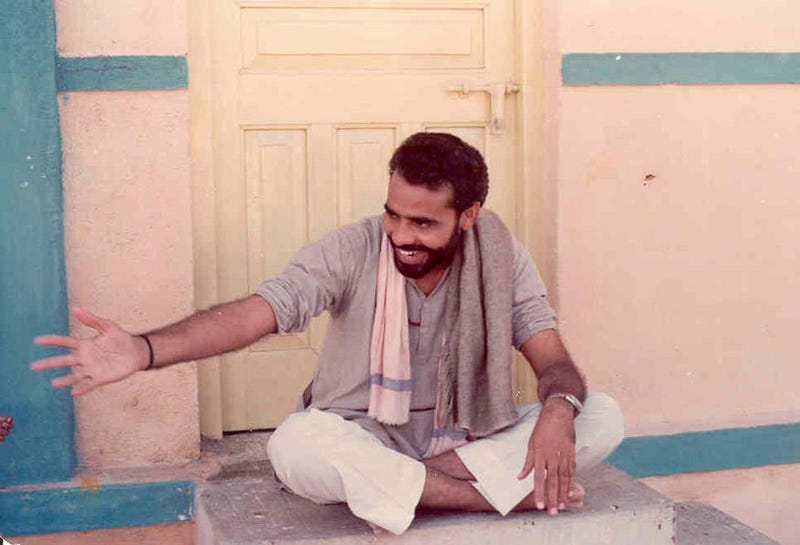
Hard work
Narendra Modi, the Prime Minister of India, doesn’t take any days off.
Before becoming Prime Minister, he was the Chief Minister of Gujarat, India. He has been working every day for the last 22 years and has not lost a single election in the last 22 years. He sleeps 3–4 hours a day and most days he tries to adjust to the sleep hours while traveling.
I honestly don’t know what motivates him. He has no wife or children. He has brothers who are lower-middle-class people living a very normal life. One of his brothers worked at a petrol pump. He became a “Sanyasi” or saint at a young age and left his family.
Attention to detail
He is a people person, and he pays attention to little things that not many people on his level can do.
I have seen him using tissue paper and keeping it in his pocket, wearing a seat belt as soon as he sits in a car. In India, there are people who have one distant relative in the police and they do not wear helmets and seat belts.
If they are caught by traffic police for breaking the rules, they just call that particular relative so that they don’t have to pay the fine.
One time, Modi Ji promised to have ice cream with the Indian badminton player, PV Sindhu, after she returned from the Tokyo Olympics. And when she returned, the PM kept his promise.
I understand that remembering small details can be difficult, especially when you have a busy schedule. As someone who often walks into a room and forgets why I went there in the first place, I can relate to how frustrating this can be.
I’m sure many of you can relate as well.
People are drawn to those who appreciate the small things.
A little sense of humor
He is witty, and he leaves his opponents speechless. Even in politics it always need not be serious. I have seen him dead serious, and I have seen him crack jokes that make the entire house burst into laughter. His interviews are always a delight to watch.
I don’t know how he does that.
If my work becomes too hectic, I find it hard to concentrate on anything else. And it’s much harder to enjoy something. Cracking jokes seems next to impossible.
But my job is obviously not as hectic as managing the nation, and he still manages to be witty.
We should all learn how to do it.
Conclusion
Sometimes we get so caught up in our prejudices that we choose not to acknowledge anything good about the person we hate or dislike.
But everyone has a story, and everyone can teach us something and that’s what we should always keep in mind.
As Donald Trump said, “Watch, listen and learn. You can’t know it all yourself. Anyone who thinks they do is destined for mediocrity.”
✨ If you enjoyed this, consider subscribing to my newsletter.
And receive a free ebook with a collection of the best self-help books in different niches that will help you kick-start your self-improvement journey.