
6 Lessons I’ve Learned From Meditating Every Morning
#3 Meditation allows you to find the part of you that isn’t at war.
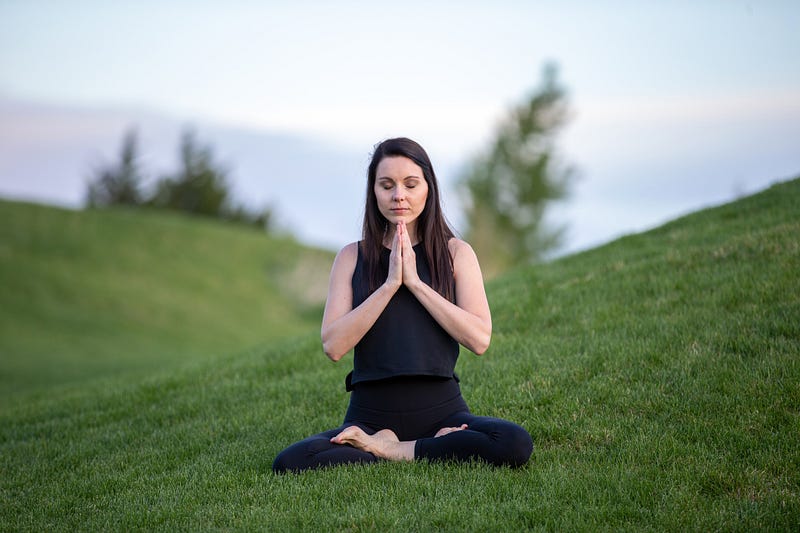
In the midst of our chaotic and fast-paced lives, finding moments of stillness can seem like an unattainable goal.
Our minds are constantly engaged, racing from one thought to another, burdened by the weight of responsibilities and obligations. Yet, in this whirlwind of activity, there exists a sanctuary — an oasis of calm waiting to be discovered.
When I first embarked on my meditation journey 4 years ago, I must admit, I was skeptical. How could sitting in silence and doing nothing possibly have any impact on my hectic life?
But as I persisted in carving out a dedicated space for daily meditation, I gradually unraveled the transformative nature of this ancient practice.
Here are 6 life-changing lessons I’ve learned.
1. Silence is addictive.
At the outset of my meditation practice, sitting in silence felt foreign and even uncomfortable. The absence of external stimuli revealed the restless nature of my mind, as thoughts clamored for attention, attempting to fill the void.
It was a challenging experience, to say the least.
However, as I committed myself to a daily meditation routine, something extraordinary began to unfold. Bit by bit, the discomfort subsided, making way for a growing sense of calm and tranquility.
Meditation quickly became my refuge, my sacred haven where I could momentarily escape the external noise and explore the depths of my consciousness. I realized that silence was not an empty void to be filled, but rather a sacred space to be embraced —and it became a non-negotiable part of my daily routine.
So, if you’re new to meditation and find the silence unsettling, I encourage you to persist.
2. Mindfulness practices are born out of necessity.
I’ve realized that mindfulness practices are not merely a luxury, but a necessity born out of the demands of our modern lives.
Life has a way of throwing us into tumultuous waters, where chaos, uncertainty, and emotional turmoil reign. It is during these challenging periods that we often find ourselves yearning for solace and healing.
It is in these moments of desperation that mindfulness practices arise as a necessary tool for navigating the stormy seas of our lives.
When we are faced with chaos, whether externally or internally, our minds become entangled in a web of worries, fears, and regrets. We feel lost, disconnected, and overwhelmed by the weight of our circumstances.
In these dark moments, mindfulness presents itself as a guiding light — a beacon of hope that offers a path toward inner peace and restoration. It teaches us to anchor ourselves in the here and now, cultivating a heightened awareness of our thoughts, emotions, and sensations.
In doing so, we create space for healing and transformation to unfold.
3. Meditation allows you to find the part of you that isn’t at war.
Within each of us exists a constant interplay of thoughts, emotions, and desires. It’s as if a battleground resides within, where our fears, doubts, and insecurities clash with our hopes, dreams, and aspirations.
This internal conflict can leave us feeling fragmented and disconnected from our true selves. However, through the practice of meditation, we can uncover a profound truth: there is a part of us that transcends this battle, a part that remains untouched by the chaos.
As we deepen our practice, we discover a peaceful center — an anchor that remains steadfast amidst the storm. It is here that we encounter the part of us that isn’t at war — the part that is inherently whole, complete, and serene.
This essence sometimes called our true self or inner being, is characterized by a sense of interconnectedness, wisdom, and unconditional love.
4. When we avoid meditation, it’s when we need it the most.
It’s easy to dismiss meditation as something you don’t have time for or as an unnecessary luxury. But let me tell you, it is precisely during those chaotic and demanding times that meditation can be your greatest ally.
If you’re avoiding meditation, I understand firsthand what that feels like. I’ve been there too, going through a rough patch and knowing deep down that uncomfortable feelings would arise if I allowed myself to sit in stillness. It’s natural to want to avoid facing our emotions and the challenges that come with them.
I remember a time when I was experiencing immense stress and anxiety in my life. Instead of turning to meditation, I chose to distract myself with busyness and endless to-do lists. I thought that by keeping myself occupied, I could outrun my emotions and find relief.
Little did I know that I was only perpetuating the cycle of stress and neglecting my well-being.
Months went by, and I could feel the toll it was taking on me. I was irritable, exhausted, and felt disconnected from myself and others. It was during a particularly overwhelming moment that I realized I couldn’t continue this way. I knew deep down that I needed to face my emotions head-on and create space for healing and self-care.
With a sense of trepidation, I finally mustered the courage to sit in meditation. At first, it was painful. The floodgates of emotions opened, and I had to confront the thoughts and feelings I had been avoiding for so long. But as I continued to show up for myself, day after day, that inner peace within me began to arise again.
5. Anything can be a meditative experience.
When we think of meditation, we often envision sitting cross-legged in silence, focusing on our breath or a specific object of attention.
While this traditional form of meditation is undoubtedly powerful, it is essential to recognize that meditation extends far beyond this narrow perception. In fact, anything can be a meditative experience if approached with awareness, intention, and presence.
Engaging in daily activities with a meditative mindset allows us to infuse our lives with mindfulness and a deep sense of connection. Whether we are washing dishes, walking in nature, cooking a meal, or even engaging in a creative pursuit, these seemingly ordinary moments can become portals to profound states of presence and inner stillness.
For instance, taking a walk in nature puts me in a deep meditative state.
As I stroll amidst the trees, I attune my senses to the sights, sounds, and smells around me. I feel the gentle breeze caress my skin, I listen to the melody of bird songs, and I appreciate the intricate details of flowers and leaves.
In these moments, nature becomes our meditation teacher, guiding us into a state of deep connection and awe.
By expanding our understanding of meditation beyond traditional practices, we transcend the boundaries that confine meditation to a specific time or place and realize that the essence of meditation lies in our ability to be fully present in each unfolding moment.
6. It’s not about not thinking — it’s about allowing your thoughts to arise with no judgment.
Another common misconception about meditation is that it involves emptying the mind or stopping all thoughts. However, the true essence of meditation lies not in suppressing or controlling our thoughts but in developing a nonjudgmental and compassionate relationship with them.
When we sit in meditation, thoughts naturally arise. Our minds are incredibly active, constantly producing a stream of ideas, memories, worries, and plans. Instead of trying to forcefully silence these thoughts, meditation invites us to observe them with a sense of curiosity and detachment.
Through regular practice, we learn to create space between ourselves and our thoughts. We become the observer — the witness to the ebb and flow of mental activity. As thoughts arise, we acknowledge their presence without getting entangled in them. We allow them to come and go, like passing clouds in the sky.
Meditation is a transformative practice that holds the power to enrich your life in ways you may have never imagined
When stress and overwhelm threatened to consume me, meditation became my anchor — a lifeline that allowed me to pause, breathe, and recenter myself amidst the storm.
So, I invite you to take a moment and reflect on your own life. Are you yearning for a sense of calm amidst the chaos? Do you seek clarity and peace within yourself? If so, meditation can be the key that unlocks these treasures within you.