
6 Lessons I Learned Building a Marketing Agency as a Digital Nomad
Tips from an adventure-seeking entrepreneur
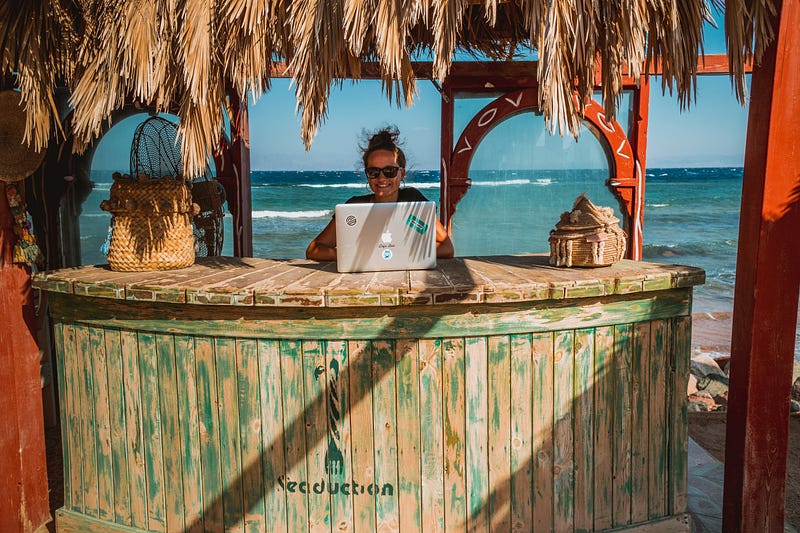
I read Tim Ferriss’ The Four-Hour Work Week a few years ago.
In the book, he describes what he calls the “new rich.” A generation of remote workers and entrepreneurs that leverage the internet to make an income while filling their lives with travel and experiences.
This group is less tied to material possessions and the obligations that arise from owning a lot of stuff.
Of course, that concept is no longer novel.
Remote work and a location-independent lifestyle have exploded over the last decade, driven by the pandemic, social media, and globally skyrocketing costs of living (thank you, Boomers).
There are many versions of remote work: digital nomads, van life-ers, RV life-ers, people building perma-culture homesteads, boat lifers, remote workers, and so many more.
At the time, I was in the throes of my corporate marketing career, having left my company for a new management role.
It didn’t seem like the right time to experiment with digital nomadism or, as a friend called it, “Instagrammable homelessness.”
And yet, I couldn’t let go of the idea. It planted a seed in my mind, and with each passing day, I sowed it.
What work would I do if I were living by the beach? How would I earn money? Would I blog? Freelance? Influence? (*gulp*).
With each morning train ride into the heart of the concrete jungle, I stoked the embers of this flame. Eventually, it turned into a roaring fire I couldn’t ignore.
I had travelled and lived in other countries before (9 to be exact) and wasn’t scared of culture shock or living somewhere unfamiliar. I was terrified of building a business remotely.
In 2021, my husband and I took the plunge and moved to a gorgeous little beach town in sunny Costa Rica.
To say the “work online, travel the world, and live your dreams” angle is explored to death is an understatement.
Yet, most of that content glamourizes the dreamy stuff — the beaches, the hammocks, the sunsets, the smoothies. Many people have now even quit the lifestyle, preferring to settle down.
So, I want to talk about another side of the “quit your job and wander” life.
The steps to building a profitable and sustainable business. It is a mindset shift, and some are just practical advice.
Lesson 1: Be a Smart Contrarian
Quitting your job, uprooting your life, and moving to another country require you to be a contrarian. Most people don’t do it (despite what social media tells you) and for good reason. It’s nuts.
When we sold our home in Toronto and moved to Costa Rica, we faced a lot of skepticism. Friends and family came at us with questions ranging from perfectly logical to completely inane.
“How will you sustain yourselves and build new careers? How will you ever find a job again… you’re a flight risk!”
Or
“I heard peanut butter is expensive in Costa Rica; how will you eat peanut butter?!”
“How will you get Amazon deliveries?”
Some of these are reasonable concerns, and you should pay attention to them. You need to make money unless you’re a trust-fund baby or sold your company for millions of dollars. You need to have an action plan, or it won’t work.
You can accept that you’ll need a new way of earning other than watching the hours count down from 9–5. You can accept that a bank won’t hire you if things don’t work out.
You don’t have to accept that trying this is a bad idea because you won’t get to eat peanut butter!
You can celebrate that you’ve freed yourself (at least a little bit) from the clutches of tech overlords drone-dropping you yet another set of cheap LED lights for your kitchen backsplash that you don’t need.
Most people have silly reasons for telling you not to do something. They are projecting their own fears about what they’re capable of.
They’re afraid of the pain of rejection if they go against the grain. They’re scared of missing potential opportunities and can’t imagine that there’s a world of possibility they haven’t even explored yet.
They’re terrified of having to give up peanut butter and instant gratification!
You need to build your own mental model. You need to reject what you know — the dominant narrative that attracts less scrutiny.
Contrarian thinking requires pain. Pain avoidance is why people sit in the comfort of situations that aren’t working for them.
Sit instead with your messy feelings and accept dissonance. You’ll find the answers to move forward.
Be a smart contrarian.
Lesson 2: Hack it Every Day
Houston, we have a problem. An epidemic of bro science tells us that hacks will transform our lives.
It’s a baseless promise that’s oh-so-sexy.
Our lizard brain wants to save energy, eat berries, and have sex at noon. So, we want quick results. We want to get to that end state so that we have all the time in the world for noon sex.
RT: Most good things in life aren’t hackable. I would count selling your home, starting a business, and moving abroad among them.
Building a digital marketing agency is not hackable.
Finding new clients, keeping them, and finding more are not hackable.
We learned pretty quickly that there was no way to hack our way out of this one.
We hit the pavement and knocked on doors to find clients. We promoted our agency on LinkedIn, Twitter, podcasts, and newsletters. We pitched like crazy. There are no hacks for:
Source + Pitch + Sell + Work + Rinse & Repeat
Hack culture messes with our heads and tells us there are shortcuts. Hyper-optimizing details that don’t matter before we do the thing that does.
Count your macros before you’ve spent a day cooking healthy, natural food.
Start intermittent fasting to delay cancer before you quit smoking.
Grow your follower count before you’ve shown up, put in the reps, and provide any value.
As Ryan Holiday says:
“There are no shortcuts besides HACKING IT every single day. “
Lesson 3: Stack Your Skills
I’m pretty obsessed with skill stacking. The thought of specializing is terrifying to me.
Building a business as a digital nomad is like building a business anywhere else. You need to master many different skills instead of focusing on a single one.
To stack skills, you must be a learner first and a doer second. Pretty much the opposite of what’s expected in a regular job.
So, we got to work. We stacked skills. We learned WordPress, copywriting, social media marketing, sales, accounting, etc.
Almost all the digital nomads I have met on my journey are generalists. Whether they are influencers, building software, or selling bikinis doesn't matter. Most write, edit videos, pitch, make art, build websites, and understand how to use social media for business.
And you need other skills. Skills like resilience, learning from failure, building good habits, and building systems. As Mark Manson says, “What the fuck are you doing?”
Over the last two years, my husband and I have focused on skill-building. The process has taken us from beach towns in Costa Rica to Atlanta to Silicon Valley. By happy accident, most of the clients we’ve landed have also come to us through this process.
“I’ve won life,” said no one ever. Skills are never perfected. There’s always more to learn, and it’s what makes the process so much fun!
Lesson 4: Bootstrap Baby!
Your best bet for a remote business as a digital nomad is to bootstrap it.
Our agency is 100% bootstrapped. We self-funded our venture through investments, savings, and having very low overhead. If you want to build a digital business (remote or not), consider bootstrapping.
No fancy VCs here. Most investors are richer bosses. They want to bog you down in slide decks and use artificial metrics like headcount to measure growth. They don’t want you to build your company from Costa Rica, Ubud, Chiang Mai, or Cartagena.
Not reporting to anyone means we can grow our business as quickly or slowly as we want.
You don’t become a digital nomad to have another boss, and you certainly don’t do it to have someone scream at you to 20x their return.
Your customers are the ones who fund your business, and it keeps the process fun and stress-free.
Lesson 5: Project Professionalism, Always
I get it; if you’re working remotely and building a business, you’re probably not too hung up on traditional workplaces' butt-kissing, corporate jargon, and stuffy mannerisms.
You probably roll your eyes at “casual Friday” as you set off for a co-working space in your flip-flops.
But you must project professionalism if you plan on doing business with clients. Whether that’s in the dress, code, how you speak, how prompt you are, and how you show up every day.
As a digital nomad or remote worker, you’re working against a stigma. The stigma is that those working remotely are lazy, don’t care about doing a good job, and only do this to rent a room in a hostel and surf.
Here are a few tips on building a pristine reputation as a digital nomad:
- Have a professional LinkedIn bio, website, and portfolio.
- Invest in high-quality tech equipment for calls and Zoom. A good webcam, microphone, and professional sound equipment let people know that you’re serious.
- Never show up late or looking not-put-together. It’s still a meeting, no matter where you’re taking it from.
- Run your internal business as you would if you had an office and employees. My husband and I have quarterly meetings for our agency where we set out goals, do financial planning, and project for the months ahead. We even have Board of Directors meetings and do meticulous record-keeping for any structural changes so that we are covered come tax season.
- Show up as your clients show up. Most of my clients are in tech and based in Silicon Valley. The vibe is more casual. But the expectations on the quality and delivery of your work are high. There is no room for mess-ups, tardiness, or poor quality. They don’t care what you’re wearing below the waist, but if your sh*t ain’t good, they aren’t buying it.
I know a lot of digital nomads that work with big companies. Some of their clients are the biggest names in the world. They’re completely professional and know their shit.
Treat a remote business as seriously as you would a physical one.
Lesson 6: Work on Your Self-Image
I’m not going to sugarcoat it.
There will be moments on this journey when you wonder if you made the right choice. When you’re sitting without power in 36 degrees; when a big project ends, and you need to figure out your next move; when you go on LinkedIn and see an ex-colleague get another promotion.
You might even miss things you never in a million years thought you would.
You might miss shooting the shit with your colleagues or the sweet thrill of getting a shout-out, bravo points, or whatever program your company had for publicly rewarding employees.
You might miss saying, “We’re disrupting the industry,” and writing cringe-worthy posts about your company’s diversity efforts.
We’re in late-stage capitalism, baby. You may question your value to society because you’re not chained to your desk inputting numbers in a spreadsheet. After all, if you’re not helping your CEO buy the BMW i7, what good are you?
You need to squash that thinking. You need to get familiar with who you are, what lights you up, and why you’re doing this.
When I started this journey, I realized I would never feel happy, fulfilled, or at peace working a corporate job.
I know plenty of folks who are. They are excellent at their jobs. They shine in the corporate world, keep getting promoted, bosses love them, and are on every DE&I initiative. They thrive in that environment.
On the other hand, I would spend my morning commute daydreaming about writing my heart out and building my own company. I was disengaged at work and miserable no matter how many promotions I got or how well I did.
Jamming my feet into shoes made for somebody else made me a square peg in a round hole.
Work on your self-image. Find confidence in the new skills you learn, the stuff you do daily to make this work, or the people you meet.
Celebrate the fact that you’re free from angry bosses and toxic teams. You’re free from performance reviews, arbitrary KPIs, and layoffs. Whether you succeed or fail is entirely up to you.
Take pleasure in figuring things out, doing meaningful work, and having happy clients. Or whatever it is that you want to do.
If it's to live in a room with blank walls and make art, go do it. If it’s to surf from 5:00 am to 9:00 am and work from your laptop when you’re done, go do it. If you have any doubts, read The Crossroads of Should and Must by Elle Luna.
And know that you’ve had to figure out so much stuff to get to this place. If it all blows up, you’ve built the grit and self-reliance to do it all over again.
There is no secret to living life on your terms.
There are no shortcuts, no life hacks, no efficiencies, none of that. You’re not soft because you’ve chosen to go a different way. In fact, you’re made of really strong stuff. It takes a lot of gumption to look a traditional, predictable, acceptable life in the face and say, “Nah, not for me.”
You need to chip away at it. Like a sculptor revealing the statue underneath, the life you want is already there. Now go grab it by the b*lls and make it yours.
Join a community of readers and get a weekly love letter. Every Friday, I’ll send you a ray of sunshine with an idea to make you think, a story to move you forward, and a book to improve your life.


