
6 Hilariously British Things We Desperately Need in America
Americans just don’t get these things right.

I was run over in my first week of living in England. A classic American, I looked the wrong way while crossing the street. I failed to see the bicycle careening towards me at top speed. We collided.
(Funnily enough, the same thing happened when I moved back home to the States, years later. Used to the left-side driving system, I persisted in looking the wrong way crossing the street for a solid week after I arrived.)
I don’t miss driving on the left. But during my six years in England, I got used to a lot of other cultural norms and habits that I never would have thought I’d adopt. These are the six surprising things I miss the most.
1. The Attitude About Queues
(Or “standing in line,” as we Americans pronounce it.)
Americans line up for stuff too, but the British take it to the next level. Every time I was at a grocery store, bookshop, cafe, club, or bus stop, people would queue. There would be orderly lines. Everyone waiting would have this sort of determinedly patient expression glued to their face, no matter how long they waited. Even during riots, British people queue. As Reddit user Rushelers550 put it, “This is the proof that the British instinct, in this case to queue, is far more powerful than any other, even that of the rioting instinct.”
In the instance that some poor unsuspecting foreigner didn’t understand that “the end of the queue starts there, actually, I’m afraid,” many British people would be willing to set them straight.
The BBC attributes the art of queueing to WWII, when “[p]ropaganda at the time was all about doing your duty and taking your turn,” according to Dr. Kate Bradley, a lecturer in social history and social policy at the University of Kent.
(The only exceptions were at pubs. There, you’d just sort of push your way forth until you were able to claim some elbow space on the bar countertop.)
Americans form lines, but the true attitude and soul of queuing are not found in our grocery stores. Funny, isn’t it, that something as simple as forming a line can be something I miss.
2. Proper Tea
My mom thinks I’m delusional, but I swear the tea here is not as good.
When I left for the U.K., I was a proper coffee-drinking American. I held out for two years, but eventually, it grew impossible to keep refusing my friends, boyfriend, and boyfriend's parents every time they offered me tea, as it felt quite rude.
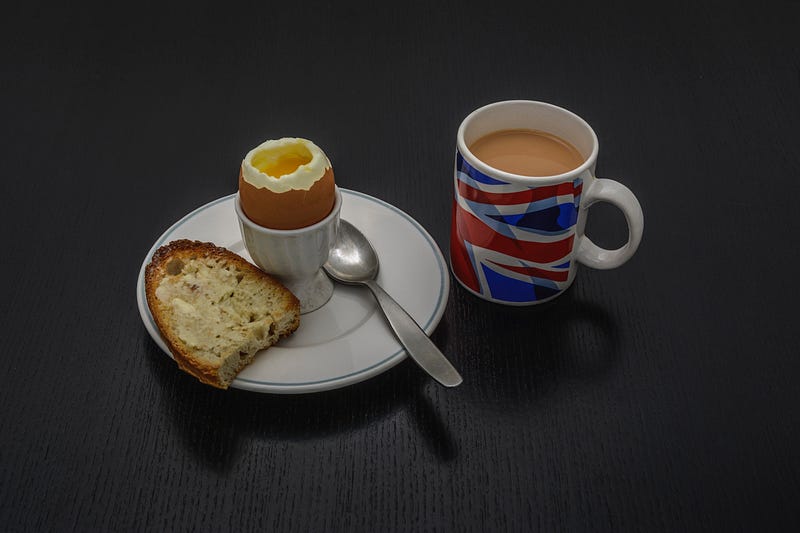
I caved and started drinking tea (with milk!) at every opportunity. I even grew to have a preference — Yorkshire Gold for me, please.
But it’s not just the flavor. I miss the culture, too. Offering people tea when they come to your house is a time-honored British tradition, and one I cherish.
I used to offer tea to any visitors to my American home, but I had to stop after the plumber gave me the weirdest look of my life when I did so.
3. Cadbury’s Chocolate
Not a lot of people know that there’s legislation related to chocolate. I certainly thought it was an urban myth that chocolate in the US was of worse quality than in the U.K. “Please,” I scoffed to my new British friends, “America is the capital for junk food. Why would our chocolate be worse?”
But it’s true, at least according to Business Insider. British chocolate typically contains more fat and cocoa, while American chocolate has more sugar. In Britain, milk chocolate must be at least 25% cocoa solids to be considered milk chocolate, while in the States, that’s not the case.
Hershey’s just does not do it for me, nor does American Cadbury’s which is actually also made by Hershey’s here. British Cadbury’s or nothing.
4. Pubs
It’s not a sports bar. It’s not a cafe. It’s not a restaurant. An English pub defies definition. It’s an experience somewhere between those three things.
My first real English pub experience as an adult was actually my first date with my now-husband. He was planning on taking me to a jazzy cocktail bar, but I showed up wearing sweatpants, a hoody, and some Uggs as I’d fallen prey to Fresher’s Flu. (This is the cold apparently all freshers, or freshmen, get their first semester at University.) So we had a minor change of plans and he took me to the King’s Arms, a pub in Oxford that’s been standing since 1609.
The King’s Arms exemplified the genre: it’s a warren of interlocking rooms. There’s old wood paneling everywhere, golden and shiny from constant touch. The floors are carpeted. The tables are mismatched and a little beat up. And the beer is excellent. There’s no real equivalent here. (Although I thought The Grog in Newburyport came pretty close!)
5. Small Talk About the Weather
I hated it to death when I first arrived. A southerner to my bones, I like nosy, personal small talk from the get-go.
I did not like chattering on incessantly about the weather, which was mostly grey, chilly, and wet. I did not like commenting on the rare appearance of the sun, and I did not like remarking on the wind, or lack of wind.
But the longer I stayed, the more I grew to enjoy it. I realized it’s not just talking about the weather — it’s more like a connection almost every English person shares, a lingua franca you can use to speak to anyone. It’s a linguistic tool to find common ground.
6. IPAs That Aren’t 8% APV
When I moved back home, my new boss took me out to Trillium, a Boston brewery. I ordered an IPA, as I always do. Just two drinks later, I was slightly dizzy and feeling very silly.
What happened?
Well, a 7.2% ABV beer happened. Two, actually. Beer, typically my go-to choice for longer, gentler drinking sessions, is very strong here, much stronger than I was used to. While you can find strong beer in the U.K., the alcohol percentage hovers more around 3–5%. “Session beers” are the norm, encouraging folks to linger over their ale or stout.
Now, every time I go out for a drink, I scan the menu to find the IPA with the lowest ABV. Usually, I have to content myself with something that’s still 5%+ or more. It’s not a huge difficulty, but just one more thing I find myself missing.
I’ve written before about my culture shock when arriving in the UK for the first time, so I wanted to do something in the opposite direction — the things I miss, once I became acclimatized to the British way of doing things.
There were many things I never got used to — such as the word “quid” or the bitingly sarcastic sense of humor — but after living there for six years, I was surprisingly fond of many of the bizarre quirks and habits I thought I’d hate forever. Maybe it’s Stockholm Syndrome, but I can’t wait to stand in a queue again.


