avatarShamiha Said

Free AI web copilot to create summaries, insights and extended knowledge, download it at here

3595

Abstract

erral">@chairulfajar_</a> on <a href="https://unsplash.com?utm_source=medium&amp;utm_medium=referral">Unsplash</a></figcaption></figure><p id="af4a"><b>3. Executive dysfunction</b></p><p id="9268"><a href="https://www.ncbi.nlm.nih.gov/pmc/articles/PMC7071509/">Some research suggests that up to 80% of those with autism suffer from executive function disorder</a>, leading to difficulties in managing time, completing tasks, and making simple tasks — like cleaning your room — very complicated or seemingly impossible.</p><p id="6e6d">Executive function is responsible for an array of daily skills and tasks, which include:</p><p id="bd6c"><i>- Paying attention</i></p><p id="60bf"><i>- Task initiation</i></p><p id="fc0f"><i>- Risk awareness</i></p><p id="9822"><i>- Working memory</i></p><p id="bfd6"><i>- Flexible thinking</i></p><p id="c019"><i>- Adaptation to change</i></p><p id="ef68"><i>- Metacognition</i></p><p id="eac9"><i>- Managing day-to-day task</i></p><p id="8281"><i>- Planning</i></p><p id="9dfd"><i>- Organisation</i></p><p id="489d"><i>- Self-control.</i></p><p id="6b20">As someone with both autism and ADHD, my executive function is temperamental and can be dependent on spoons. ADHD medication can be a helpful tool which allows me to do daily tasks that everyone else has the innate ability to do, but they can leave me in an intense state of autistic burnout.</p><figure id="4f21"><img src="https://cdn-images-1.readmedium.com/v2/resize:fit:800/0*ft0NsIWDh8WVpIIa"><figcaption>Photo by <a href="https://unsplash.com/@edenconstantin0?utm_source=medium&amp;utm_medium=referral">Eden Constantino</a> on <a href="https://unsplash.com?utm_source=medium&amp;utm_medium=referral">Unsplash</a></figcaption></figure><p id="2beb"><b>4. Chronic exhaustion</b></p><p id="f216">When an autistic person admits that they’re tired, they often mean that they have reached the stage of exhaustion. From my own experience, I am rarely tired, but I am frequently exhausted. Simply living in an ableist society is mentally, emotionally and physically draining, and this is enhanced because I am also in chronic pain.</p><p id="01e7">Another reason for chronic exhaustion is that many autistic people and people with ADHD are high-masking, which is where we hide our neurodivergent traits so that we can fit in, be loved and meet the expectations of others. As a late-diagnosed autistic, I had no idea that the reason why I felt so exhausted was that my body and mind were tired from pretending to be someone I wasn’t; my body was exhausted because I was denied my sensory and communication needs and often forced to be in environments that were triggering. It wasn’t until I learnt I was autistic that I realised how damaging masking was.</p><p id="370b">I genuinely believe that one of the reasons why I had brain surgery five years ago, due to increased pressure in the brain, was because of the extensive masking I did from the ages of 16–24. I was constantly pushing myself beyond my limits, whether this was with my family, in my toxic relationship, at school, university or work.</p><p id="1a44">Although masking is a necessary evil, I believe that unmasking and honouring our autistic needs can be beneficial for our health. I have been in the process of unmasking for the last year or so now, and I have never been in such a good place mentally or physically in my life before.</p><figure id="5104"><img src="https://cdn-images-1.readmedium.com/v2/resize:fit:800/0*UNZMzg1VSLU6bfcf"><figcaption>Photo by <a href="https://unsplash.com/@laurachouette?utm_source=medium&amp;utm_medium=re

Options

ferral">Laura Chouette</a> on <a href="https://unsplash.com?utm_source=medium&amp;utm_medium=referral">Unsplash</a></figcaption></figure><p id="68a0"><b>5. Emotional Regulation</b></p><p id="0c05">People with autism and, or ADHD can struggle with regulating their emotions, which can lead to frequent meltdowns, emotional outbursts and, in some cases, complete mental breakdowns. In fact<a href="https://bmcpsychiatry.biomedcentral.com/articles/10.1186/s12888-020-2442-7">, in some research, up to 70% of people with ADHD reported emotional dysregulation, with anger and rage issues being a primary concern.</a></p><p id="845b">As a teenager and in my early twenties, rage and anger were frequent emotions that I felt, and I had no control over them. The smallest of things would anger me, and I would experience a fit of rage, where I would scream so loudly, scaring my friends and family. I could never be a <i>‘little angry’</i>; I would feel nothing or rage, and there was no in-between until I was 25.</p><p id="0fae">As an autistic person, it is not that I feel no empathy; it is that I experience too much empathy, and I can’t separate my own emotions from others. For example, if I saw my little sister in pain with a stomach ache, I would cry my eyes out because she was in pain, and I couldn’t help her.</p><figure id="e854"><img src="https://cdn-images-1.readmedium.com/v2/resize:fit:800/0*S40m1tSLAAFG1AqX"><figcaption>Photo by <a href="https://unsplash.com/@benwhitephotography?utm_source=medium&amp;utm_medium=referral">Ben White</a> on <a href="https://unsplash.com?utm_source=medium&amp;utm_medium=referral">Unsplash</a></figcaption></figure><p id="b575"><b>6. Co-morbidities</b></p><p id="663c">As an autistic person, you are at a higher risk of developing other physical or mental health conditions. I have been diagnosed with thirteen health conditions, and I always wondered why I was so prone to developing so many health conditions from such a young age compared to my siblings or my peers. It was only when I was diagnosed with autism that I learnt that was the root of all of my conditions. As you can imagine, having thirteen health conditions, which can impact my mobility, my ability to complete daily tasks, my pain levels, and my gut health, is entirely debilitating and has disabled me.</p><figure id="1b05"><img src="https://cdn-images-1.readmedium.com/v2/resize:fit:800/0*Y22nh_-KsI1Pdqsu"><figcaption>Photo by <a href="https://unsplash.com/@markusspiske?utm_source=medium&amp;utm_medium=referral">Markus Spiske</a> on <a href="https://unsplash.com?utm_source=medium&amp;utm_medium=referral">Unsplash</a></figcaption></figure><p id="12a1"><b><i>I hope you found this helpful. Is there anything you’d add? Please comment if you found this insightful or enjoyed reading it, as Medium writers are now paid for engagement, including comments, claps, and highlights!</i></b></p><p id="c273"><b><i>If you found my content relatable and insightful, please do all three. I love reading your comments; it keeps me going!</i></b></p><p id="546a"><b><i>I frequently write about the Neurodivergent experience and writing on Medium, so follow me for more content and subscribe to be the first to know about my upcoming book! Thank you for all of your support!</i></b></p><p id="4d6f"><b><i>Follow my socials; I recently started making daily TikTok videos and would love your support! Leave me a comment, and let me know if you came from Medium.</i></b></p><p id="3257"><a href="https://linktr.ee/shamihasaid"><b><i>https://linktr.ee/shamihasaid</i></b></a></p></article></body>

6 Genuine Ways That Autism And ADHD Disable Me

It’s not just a ‘quirky’ personality
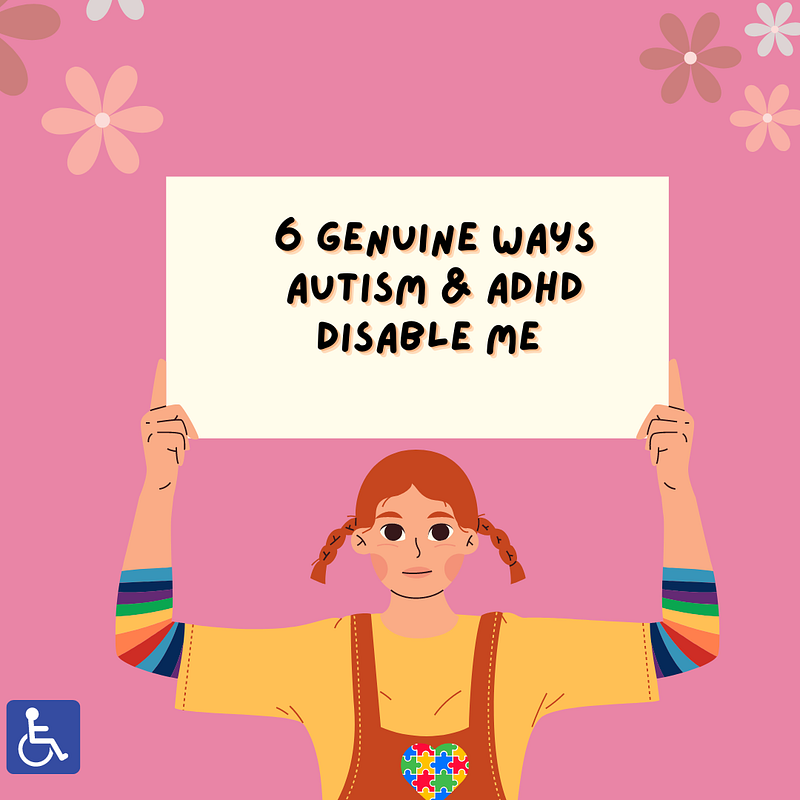
Image created on Canva by Author.

Like many others, I was diagnosed with Autism and ADHD at the age of 27, and the diagnosis allowed me to understand why everyday tasks felt impossible. Although there are plenty of discussions that autism isn’t a disability and is just a neurotype, this is far from the truth. In the UK, Autism and ADHD are both classified as a disability, as it is a long-term condition that affects your day-to-day life.

Autism is a spectrum disorder, and this means that there are people with different levels of support needs, which are currently described as level one to level three, with level one being the lowest amount of support an individual might need daily because they’re autistic. Although my needs are assessed at level one, this doesn’t mean that my autism doesn’t disable me, and my ADHD is another disability that disables me daily.

Here are a few of the ways that ADHD and Autism can be disabling:

1. Social communication

One of the ways that my autism disables me regularly is that I struggle with social communication and the social demands of society. In my home life, I struggle to initiate conversations with family and friends, make small talk, and feel very uncomfortable in large gatherings. I struggle to work in a team, communicate my difficulties, or partake in office chitchat, and I never want to go out for drinks with my team. As a mum, I struggle with the small talk anticipated at school drop-offs/pick-ups, and at family gatherings, I feel like I’m drowning!

Photo by Mimi Thian on Unsplash

2. Sensory issues

The hardest part of being autistic is that it feels like my senses are either overwhelmed or underwhelmed, which can be an irritating, distracting and triggering experience. It is hard to get the balance right, and it can involve a lot of adjustments for me to feel completely comfortable. However, outside of my house, this isn’t always possible. At work, the lights are too bright, it’s too noisy, and the temperature is too cold. If I wanted to go shopping, it was often too crowded, hot, and noisy. If I wanted to go to a restaurant or meet up with friends, again, this would be in a loud setting, which quickly became overstimulating.

Sensory triggers can be disabling for an autistic person because every time you leave the house, your sensory needs aren’t met. I still leave the house, but these sensory triggers cause me chronic debilitating migraines.

Photo by @chairulfajar_ on Unsplash

3. Executive dysfunction

Some research suggests that up to 80% of those with autism suffer from executive function disorder, leading to difficulties in managing time, completing tasks, and making simple tasks — like cleaning your room — very complicated or seemingly impossible.

Executive function is responsible for an array of daily skills and tasks, which include:

- Paying attention

- Task initiation

- Risk awareness

- Working memory

- Flexible thinking

- Adaptation to change

- Metacognition

- Managing day-to-day task

- Planning

- Organisation

- Self-control.

As someone with both autism and ADHD, my executive function is temperamental and can be dependent on spoons. ADHD medication can be a helpful tool which allows me to do daily tasks that everyone else has the innate ability to do, but they can leave me in an intense state of autistic burnout.
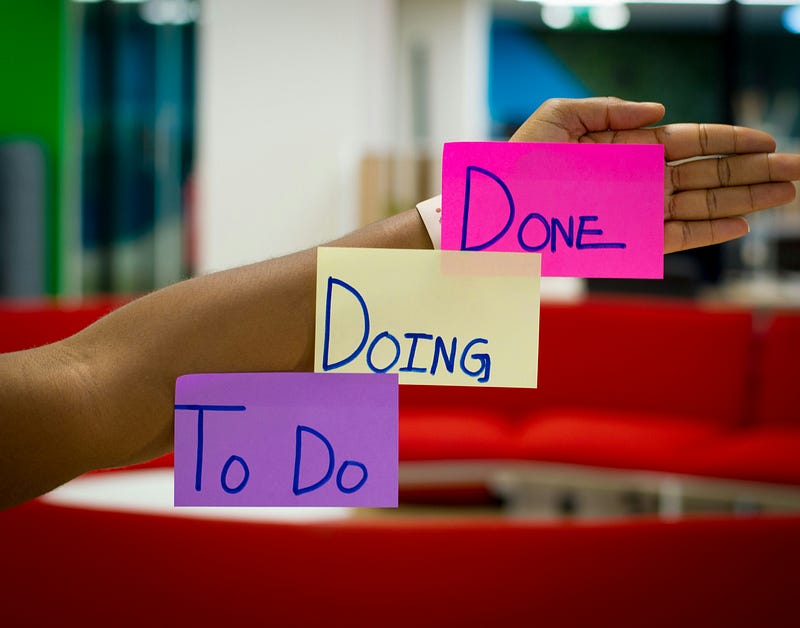
Photo by Eden Constantino on Unsplash

4. Chronic exhaustion

When an autistic person admits that they’re tired, they often mean that they have reached the stage of exhaustion. From my own experience, I am rarely tired, but I am frequently exhausted. Simply living in an ableist society is mentally, emotionally and physically draining, and this is enhanced because I am also in chronic pain.

Another reason for chronic exhaustion is that many autistic people and people with ADHD are high-masking, which is where we hide our neurodivergent traits so that we can fit in, be loved and meet the expectations of others. As a late-diagnosed autistic, I had no idea that the reason why I felt so exhausted was that my body and mind were tired from pretending to be someone I wasn’t; my body was exhausted because I was denied my sensory and communication needs and often forced to be in environments that were triggering. It wasn’t until I learnt I was autistic that I realised how damaging masking was.

I genuinely believe that one of the reasons why I had brain surgery five years ago, due to increased pressure in the brain, was because of the extensive masking I did from the ages of 16–24. I was constantly pushing myself beyond my limits, whether this was with my family, in my toxic relationship, at school, university or work.

Although masking is a necessary evil, I believe that unmasking and honouring our autistic needs can be beneficial for our health. I have been in the process of unmasking for the last year or so now, and I have never been in such a good place mentally or physically in my life before.

Photo by Laura Chouette on Unsplash

5. Emotional Regulation

People with autism and, or ADHD can struggle with regulating their emotions, which can lead to frequent meltdowns, emotional outbursts and, in some cases, complete mental breakdowns. In fact, in some research, up to 70% of people with ADHD reported emotional dysregulation, with anger and rage issues being a primary concern.

As a teenager and in my early twenties, rage and anger were frequent emotions that I felt, and I had no control over them. The smallest of things would anger me, and I would experience a fit of rage, where I would scream so loudly, scaring my friends and family. I could never be a ‘little angry’; I would feel nothing or rage, and there was no in-between until I was 25.

As an autistic person, it is not that I feel no empathy; it is that I experience too much empathy, and I can’t separate my own emotions from others. For example, if I saw my little sister in pain with a stomach ache, I would cry my eyes out because she was in pain, and I couldn’t help her.

Photo by Ben White on Unsplash

6. Co-morbidities

As an autistic person, you are at a higher risk of developing other physical or mental health conditions. I have been diagnosed with thirteen health conditions, and I always wondered why I was so prone to developing so many health conditions from such a young age compared to my siblings or my peers. It was only when I was diagnosed with autism that I learnt that was the root of all of my conditions. As you can imagine, having thirteen health conditions, which can impact my mobility, my ability to complete daily tasks, my pain levels, and my gut health, is entirely debilitating and has disabled me.
Photo by Markus Spiske on Unsplash

I hope you found this helpful. Is there anything you’d add? Please comment if you found this insightful or enjoyed reading it, as Medium writers are now paid for engagement, including comments, claps, and highlights!

If you found my content relatable and insightful, please do all three. I love reading your comments; it keeps me going!

I frequently write about the Neurodivergent experience and writing on Medium, so follow me for more content and subscribe to be the first to know about my upcoming book! Thank you for all of your support!

Follow my socials; I recently started making daily TikTok videos and would love your support! Leave me a comment, and let me know if you came from Medium.

https://linktr.ee/shamihasaid

Autism
Health
Mental Health
Advice
Psychology
Recommended from ReadMedium