avatarNovel Nest

Free AI web copilot to create summaries, insights and extended knowledge, download it at here

4340

Abstract

bias that taints the asymmetrical view about people who get addicted.</p><h2 id="c308">3. One Hundred Years of Solitude by Gabriel Garcia Marquez</h2><figure id="8694"><img src="https://cdn-images-1.readmedium.com/v2/resize:fit:800/1*T3g9Q4m-vs32vnhamZrzuw.png"><figcaption><a href="https://geni.us/4l1gbu">Image: Amazon</a></figcaption></figure><p id="c925">The fate of Macondo.</p><p id="cfa2">This Spanish novel is from 1967.</p><p id="1a7e">It takes us to the fictional rural town of Macondo. The novel examines the 100-year history of this town. We get to know the story through the Buendías family.</p><blockquote id="c82c"><p><b>“There is always something left to love.”</b></p></blockquote><p id="92ed">In this book, there is no single protagonist. The story moves through various plots and subplots, jumps through time, and uses multiple characters.</p><p id="3395">Mocando is isolated from the world. It is rarely visited. And those who do visit it are gypsies.</p><blockquote id="297c"><p><b>“A person does not belong to a place until there is someone dead under the ground.”</b></p></blockquote><p id="0eb9">In his attempt to capture the ups and downs of history, the writer describes the wars, plagues, and executions in the town.</p><p id="4f7e">This novel also has magical realism. With curses and fantasy elements, the story gets a whole new dimension to it.</p><blockquote id="87bd"><p><b>“Children inherit their parents’ madness.”</b></p></blockquote><p id="edc1"><a href="https://geni.us/4l1gbu">This book</a> is fascinating because it traces a town’s evolution. There are good times but then there are issues that arise out of those good times. In short, history repeats itself.</p><div id="69b8" class="link-block"> <a href="https://readmedium.com/the-ultimate-digital-reading-journal-my-first-digital-product-0f33de6e30b1"> <div> <div> <h2>The Ultimate Digital Reading Journal </h2> <div><h3>How I Organize Every Single Book I’ve Read</h3></div> <div><p>medium.com</p></div> </div> <div> <div style="background-image: url(https://miro.readmedium.com/v2/resize:fit:320/1*EHMvRixn023Qbes_Jh1xAA.png)"></div> </div> </div> </a> </div><h2 id="8c45">4. The Master and Margarita by Mikhail Bulgakov</h2><figure id="3fad"><img src="https://cdn-images-1.readmedium.com/v2/resize:fit:800/1*F-Ti6lHOI7WybBBuqm19Hw.jpeg"><figcaption><a href="https://geni.us/V5fJ">Image: Amazon</a></figcaption></figure><p id="229b">A book written in times of censorship.</p><p id="705b">This novel was originally published in a censored form.</p><p id="bbfd">It tells us of the devil who descends upon Stalinistic Russia in the form of Professor Woland. The professor is against the religious beliefs of the people.</p><p id="daaf">He is accompanied by other characters as well.</p><blockquote id="9bcd"><p><b>“What would your good do if evil didn’t exist, and what would the earth look like if all the shadows disappeared?”</b></p></blockquote><p id="b5ad">The central theme of the book is the love affair between the Master and Margarita. This is how Master describes the meeting between him and Margarita:</p><blockquote id="7f04"><p><b>“Love caught us suddenly, leaped at us like a murderer appearing from out of nowhere in an alley, and struck us both down at once. Like lightning, like a Finnish knife!”</b></p></blockquote><p id="8c6a">Many characters and happenings in the novel are allegorical. To me, that seems like an attempt to publish the truth about the Soviet regime without being obvious.</p><p id="089a">Master is a writer. He burns one of his manuscripts. This is something that the author of this novel himself did too in the face of political repression.</p><p id="33c9">When Professor Woland asks the Master about his manuscript and is told about the burning, he says:</p><p id="cd38" type="7">“Manuscripts don’t burn.”</p><p id="528f">The story explores Christian theology, the battle between good and evil, and love.</p><p id="ab5b"><a href="https://geni.us/V5fJ">This novel</a> is densely written and might not be everyone’s cup of tea. But if you are comfortable with philosophy and religion being presented in a symbolic way, you’ll like it.</p><

Options

h2 id="a205">5. Franny and Zooey by J.D. Salinger</h2><figure id="3c2f"><img src="https://cdn-images-1.readmedium.com/v2/resize:fit:800/1*Q_9qdejeijobtgnawp0I8w.png"><figcaption><a href="https://geni.us/WT748i">Image: Amazon</a></figcaption></figure><p id="577d">The magic of sibling relationships.</p><p id="1171">Many are familiar with the pain and discontentment that spiritual and existential questions bring. That is especially true if we dwell too long and too deep on them.</p><p id="944f">‘Franny and Zoey’ has two short stories. These stories are based on the two youngest kids of the Glass family. The Glass family appears continually throughout various works of J. D. Salinger.</p><p id="4c12">Since the stories are philosophical and thought-provoking, there are many quotes that are worth sharing. But since we are doing a short intro, I would really like to share what Franny says:</p><blockquote id="0ba7"><p><b>“I’m just sick of ego, ego, ego. My own and everybody else’s. I’m sick of everybody that wants to get somewhere, do something distinguished and all, be somebody interesting. It’s disgusting — it is, it is. I don’t care what anybody says.”</b></p></blockquote><p id="38b6">Here she is expressing her discontentment with the people at her school to her boyfriend. Franny’s intellect and knowledge take her down a path of spiritual quest.</p><p id="15bf">The second story follows Zooey. Zooey wants to help his sister Franny who is in a downward spiritual spiral. He talks to her in order to ease her.</p><blockquote id="1fbc"><p><b>“Bessie: ‘Why don’t you get married?’</b></p></blockquote><blockquote id="9e9f"><p><b>Zooey: ‘I like riding in trains too much. You never get to sit next to the window anymore when you’re married.’”</b></p></blockquote><p id="5da6">We also get to know how the siblings have been taught about different religions by their elder brothers, Buddy and Saymour.</p><h2 id="4208">6. Another Country by James Baldwin</h2><figure id="f359"><img src="https://cdn-images-1.readmedium.com/v2/resize:fit:800/1*hXHAJ_W8n5phJAgTIwi-TQ.png"><figcaption><a href="https://geni.us/vVmcI">Image: Amazon</a></figcaption></figure><p id="9ff6">Of racism and relationships.</p><p id="d4a8">James Baldwin takes us to the 1950s in New York.</p><p id="e487">The themes discussed in this story revolve around racism, love, infidelity, and homosexuality.</p><blockquote id="69f0"><p><b>“People don’t have any mercy. They tear you limb from limb, in the name of love.”</b></p></blockquote><p id="24de">Rufus is an African American who has been living out on the streets. He reflects back on his childhood, and his relationship with his father and sister.</p><p id="2e67">We learn that a few months earlier, Rufus was in a relationship with Leona, a white woman. As they started living together, Rufus became violent. As a result, Leona ended up in a mental hospital.</p><p id="4230">Regret pushes Rufus to suicide.</p><blockquote id="0b36"><p><b>“We all commit our crimes. The thing is to not lie about them — to try to understand what you have done, why you have done it. That way, you can begin to forgive yourself.”</b></p></blockquote><p id="9689">The story continues after Rufus’s death as his friends and acquaintances try to make sense of it. This includes his sister Ida, his friend Vivaldo, and a couple named Richard and Cass.</p><p id="bb04">The characters pursue various relationships with each other. This includes dating and cheating both in homosexual and heterosexual contexts.</p><p id="7f40">I think that is what makes <a href="https://geni.us/vVmcI">this novel</a>controversial.</p><p id="a709">I hope you have found this article useful. If you did, it would be awesome if you gave me a clap or left a response!</p><p id="7f8e">If you enjoyed this article and want to support Novel Nest, <a href="https://medium.com/@NovelNestBooks/subscribe">click this link</a> to get notified whenever I publish something new.</p><p id="8477">If you enjoyed these book recommendations, check out the rest of my book lists on my blog- <a href="https://www.thenovelnest.com/blog">https://www.thenovelnest.com/blog</a></p><p id="8454"><i>Affiliate Disclaimer: This post features Amazon affiliate links, which means I may earn a small commission if you make a purchase through these links.</i></p></article></body>

6 Books Recommended by Pedro Pascal I’m Kicking Myself for Not Reading Sooner

Books from Spain, Russia, and the US

Image: Wiki Commons

Life is tough!

Reading fiction makes it better. We can pick up a book and get lost in it for a while, forgetting about all the troubles that surround us.

Today’s books are recommendations by Pedro Pascal, an actor who is known for his roles in Game of Thrones and Narcos.

All but one are from the fiction genre. They also come from diverse backgrounds. Pick them up for a unique experience.

Let’s get the ball rolling!

1. Crime and Punishment by Fyodor Dostoevsky
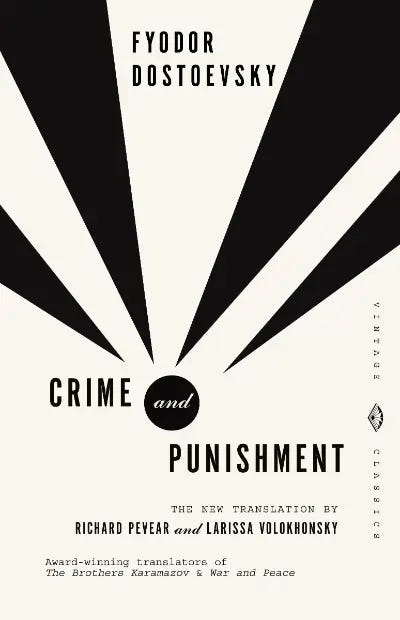
Image: Amazon

Does the means justify the ends?

Originally in Russian, this novel tells us the story of Rodion Raskolnikov.

Rodion Raskolnikov is an ex-law student in Saint Petersburg. He is poor with little means. But he thinks very highly of himself due to his intelligence and handsomeness.

“We sometimes encounter people, even perfect strangers, who begin to interest us at first sight, somehow suddenly, all at once, before a word has been spoken.”

The novel follows his conflicting thoughts about morality. Fed up with everything, he decides to murder a pawnbroker, named Alyona Ivanovna.

“A hundred suspicions don’t make a proof.”

The reasoning that Raskolnikov gives himself is that with her money, he will go on to do great things.

As you know, such a reasoning is flawed. However, Raskolnikov follows through with his plan. After he murders Ivanovna, her sister happens upon the scene. As a result, he kills her too.

“The man who has a conscience suffers whilst acknowledging his sin. That is his punishment.”

In the upcoming days see him racked with guilt and clashing emotions. He becomes nervous that he will be caught by the police.

The story of this novel implores us to ask difficult questions.

2. The Urge: Our History of Addiction by Carl Erik Fisher
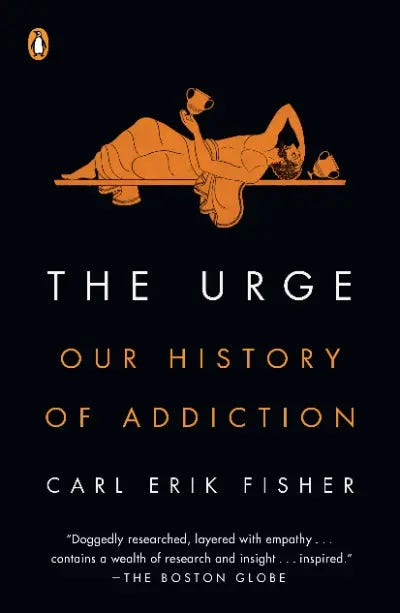
Image: Amazon

Drugs, addiction, and rehab…

Carl Erik Fisher is one of those authors who are not afraid of sharing their intimate experiences to get the point across.

Along with his personal experience of addiction and rehab, Fisher takes us on a tour of the history of addiction. He himself is an addiction physician.

“There is a recurrent and selective amnesia that the greatest drug harms — including addiction — are almost always caused by legal products: morphine and cocaine in the nineteenth century, stimulants and sedatives in the mid-twentieth century, opioids more recently, and, throughout and always, alcohol and tobacco.”

Based on his experience, both as a physician and patient, he focuses on the current approaches and treatments for addiction including AA and other outpatient programs.

His criticism brings to light the deeply unsettling question of why we are unable to deal with addiction as a society.

Are pharma companies and doctors responsible for addiction cases? The author seems to think so.

“I wanted to be honest and to live life without the looming fear of having to hide something.”

He also touches upon the role of law enforcement and politicians, as well as the racial bias that taints the asymmetrical view about people who get addicted.

3. One Hundred Years of Solitude by Gabriel Garcia Marquez
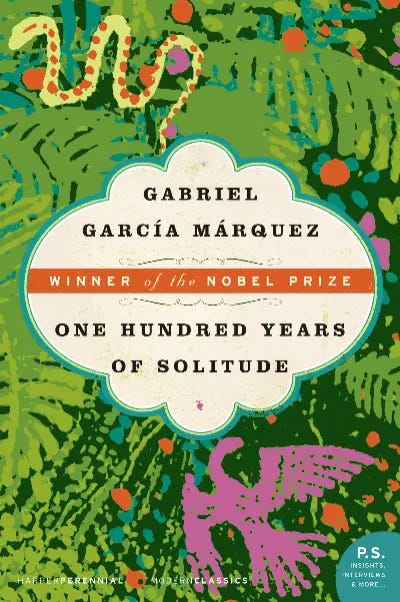
Image: Amazon

The fate of Macondo.

This Spanish novel is from 1967.

It takes us to the fictional rural town of Macondo. The novel examines the 100-year history of this town. We get to know the story through the Buendías family.

“There is always something left to love.”

In this book, there is no single protagonist. The story moves through various plots and subplots, jumps through time, and uses multiple characters.

Mocando is isolated from the world. It is rarely visited. And those who do visit it are gypsies.

“A person does not belong to a place until there is someone dead under the ground.”

In his attempt to capture the ups and downs of history, the writer describes the wars, plagues, and executions in the town.

This novel also has magical realism. With curses and fantasy elements, the story gets a whole new dimension to it.

“Children inherit their parents’ madness.”

This book is fascinating because it traces a town’s evolution. There are good times but then there are issues that arise out of those good times. In short, history repeats itself.

4. The Master and Margarita by Mikhail Bulgakov
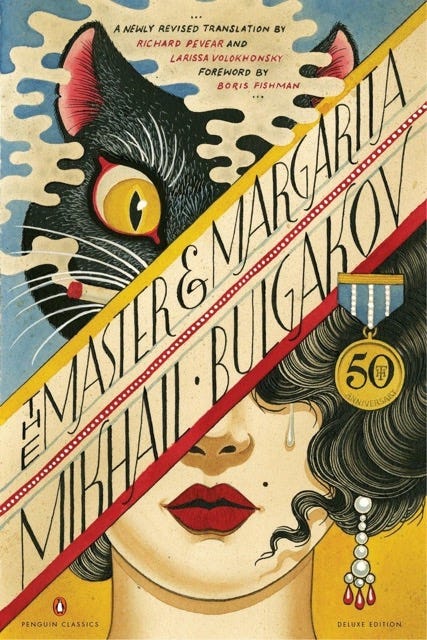
Image: Amazon

A book written in times of censorship.

This novel was originally published in a censored form.

It tells us of the devil who descends upon Stalinistic Russia in the form of Professor Woland. The professor is against the religious beliefs of the people.

He is accompanied by other characters as well.

“What would your good do if evil didn’t exist, and what would the earth look like if all the shadows disappeared?”

The central theme of the book is the love affair between the Master and Margarita. This is how Master describes the meeting between him and Margarita:

“Love caught us suddenly, leaped at us like a murderer appearing from out of nowhere in an alley, and struck us both down at once. Like lightning, like a Finnish knife!”

Many characters and happenings in the novel are allegorical. To me, that seems like an attempt to publish the truth about the Soviet regime without being obvious.

Master is a writer. He burns one of his manuscripts. This is something that the author of this novel himself did too in the face of political repression.

When Professor Woland asks the Master about his manuscript and is told about the burning, he says:

“Manuscripts don’t burn.”

The story explores Christian theology, the battle between good and evil, and love.

This novel is densely written and might not be everyone’s cup of tea. But if you are comfortable with philosophy and religion being presented in a symbolic way, you’ll like it.

5. Franny and Zooey by J.D. Salinger
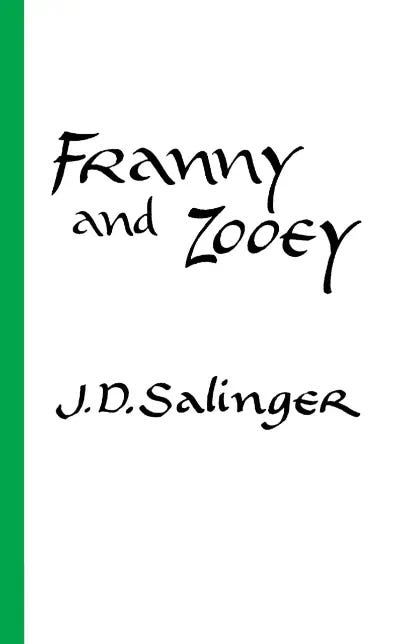
Image: Amazon

The magic of sibling relationships.

Many are familiar with the pain and discontentment that spiritual and existential questions bring. That is especially true if we dwell too long and too deep on them.

‘Franny and Zoey’ has two short stories. These stories are based on the two youngest kids of the Glass family. The Glass family appears continually throughout various works of J. D. Salinger.

Since the stories are philosophical and thought-provoking, there are many quotes that are worth sharing. But since we are doing a short intro, I would really like to share what Franny says:

“I’m just sick of ego, ego, ego. My own and everybody else’s. I’m sick of everybody that wants to get somewhere, do something distinguished and all, be somebody interesting. It’s disgusting — it is, it is. I don’t care what anybody says.”

Here she is expressing her discontentment with the people at her school to her boyfriend. Franny’s intellect and knowledge take her down a path of spiritual quest.

The second story follows Zooey. Zooey wants to help his sister Franny who is in a downward spiritual spiral. He talks to her in order to ease her.

“Bessie: ‘Why don’t you get married?’

Zooey: ‘I like riding in trains too much. You never get to sit next to the window anymore when you’re married.’”

We also get to know how the siblings have been taught about different religions by their elder brothers, Buddy and Saymour.

6. Another Country by James Baldwin
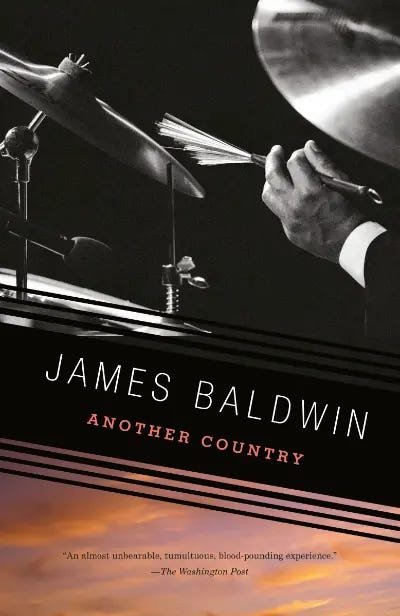
Image: Amazon

Of racism and relationships.

James Baldwin takes us to the 1950s in New York.

The themes discussed in this story revolve around racism, love, infidelity, and homosexuality.

“People don’t have any mercy. They tear you limb from limb, in the name of love.”

Rufus is an African American who has been living out on the streets. He reflects back on his childhood, and his relationship with his father and sister.

We learn that a few months earlier, Rufus was in a relationship with Leona, a white woman. As they started living together, Rufus became violent. As a result, Leona ended up in a mental hospital.

Regret pushes Rufus to suicide.

“We all commit our crimes. The thing is to not lie about them — to try to understand what you have done, why you have done it. That way, you can begin to forgive yourself.”

The story continues after Rufus’s death as his friends and acquaintances try to make sense of it. This includes his sister Ida, his friend Vivaldo, and a couple named Richard and Cass.

The characters pursue various relationships with each other. This includes dating and cheating both in homosexual and heterosexual contexts.

I think that is what makes this novelcontroversial.

I hope you have found this article useful. If you did, it would be awesome if you gave me a clap or left a response!

If you enjoyed this article and want to support Novel Nest, click this link to get notified whenever I publish something new.

If you enjoyed these book recommendations, check out the rest of my book lists on my blog- https://www.thenovelnest.com/blog

Affiliate Disclaimer: This post features Amazon affiliate links, which means I may earn a small commission if you make a purchase through these links.

Books
Reading
Book Review
Book Recommendations
Novel
Recommended from ReadMedium