
6 Awful Racist Vintage Ads That Would Never Fly Today
It’s unbelievable how such horrible ads even existed.
Ads have been around since the 1700s, and thankfully we have progressed a long way since then.
The earlier ads were made and published without any rules and regulations, and this is why in history we had seen some of the most horrible advertisements floating around.
All kinds of ads were made in those days; however, the worst and most offensive were those which targeted a racist ideology.
The ads listed below reinforces how far we have come —truly. Ready for the discomfort? Let’s dig in:
1. Pears Soap The White Man’s Burden
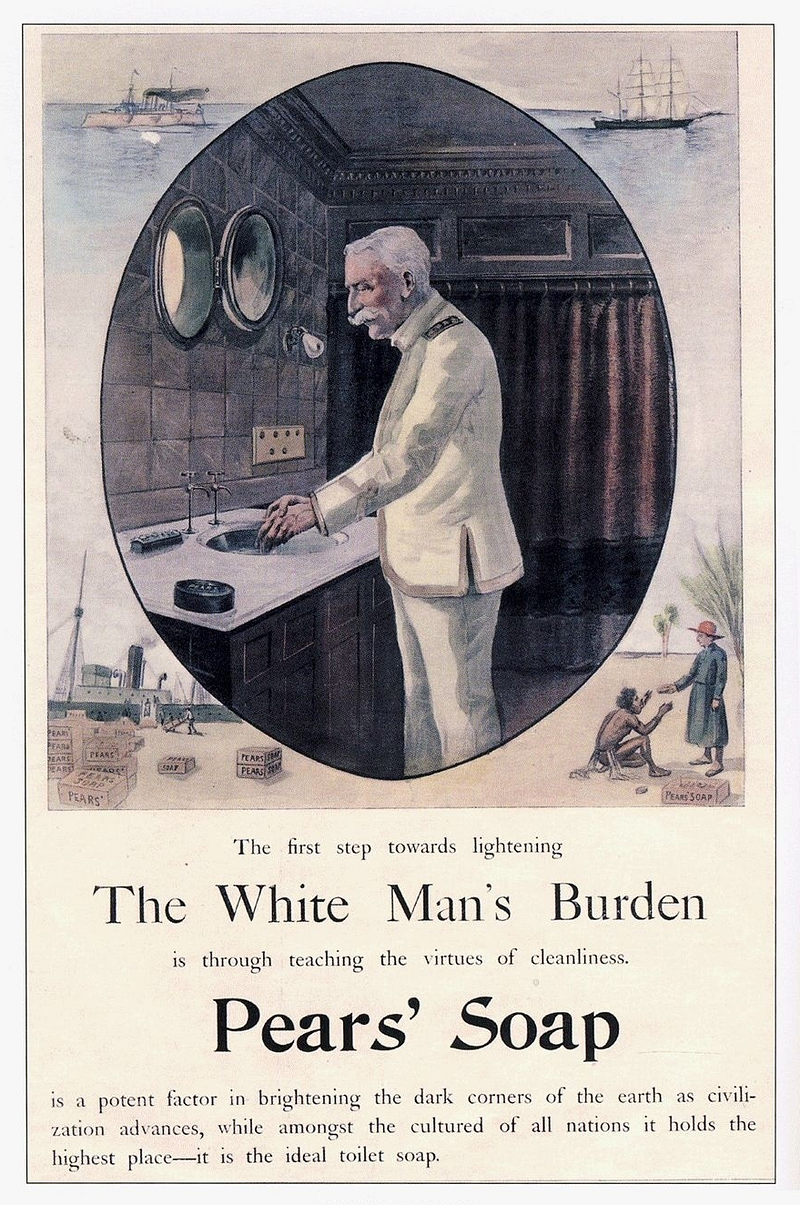
The Pears’ Soap advertisement from the 1890s instructed white people to promote cleanliness among other races.
Come on now, the mentality of the person who made this Ad is pitiful.
The way one has decided to promote the soap is outright racist. Essentially, one is trying to tell here that other races are dirty. How? The other races own a bit darker in complexion — awful mentality.
Anyway, if this ad was ever used in the 20th century, the company would certainly go bankrupt in a week — but actually nope, certainly within seconds.
2. Racist Magic Washer — Target Them All
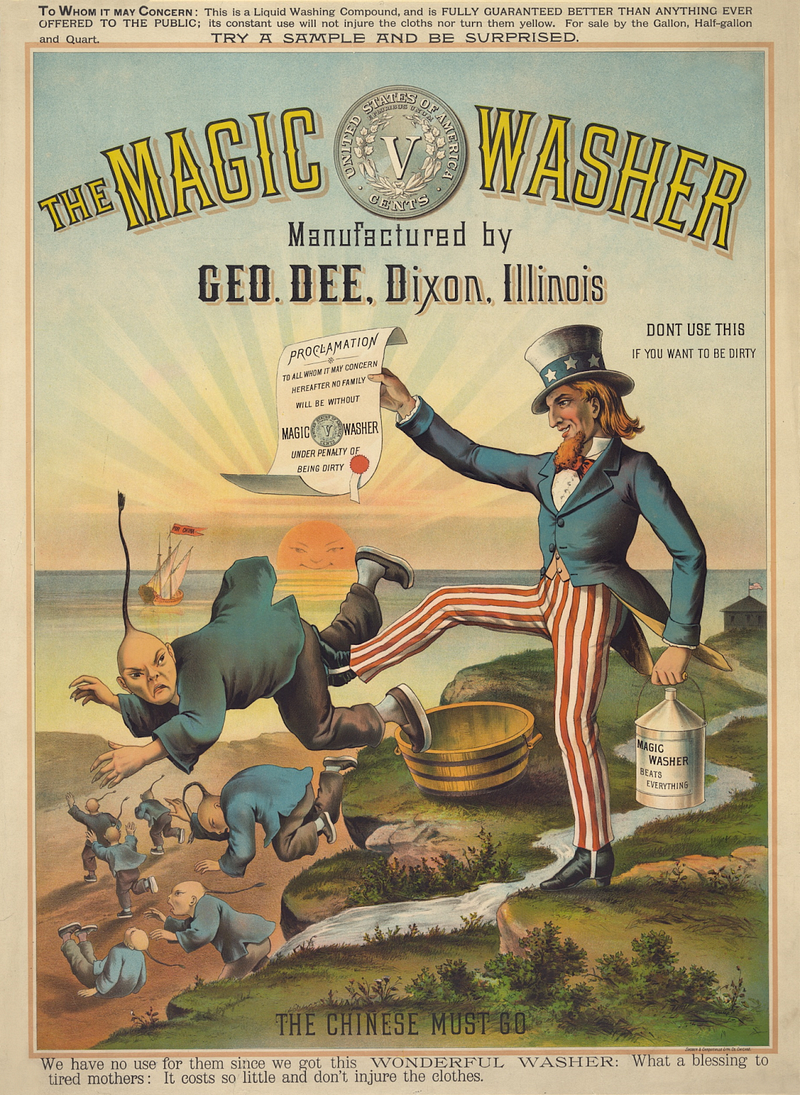
Why is Uncle Sam kicking a Chinese man off the cliff while holding a bottle of Magic Washer?
This ad clearly shows that it was not only black people who had to face racism; anyone who was not white had to face the same amount of hatred.
This cartoon was made to show two different sides; one was the Chinese Exclusion Act of 1882, which prohibited all Chinese laborers for ten years, and the only Chinese people that were allowed to remain in the country were people with better jobs.
Now let’s discuss the other side of the picture — The Magic Washer. It was promoted in such a way because most of the laundries in those days were run by Chinese people.
3. Fairy Soap — Really?
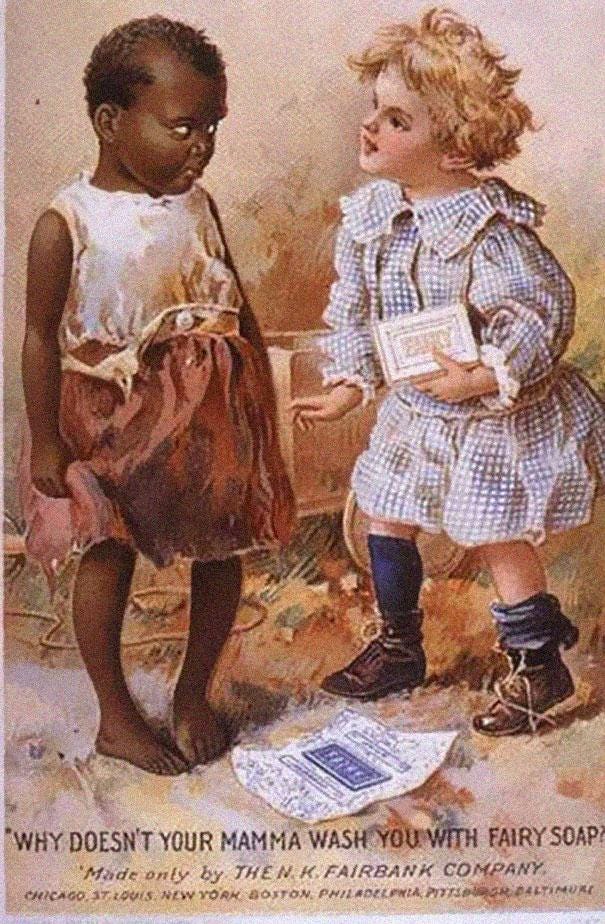
The picture above is about a soap that would apparently make you fairer, The Fairy Soap.
You can see a white kid properly dressed with long socks & leather shoes; while on the other hand, there is a barefooted black kid clad in just an untidy frock. Outright racist character depiction.
The cherry on this racist cake is the line written below which I can’t dare to rewrite. One doesn’t even have to zoom in to get what people tried conveying.
4. Chlorinol Soda Bleaching
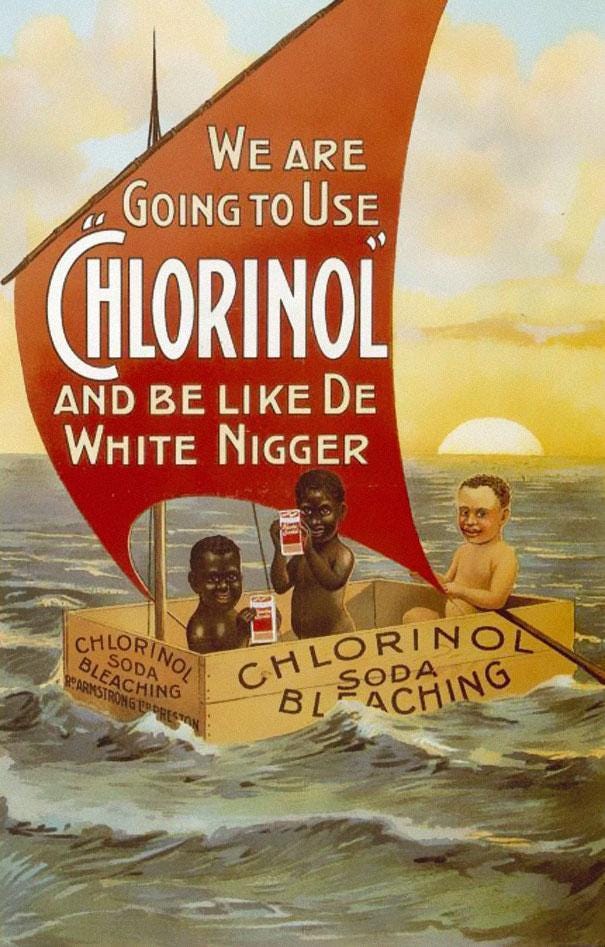
The sad part of this advertising is that even in today’s world, we see ads like these but in a much milder way, even when there is so much consciousness in the society.
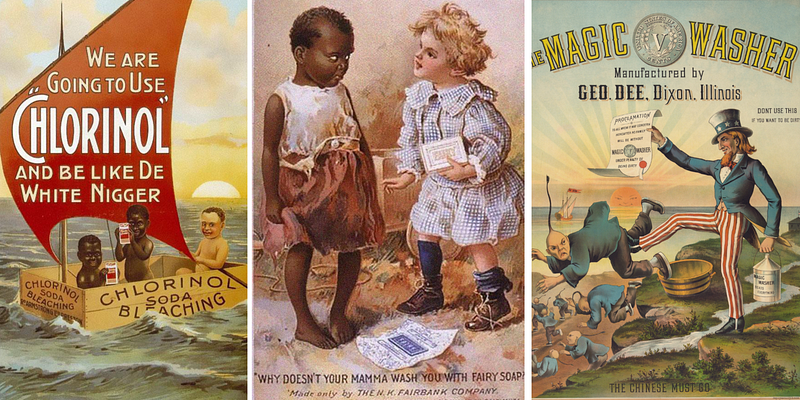
Anyway, moving back to the topic here, in the image above, two black kids are holding Chlorinol Soda Bleach, and on the right is a black kid who has turned fairer after using the Chlorinol Soda bleach.
The heart-breaking aspect of the ad lies in the words used. What were they trying to prove here that people with a darker complexion aren’t beautiful?
I mean, don’t you know about Beyonce or Tyra Banks or countless other amazing-looking people? Leave the façade. We all are beautiful — it lies within.
5. Jell-O America’s Most Famous Jelly
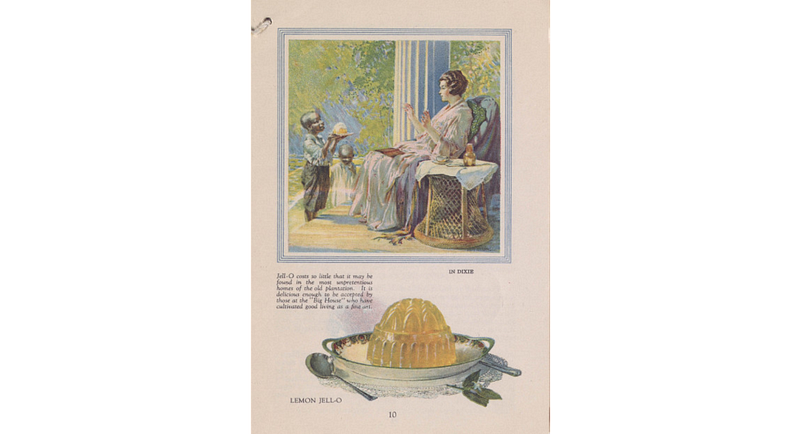
Let’s talk about Jelly by Jell-O which is being served to a white by a black boy in 1922.
So who doesn’t know about Jell-O? It is perhaps the most famous brand of jelly in the world; however, this ad of theirs would have made anyone think twice before they purchase it if it was posted in this day and age.
In the picture above, you can clearly see two black kids serving a white lady the famous jelly, a clear depiction of racism, child labor and what not?
6. Rastus, The Chef From Cream Of Wheat
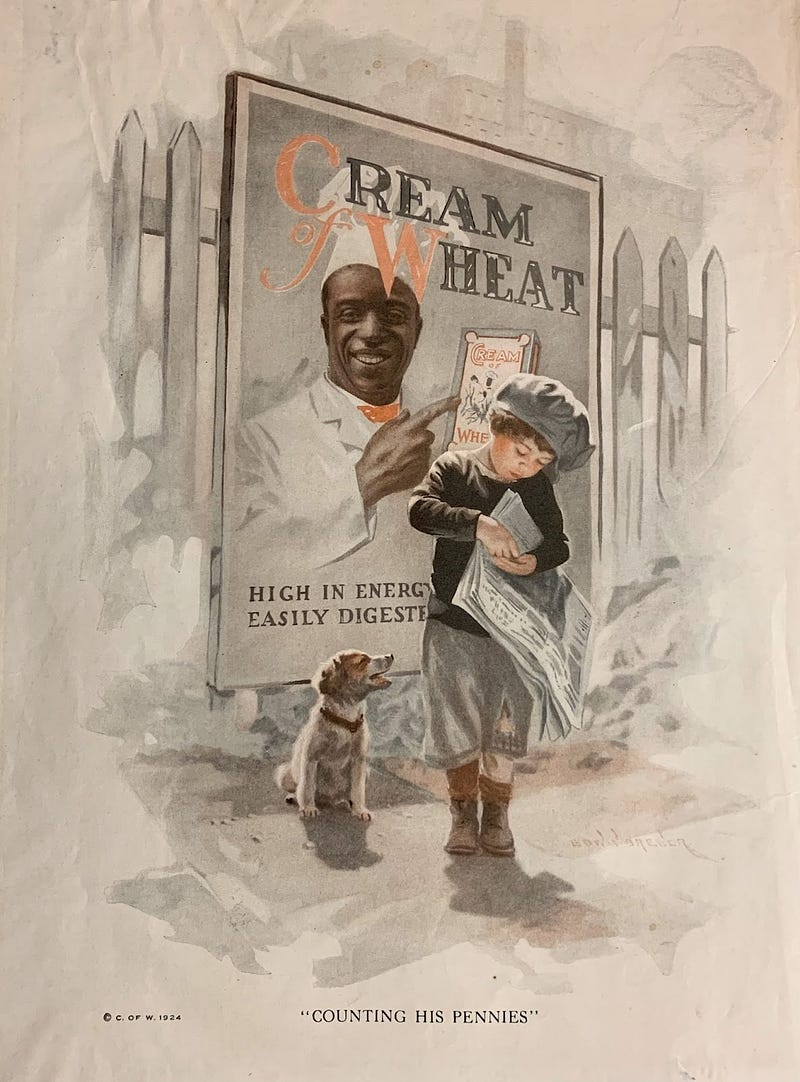
Rastus is a name given to the guy who was the brand’s face for more than 100 years.
The name Rastus is a derogatory term associated with African Americans, and it is one of the most offensive names out there.
Rastus is a pejorative term traditionally associated with African Americans in the United States. It is considered offensive.
Final Words

Advertisement did progress a lot in the latter part of the 20th century, and thankfully the change was for good.
However, we still see ads that literally weigh beauty on an awful, senseless and racist scale. I sometimes ponder will we ever get over this soon — but sadly my thoughts scare me.
More from the author:


