
TECHNOLOGY|MONEY|FUTURE
6 Advantages of Using the Internet of Things and Artificial Intelligence in Monetary Transactions
The opportunities to make the use of money efficient through IoT and AI
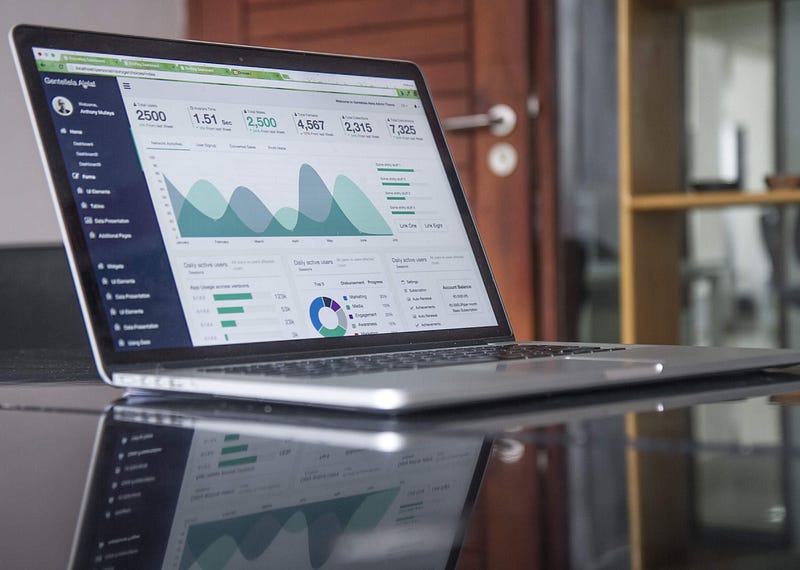
The monetary world and IoT and AI
Money has the value of time.
If monetary transactions are not made in the timeframe that they are required, heavy losses will occur to those transacting them.
Artificial Intelligence (AI) and the Internet of Things (IoT) together create a powerful visualization effect of the exchange of data and help in making money management efficient.
Monetary transactions are useful in all dimensions of life, concerning individuals and corporate organizations.
Where do we use monetary transactions?
The usual activities where we make the maximum use of monetary transactions are for the stock market transactions in purchase and sale of shares, banking, making investments in mutual funds, capital budgeting in organizations, healthcare for hospitalization and private clinic operations, purchase of equipment, private equity, education, spending in clubs, commercial and social activities transactions.
IoT and AI can add value to our lives if we use them wisely and efficiently or destroy our lives if they are not done in a diligent manner.
With the advent of IoT and AI, the world has benefitted with efficiency in real-time payments. Gone are the days where we had to wait for our payments for months and years. Exporters kept hanging around for money to be transferred in time. Monetary transactions in the stock market used to take very long and money would be credited after months.
Let us see what IoT and AI have given us as gifts in the monetary world?
Internet of Things (IoT) and Artificial Intelligence (AI) are popular buzz words in the business scenarios for all commercial dealings. In recent years their value has increased a lot in our lives as we have become totally dependent on them for a large number of activities.
Alexa, Siri, and Google Assistant on our phones are some examples of the latest use of AI. However, AI would not have seen the light of the day had the Internet not come into being. It is based on the internet. Therefore they go hand in hand and work together.
Monetary transactions are much faster in today’s Iot and AI world. Banks have the support of digital information. At the touch of the button, an individual can find out his/her balance through mobile/net banking, whereas earlier he had to go physically to the bank and the employees of the bank spent a lot of time finding out the details and giving it to him.
A lot of time has been saved in business transactions. Several transactions are taking place nationally and internationally and they are all required to be done quickly and efficiently.
The Six major advantages of IoT and AI in monetary transactions
There are national and international transactions and the flow of money is regulated through the monetary policy and the movement of money through banks.
During Covid-19 and thereafter the monetary world has become completely reliant on IoT and AI for customer services. Six advantages are discussed in the following paragraphs.
#1.Automated Messaging system: IoT and AI provide automated messaging systems on mobile phones and computers through emails. Information to investors is immediately sent if a transaction takes place. It also updates them with their latest balances and the date and time of the last transactions.
A visit to a bank for this kind of information is now quite rare. Earlier banks were full of people now they are empty. Not only banks but insurance companies, mutual funds, stock markets send automated messages all arriving through the interactions of IoT and AI anywhere in the world.
#2.Predictive analysis of monetary data: In the monetary world where there are company monthly and annual reports, banks, export-import transactions, and trades. The data is usually very large and IoT and AI process, analyze and predict the future with speed.
#3. Unique Password and Security. IoT and AI bring about security in financial data. Every account is given a protective password. As soon as a wrong password is entered an alert is sent to the right account holder immediately to notify and ask whether the account holder has forgotten the password or someone is misusing the account.
#4. Analysis of customer preferences: IoT and AI, can predict customer preferences for spending in the use of products and services. Each customer's spending habits can be predetermined. It even determines through judgment about the preference of purchases in the near future.
Voice-based commands are easily answered through the technology of AI by using IoT to provide information about any type of transaction. It also helps the customer to analyze his data and take decisions through trends and patterns offered to him to make a choice through the discovery of information provided.
#5. Stock Market Data Analysis: AI helps in providing information on products and services that are being developed and are currently available in the stock market according to the requirements of the customers. Therefore, it saves time and efficiently predicts the success of new products in the market.
The data of investors has been converted from the physical form into electronic mode. When a trade takes place in the stock market, changes in company records are very quick. In fact, they are almost immediate. Earlier it took a long time to make relevant changes in the company records. There used to be human errors also.
Errors were usually of the kind where wrong names were entered and physically new share certificates had to be prepared. The IoT and AI have completely changed the system. Through DEMAT accounts all trades are electronic and there is no physical form of shares.
The trades take only minutes and within a week settlement takes place and also old names are deleted and new ones are added quickly.
A monthly statement is sent to all the investors showing the new position Thus trade and settlement of a very high volume take place with accelerated speed.
#6. Payment Gateways: apart from net banking so many payment gateways have started operating in the financial world. To name some of them, Pay Pal, Google Pay, Amazon Pay, Paytm, Instamojo, Cashfree EBS, CCAvenue, Atom Paynetz Citrus are operating and making payments simple.
The takeaways
- Reducing processing time for data: Since banks are a very big part of the monetary world and investments are made in billions of rupees and other foreign currencies this reduces the time in processing data and makes the operations efficient.
- Detection of errors: IoT and AI can proactively detect the chances of fraud and help to protect data by avoiding frauds through unique passwords.
- Processing data without human intervention: AI and IoT do not require human intervention to process data to forecast the requirement of different types of monetary services and to understand human psychology.
- New payment services: During and after the pandemic many payment gateways have started operating. People do not physically transact with cash. They have improved the financial transactions with the ease and speed of working in the operations.
- Future in the banking industry: The future of IoT and AI in the banking industry is immense. It will facilitate our lives and accelerate our transactions and improve our ways of doing business.
To conclude:
The future of IoT and AI in the money transactions in a Volatile, Uncertain, Complex, and Ambiguous“. (VUCA)the world is all-encompassing.
“Gartner forecasts that 14.2 billion connected things will be in use in 2019 and that the total will reach 25 billion by 2021, producing an immense volume of data.”
This itself shows the tremendous growth of these technologies in the near future and are set to impact most transactions, especially monetary transactions leading to a change in the industrial environment as transactions will become automated creating both intelligent as well as efficient processes and practices in the financial world.
©Dr. Preeti Singh, 2021.


