
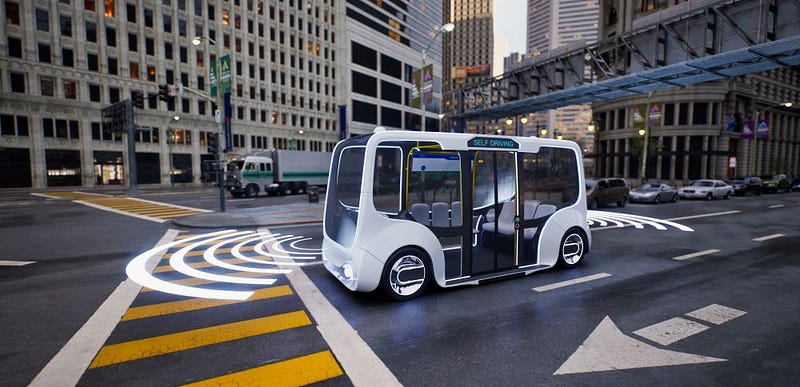
AI-Powered Autonomous Vehicles: The Road Ahead
Self-driving cars were once a far-fetched fantasy confined to the realm of science fiction. Yet today, artificial intelligence (AI) is steering autonomous vehicles closer to mainstream adoption. Major players like Tesla and Waymo are racing down the highway of innovation, fueled by AI and machine learning. As investors pump billions into the industry, autonomous driving promises to redefine our relationship with vehicles.
But how far along is this technology, truly? What possibilities does it unlock for the future of transportation? And what obstacles litter its path? This article explores what the road ahead looks like for AI behind the wheel.
The State of Play: AI Drivers Edging Towards Graduation
Autonomous driving encompasses different levels of automation, ranging from basic assistance features to entirely self-driven vehicles requiring no human intervention. The industry employs a classification system developed by SAE International, which defines six levels of driving automation from 0 (no automation) to 5 (full automation).
Most vehicles on the road today feature Level 1 and 2 capabilities, with AI stepping in for limited steering and acceleration control alongside human drivers. But several companies are testing more advanced Level 4 self-driving prototypes focused on safety and reliability.
For example, Waymo has racked up over 20 million miles of public road testing across various geographies without a single at-fault incident. Its autonomous ride-hailing service in Phoenix serves thousands of customers. GM-backed Cruise received a permit last year to charge for robotaxi rides in San Francisco and has given fully driverless demonstrations. Meanwhile, Tesla continues adding features to its Level 2 Autopilot driver assistance platform while working towards full autonomy.
These achievements indicate AI and autonomous driving technology is crossing key milestones, though barriers remain before Level 5 vehicles can ferry us around while we nap.
Paving the Way: AI & Data Fuelling Self-Driving Cars
What enables autonomous cars to perceive and navigate their surroundings? Artificial intelligence, specifically deep learning. Self-driving vehicles are powered by AI algorithms that crunch vast amounts of visual data from cameras and sensors. The more miles they drive, the more adept their neural networks become at recognizing traffic lights, signs, pedestrians and predicting behaviors.
For example, Waymo’s vehicles have logged over 20 billion miles in simulation to supplement real-world testing. Its machine learning models identify objects, assess distance, and make driving decisions in real-time. This capacity to interpret complex environments and react appropriately pushes autonomous technology forward. Companies are also tapping AI for better mapping and route planning by analyzing traffic patterns.
Additionally, 5G connectivity promises to accelerate autonomous driving by enabling quicker data transmission between vehicles and infrastructure. As networks advance, experts predict entire transportation ecosystems seamlessly linked through data sharing.
The Roadblocks: Hurdles in the Path of Autonomous Driving
Despite progress, skepticism persists around self-driving vehicles with AI lacking the adaptability of human drivers. Most experts contend autonomous technology remains inadequate for unpredictable conditions like severe weather or complex urban areas. Edge cases where AI fails and risks lives rightfully raise alarms.
While accidents directly caused by autonomous vehicles have been few and far between, they attract immense scrutiny when they occur. Uber disabled its self-driving fleet after one of its vehicles fatally struck a pedestrian in 2018. Tesla too has faced backlash for enabling its Autopilot system on roads it may not be capable of handling safely. Critics urge caution against premature deployment before technology proves reliable.
Further, autonomous driving must navigate complex policy issues as regulations evolve. Governments grapple with liability laws, licensing protocols, insurance frameworks and more. The lack of standardized rules threatens to hamper scaling. Infrastructure poses another dilemma — cities must retrofit roads with connectivity, traffic lights, and signage compatible with self-driving vehicles.
Public skepticism adds to the red tape. Surveys show most consumers still hesitate trusting autonomous cars, especially fully driverless ones. Yet early riders in Waymo’s robotaxis praise the experience. Gradually exposing society to AI advancements can shape acceptance.
The Road Ahead: AI & Autonomous Driving’s Next Frontiers
While challenges remain, autonomous driving promises transformative change once adopted at scale. Safer roads may follow reduced accidents due to inevitable human errors. Traffic optimization through better route coordination can cut congestion and emissions. Further economic benefits arise from improved fuel efficiency and productivity gains with hands-free driving.
Additionally, self-driving technology offers increased mobility for the elderly and people with disabilities unable to operate vehicles themselves. It also promises to revolutionize sectors like logistics by enabling around-the-clock delivery with autonomous trucks.
As AI algorithms grow more refined and 5G networks expand, the path ahead comes into focus. Smart infrastructure and traffic management systems will likely emerge, where vehicles constantly exchange data with their environment for optimization. Shared mobility models may gain traction through autonomous ride-hailing fleets and reduced private car ownership.
Ultimately, autonomous driving seems destined to uproot transportation. But it requires continued coordination between policymakers, technology companies, infrastructure providers and public interest groups. AI capabilities must align with ethical priorities focused on safety and accessibility. It is a winding road ahead — how soon we arrive at full autonomy depends on how judiciously we navigate it.