
The Devastating Realization That Your Personality May Actually Be a Trauma Response
The ridiculousness of how these thoughts drive our mental bus.
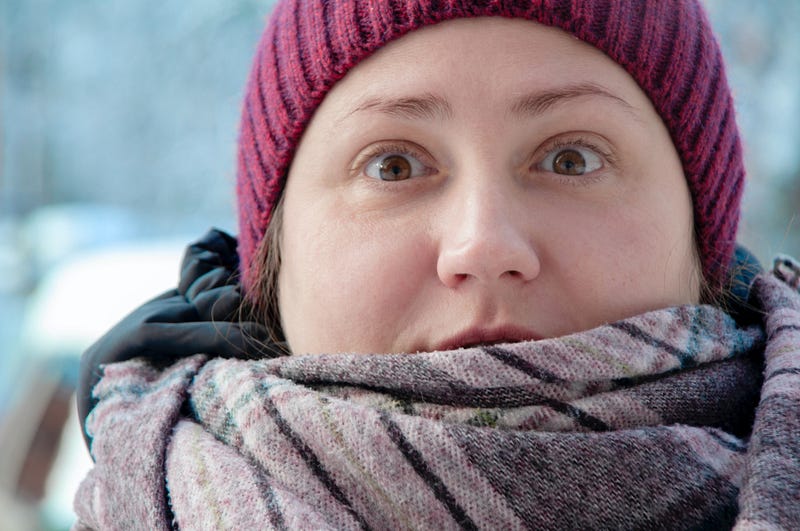
“I’m insecure.”
“I love really hard.”
“I’m a perfectionist.”
“I have an addictive personality.”
“I’m always anxious.”
Many of the things we say about ourselves are not descriptions of who we are inherently, but of the coping mechanisms we adopted to survive childhood.
Maybe the self-proclaimed people-pleaser grew up with dysfunctional parents who threw adult temper tantrums whenever their children didn’t meet their oft-unexpressed wants and needs.
Perhaps “I’m a neat freak” is code for “I grew up in a turbulent home where I felt powerless over my world, so organizing and cleaning became a way to 1) dissociate from my overwhelming and intolerable reality, and 2) provide some semblance of control in my otherwise chaotic existence.”
It seems a bit odd that we incorporate our childhood hurt and assign it to our personality. If you had a bleeding wound, you wouldn’t say, “This is just who I am — I’m a bloody person.” No. You’d get a damn bandaid.
What Is Trauma?
First and foremost, we have to get clear on what the word trauma means. Most people think that word only applies to people who watched their whole family get murdered with a rusty screwdriver when they were six.
False.
Trauma takes many forms but can generally be characterized by:
- Habitually unmet physical or emotional needs
- Mental fragmentation of an unbearable reality
- Experiences that overwhelm our ability to cope
- Chronic disruption of connectedness from self and others
- Fight/Flight/Freeze/Fawn response that is stuck ON or stuck OFF
- Interference with our ability to offer and receive love and nourishment
- Breach of protection from overwhelming sensation to an overwhelming sense of helplessness
There is a lot to be said of trauma, but this is it with broad brushstrokes.
Trauma Response in Mice
Isabelle Mansuy from the Brain Research Institute at the University of Zurich has done amazing research on the transgenerational, behavioral, and metabolic effects of early-life stress in mice.
Mouse pups who experienced maternal separation and unpredictable stress for three hours a day during their first two weeks of life went on to display “increased risk-taking behaviors, depressive-like symptoms, altered social recognition, memory deficits, and insulin/glucose dysregulation.”
Control group mice placed in a bowl of water swam while the traumatized mice just sank. And such behavior was clearly demonstrated in three subsequent generations of mice who were not themselves exposed to the same early-life stressors.
So trauma creates the physiological experience of shame and helplessness in our bodies. It makes us remarkably willing to give up on life.
And we not only carry the trauma of our own childhood, but we may be lugging around the trauma of our parents, grandparents, and great-grandparents too.
Well, f**k me.
Inside just a couple generations of my family, you can find emigration from a war-torn country, disease, addiction, military service, incest, orphans, suicide, depression, alcoholism, domestic violence, you name it. I didn’t have a snowball’s chance in hell at escaping childhood unscathed.
Traumatized mice and their offspring experience insulin and glucose dysregulation. I was diagnosed with Type 1 Diabetes at the age of eight. I know — probably just a coincidence. And my lifelong battle with addiction and depression? That’s just who I am, right?
Identification
The biggest problem with identifying as your trauma response is the finality of it.
“I am _____” is an extremely powerful statement. It’s a profound, core belief about the very nature of who you are as a person. I urge you to be careful with how you fill in that blank.
“I am not good enough,” “I am terrible at life,” “I am an idiot,” or any such negative message reinforces the belief that you simply are those things and there’s not a damn thing you can do about it. It’s a death sentence. A terminal diagnosis. It’s a platinum victim card that accumulates frequent failure miles. Permission to give up on life, deny personal responsibility, and completely disregard the very real possibility of healing and growth.
For the love of God and small children, stop calling your trauma response “me.”
You are not your wounds, you are not the things you had to do to survive, you are not your inherited family baggage, and you are not any of the twisted crap your parents taught you to believe.
There is nothing objectively “you” about any of that.
Possibilities
The moment you concede the possibility that maybe, just maybe you’re a wonderful human being — kind, loving, good enough, and inherently worthy of joy — but that you’ve perhaps suffered some unfortunate, adverse experiences… then you swing open the door to limitless possibilities for your life.
This is the moment you take your power back, the moment you pick up the pen and begin writing your own story, the moment you decide that you are in charge of your destiny.
You decide to actually live.
Now, this isn’t usually a healing event where everything becomes all better in the blink of an eye. No. This is a turning point — the beginning of a healing journey that can only be limited by the unhelpful beliefs you continue to harbor inside your skull.
Behind Enemy Lines
As long as you subscribe to the unremitting accusations of shame, the soul-eating emotion that is ever-present in the wake of trauma, you will be dogged at every step by a deep conviction in your worthlessness. This will negatively impact literally every aspect of your life, and your painful existence will only serve as further “evidence” of your apparent inadequacy.
The only way to break the cycle is to stop believing everything you think. Trauma is neurobiologically imprinted on the human brain and subsequently produces horribly skewed self-perception.
You can’t use your fucked thinking to unfuck your fucked thinking. That’s clearly not a strategy for success.
The Way Out
I recommend asking for help. Find a coach, therapist, psychiatrist, mentor, or minister — someone who has personal experience recovering from what ails you — and ask them to help you. I am yet unfamiliar with any other possibility for personal transformation.
However, I must warn you that this work of healing and recovery is by far the hardest thing I have ever done.
It’s physically, mentally, emotionally, spiritually, and financially strenuous. If you can avoid it at all, you probably should. The only reason I did it is because I ran out of other options.
If you’re feeling like a laboratory mouse in this great big bowl of water called life, it’s much easier and certainly less work to just sink to the bottom. But if you wanna live, you gotta swim!
Surviving is no delicate matter.
Adam Murauskas is a relationship coach and Medium top writer. He and his wife Rebecca abandoned their careers in 2019 to pursue passions for helping people heal. Take a free relationship quiz at FixYourPicker.com or find daily content on Instagram @fixyourpicker.
If you enjoy reading stories like this and want to support me as a writer, consider signing up to become a Medium member. It’s $5 a month, giving you unlimited access to stories on all topics. If you sign up using my link, I’ll earn a small commission.