
A Kinesiologist’s Blueprint for Joint-Friendly Lifting
We’ve had it all wrong. You must bend your back to avoid pain!

If there’s one fitness myth that needs busting it’s that you should only lift with a straight back. Firstly, it’s anatomically impossible to achieve. Secondly, it’s horrible health advice. While this may shock you, things will all make sense once you take a step back and realize just how robust and adaptable your body is.
The perfect lifting posture that’s plastered across WorkSafe videos and hospital walls will only program your brain to be afraid to use your back as it was designed. It implies it can be easily harmed by doing certain movements the “wrong way”. This brings about unnecessary anxiety and even movement avoidance behavior that will only spur more pain, stiffness, and dysfunction.
The very advice that’s supposed to protect our joints is what’s causing the most harm. All it’s doing is instilling a sense of fragility when in reality, you’re strong than you think.
As a kinesiologist and trainer who’s spent years working at a chiropractic clinic, I want to help you let go of the beliefs holding you down and get back to pain and restriction-free movement. If you follow the simple blueprint below, you’ll quickly regain strength and function in the activities that matter most to you. It’s amazing what happens when you believe in your body’s ability to protect and support you through life.
Let’s dive right in.
Breaking the Mold and Embracing Back Rounding
The first order of business is to clarify exactly what populations this advice is relevant to. While this is a good general rule for just about anyone, those with acute pain and diagnosed conditions such as scoliosis or spinal stenosis should first seek advice from a trusted health professional as additional action may be necessary.
It should also be noted that this strategy should not be applied to heavy lifting as you must be intentional with how you set up and perform these movements for safety and longevity. If you’re simply dealing with daily aches and pains, however, it’ll be in your best interest to listen closely to the advice below.
Have you been told that rounding your back is dangerous? This isn’t actually true…as long as you work within your current mobility, strength, and load tolerance while slowly progressing intelligently over time. — Dr. Caleb Burgess
In my line of work, I see fear-avoidance behavior around bending the back on a daily basis. Once you establish a ‘right’ way to lift objects, it’s easy to grow fearful of breaking those boundaries. We humans are very stubborn about movement patterns and find it difficult to step outside of the box when a norm is established.
In the case of everyday lifting (carrying boxes, putting groceries away, etc…) spinal flexion under load has been so criminalized that it’s been proven to elevate pain experience based on fear. Additionally, you may end up missing out on strength and mobility gains that come with moving your body more freely throughout the day. In other words, you’re more likely to get injured when constantly living under a restrictive mindset.
The worst thing you can do for your back is worry about your back. — Dr. Grant Elliot
Fortunately, this negative trend can be easily reversed if you expand your definition of safe lifting. A great start is to simply apply this mindset to your everyday activities. Whether it’s a toy on the floor or a moving box, don’t overthink it and try picking it up in a way that feels most natural to you. You’ll be shocked at how much less stress and tension you feel in your body over time.
If you want to be proactive and protect yourself from future aches and pains, I’d also encourage you to consider doing a structured program around lifting with a rounded back. This will help you gain confidence with spinal flexion and enhance your tolerance to lift heavier objects pain-free. To help give you a head start, here are three exercises I frequently give to my clients. Try these once per day for the best results!
1)Squat-to-Stand with Toe Touch
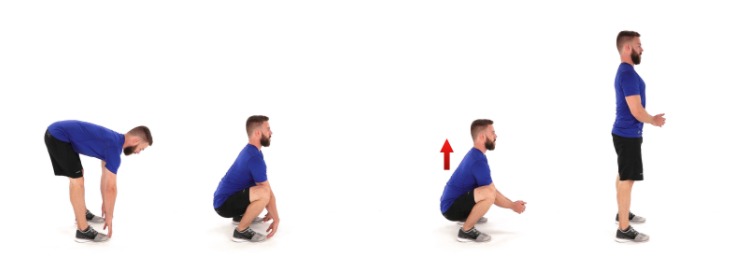
Application: 10–15 reps
Cues: Begin by hinging at the hips and lowering the arms to the floor. Don’t worry if you can’t touch your toes, just do your best. Next, lower into a squat by bending the knees, lowering the hips, and raising the chest/head. Rest at the bottom of your deep squat for about 2–3 seconds then extend up to a standing position once again.
2) Spinal Flexion Mobility
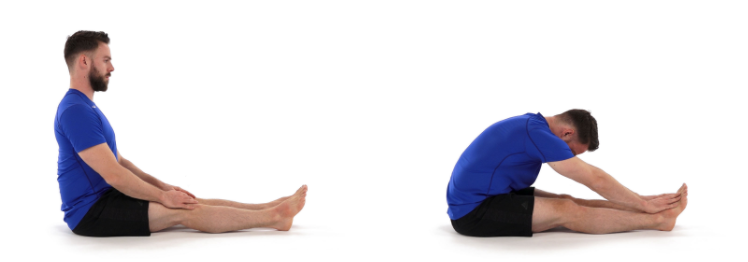
Application: 10–15 reps
Cues: Start by sitting in a neutral position with your legs straight out in front of you. To initiate the action, hinge flex your spine forward — being intentional about rounding through the spine. Reach as far forward as you can on an exhale and then hold for 2–3 seconds at the end range. Next, gradually roll back up to the starting position in preparation for your next rep. If you feel super inflexible here, consider using a strap around the feet to assist in your flexion.
3) Jefferson Curl (Stick or Kettlebell)
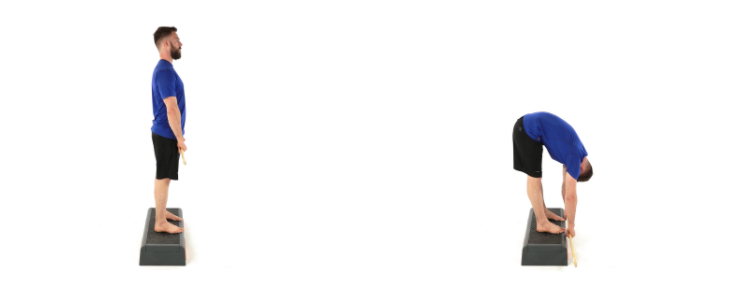
Application: 10–15 reps
Cues: Start on a step with a stick or kettlebell in your hands. Next, round the spine and roll down one vertebra at a time like a string of pearls — starting in your head and ending in your lower back. Reverse the motion to roll up, starting in your lower back and ending at the head. For the best results, try to keep your knees as straight as possible throughout. Remember to listen to your body and only go to your maximum pain-free range of motion! Over time, feel free to progress by adding resistance in the form of dumbbells or kettlebells.
In Closing,
Striving to achieve better posture in every lift is both impossible and harmful to your health. All it does is limit your body’s true potential and encourage a fear-mongering approach to movement that leads to more pain than you started out with.
Once you start believing in your robust, adaptable spine, great things will happen. You’ll grow stronger and more mobile while waving goodbye to the anxiety around lifting that wasn’t so necessary after all. Are you ready to turn a corner and start moving with freedom?
You got this!
-DavidLiira.Kin