
The Master and the Slave: Your Internal Dialogue

Imagine I could follow you wherever you went — but you couldn’t see me. I could whisper whatever I wanted in your ear — and you would believe me. You wouldn’t even know I was a separate from you. You would be at the mercy of thoughts running through your mind that you could not control, seemingly from nowhere: thoughts becoming beliefs, beliefs shaping behaviors, behaviors forming identity.
How much care would you want me to put into my words? How free would you be? How in control of your life would you feel? How much discipline would you put into containing me? How much of a curse or a blessing could I be?
My words are your words. My incessant monologue is your internal dialogue.
I am your ego.
Intense depression, anxiety and personality disorders offer severe internal dialogues that penetrate and ultimately misshape the surrounding reality. We believe we are reacting to our reality when in fact, reality is reacting to our consciousness. Consider how an incessant charade of beliefs about your own futility become self-fulfilling prophecies.
The borderline who tells their partner hundreds of times,
You will betray me.
You will betray me.
You will betray me.
gets to finally say at the moment of break-up
I told you so.
I told you so.
I told you so.
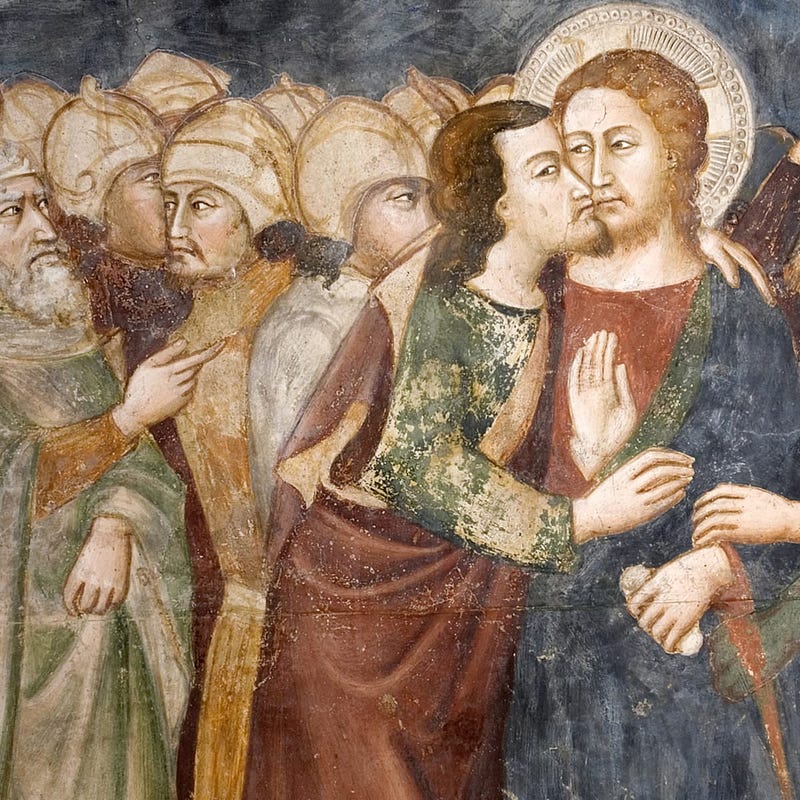
The depressed patient who sabotages opportunities for happiness; the anxious patient who overthinks their peace until it disappears; the borderline who chases love away only to bemoan its absence — they all succumb to the same black magic from the same evil wizard who whispers his spell in their ear.

Such people feel disempowered to no end. They believe life has overpowered them, rendering them miserable. It has! Yet they were the ones to overpower life in this manner: the power to chase happiness away: the power to experience life without power.
When I see such people in therapy, I reflect to them that they are indeed powerful — only, they are not aligning their power with their happiness. Their power is going to the part of themselves that believes that they and happiness are incompatible.
If I become happy, happiness will leave me. Better for me to leave it first.
The chronically unhappy think of happiness the way people who fall in love with someone ‘too good for me’ think of their would-bes. It can’t last.
It is hard to be happy…until it isn’t. Chronic misery is a learned behavior, practiced despite our longing for our time in the sun. It can feel odd to believe in one’s happiness when one’s pain is more vivid. We tend to believe in the experiences that are most vivid, not most true.
Your internal dialogue is vivid because it is the one reality you believe in that no one else can perceive. It tends to predict your future through your own confirmation bias: you forget optimism that precedes misery just as you forget pessimism that precedes joy. And you rarely get to shut it up. A part of you shapes your life and personality that you have yet to master. We are all our own bitch.
Hence what we are willing to tell ourselves about who we are is more cause than effect of the life we live. Be your own cause. Being an effect hides our consciousness from ourselves. As Jung said,
Everything we do not become conscious of, we call our Fate.
Instead of outsourcing autonomy to Fate, we can just as easily remember it is our Fate to take responsiblity for our internal dialogue. We don’t have to be anyone else’s version of us, including our ego’s. As Oscar Wilde said,
Be yourself. Everyone else is taken.
Which leads us to Nietzsche, who understood that life is about
becoming who we are.
Not becoming what our ego whispers.
To follow me: https://medium.com/@myartman
To subscribe: https://medium.com/@myartman/membership


