
Curators Are the New Creators
The Business Model of Good Taste
This piece is now published on Mirror.
We’re experiencing a content overload. There are an average of 550 new social media users each minute, and over 40,000 search queries on Google every second. The Facebook like button has been pressed 13 trillion times, and each new day welcomes another 682 million tweets. It seems that every time we blink there’s a new podcast published, or blog post to read, or book recommendation to order on Amazon. To make a long story short, it’s becoming increasingly difficult to disaggregate signal from noise.
Andrew Chen, General Partner at Andreessen Horowitz, wrote last year:
“We’re living in a pivotal time in the history of mass communication — what we believe is the golden age of new media.”
With more creators, more content, and more choice than ever before, consumers are now being consumed by a state of analysis paralysis. The real scarcity isn’t content anymore. It’s attention. When it’s impossible to absorb everything from the flood of information, the best we can do is pick and choose what matters to us most — or, better yet, find the people who can do the curating for us. Mario Gabriele from The Generalist said it best:
“We’re all consuming more media, and there’s an increasing willingness to pay for high-quality content. The last year has also seen an explosion of great writers and analysts in the space — I believe we’re at the start of a creator breakout.”
As the amount of content grows, so does the market for credible curators.
A great case study is Nathan Baschez and Dan Shipper’s Everything Bundle. In April, they decided to offer a bundled version of their newsletters, expecting a few extra subscribers from the experiment. Instead, they grew together from 600 to 1,000 paying subscribers within the first month. With all this talk of unbundling (some examples are the unbundlings of college, G Suite, Reddit, and venture capital), Nathan and Dan’s intentional bundling proved to be a striking success.
The Everything Bundle case study is one of my favorites, but it’s not the only one, by any means. Channels Stack is a curated site for educational content on YouTube, organizing hundreds of channels into defined categories. The Browser is a daily newsletter from someone who reads 1,000 articles a day, choosing his five favorites and sending them out with a short summary. Oftentimes, these linked articles don’t have a paywall of their own at all — but subscribers of The Browser pay to have them sent in a curated list.
The demand is certainly there: Channels Stack launched on Product Hunt with a 5.0/5 average rating and nearly 400 upvotes, and The Browser has successfully figured out how to monetize free existing content (with over 40,000 followers on Twitter to boot).
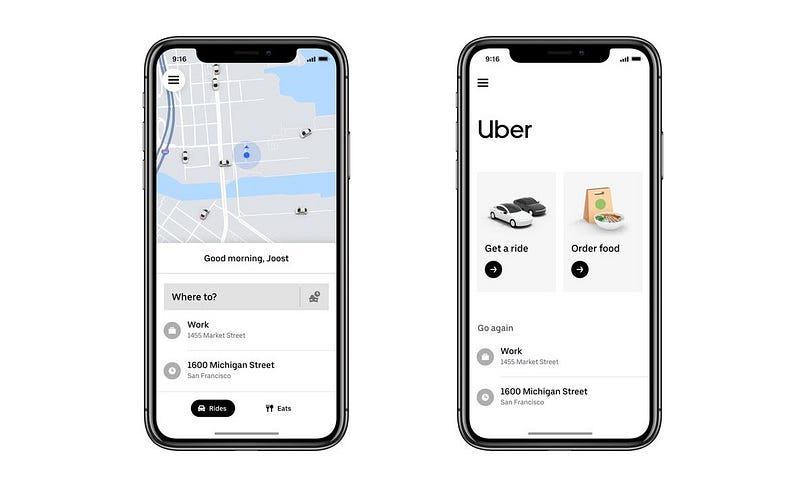
We can go even further back — classic examples of successful curation businesses are record shops and bookstores, and examples in tech include Spotify (for music), Netflix (for TV and movies), and Uber (which bundled its UberEats offering into one app, thus increasing Uber’s TAM, or total addressable market).
In my view, however, the business of influencer bundling has only just begun. Curators are the new creators, and as consumers, we’re going to be willing to pay someone with good taste to help us sort through the ever-growing mass of information at our fingertips.
The Psychology Behind the Need for Curation
As it turns out, there’s some psychological ground to all of this. Think of it as a carefully mixed cocktail of the following:
- Zuckerberg’s Law, or the tendency to share more and more on social media over time
- Dunbar’s number, or the average number of stable social relationships one can maintain at a given time (it’s around 150)
- Zipf’s Law, which describes how in any system of resources there are a small number of items of high value, and a “long tail” of many more of low value (slightly tangential but related reading: Metcalfe’s Law, which has now largely been refuted as a method of evaluating social networks, but in 2012 helped to rationalize Facebook’s insane over-valuation in its IPO)
To me, online content consumption seems to exist on a pendulum of sorts: we love content to the extreme — Unbundle!! Give us more! — until we are overwhelmed with choice and analysis — It’s too much!! Bundle it back up again! — and swing to the opposite side. In the end, we always end up somewhere in the middle… but it’s a lot of swinging back and forth on this creation/curation pendulum until we get there.
“There are only two ways to make money in business: One is to bundle; the other is to unbundle.” — Jim Barksdale
Having said this, and looking at the current information overload we all face on a day-to-day basis, I think there’s room for a new market of creators as curators. So, with that said, what does this look like for an influencer or brand?
How Do You Curate — and Why?
There isn’t one sole motivation behind why creators, influencers, and brands may want to curate. In fact, curation can:
- Build a personal brand or audience.
- Fulfill a need in a particular market. For example, Femstreet is a weekly digest of timely posts from female investors and operators. It’s racked up thousands of subscribers and has been featured in Fortune, Forbes, and Crunchbase.
- Create an extra category within an existing business.
- Become an additional revenue source. As we saw with The Browser example, it’s possible to monetize free content if it’s curated well — consumers are willing to pay someone who has good taste, and it’s an easy way to add a revenue stream to your business.
To learn more, I asked my own audience about their favorite curated content:
Below is a categorized list of some of the responses I received. My favorites are in bold:
Newsletters: Morning Brew, Everything Bundle, LetterDrop, Femstreet, Brain Pickings, The Generalist, The Browser, Snaxshot, The Profile, The Takeoff, Social Studies, Techmeme
Podcasts: Podcast Notes, TLDL, Shuffle, Podshots, Podcast Review
Crowdsourced Curation: Pocket, Bookshlf, Listory, MyHighlights
[Note: there are even more responses in the Twitter thread above, in case you’re curious and want to check out more!]
Making Curation Profitable
The best brands (and individual influencers, at that) are the best at an always-evolving curation as a service. Nathan and Dan’s Everything Bundle seems to be a playbook in itself, as outlined by Ari Lewis in this thread:
- Find initial traction
- Shift the emphasis from the individual to the greater media brand
- Scale and continue to add value
One way to monetize curation is through a paid newsletter, with the Everything Bundle as a great example. Other opportunities include blogs, ebooks, e-commerce stores, and consultations/speaking gigs. I even came across ReadBase during my research, which allows curators to monetize their bookmarks and reading lists. In any case, curators can find success by building up a targeted online presence and then providing curated content to that audience.
It’s clear that curating content within a particular niche can be an incredible way to build an audience and add value. Content curation hooks people in with the promise of learning new skills while saving time, and it keeps them coming back by building a sense of community around a particular subject or vertical. As outlined in this Harvard Business Review interview with Marc Andreessen and Jim Barksdale, bundling and curation can be a strategic decision for your business, as long as it’s done correctly.
Curation, in a sense, is its own form of intertextuality, or the shaping of a text’s meaning by another text. Content doesn’t exist on the Internet in a vacuum: it takes up space, and it forms a web of influence and connections. We have the content. Now, the question becomes: what will we do with it?


