
Is Your Sleep Routine Boosting or Hurting Your Exercise Performance?
You need to consider both sleep duration and quality
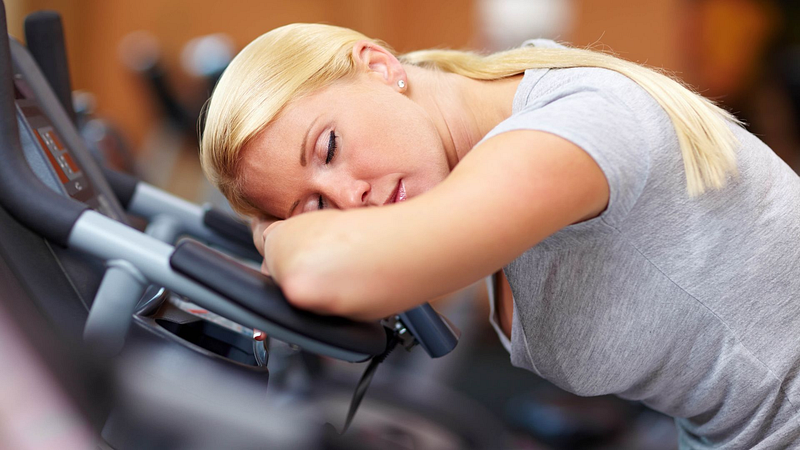
Don’t wait until you are dead to prioritize sleep.
It’s too important and you can’t achieve the same benefits from sleep any other way. I don’t care how good your exercise programming or diet are, without sleep, your performance in the gym will suffer.
Sleep is when the body repairs and rejuvenates itself, and the brain consolidates learning and memory. Sleep is critical for physical performance, and several studies have shown that sleep loss can have significant detrimental effects on athletic performance.
Before we get to the how and strategies to enhance performance, let’s briefly cover some sleep basics.
Stages of sleep
Sleep is divided into two main categories: non-REM (NREM) sleep and REM sleep. NREM sleep is further divided into three stages, while REM sleep is a distinct stage on its own.
NREM sleep:
- Stage 1: This is the transitional stage between being awake and falling asleep. During this stage, the body begins to relax, and brain waves slow down. This stage usually lasts for only a few minutes.
- Stage 2: During this stage, the body continues to relax, and brain waves slow down even further. However, the brain will occasionally produce bursts of rapid brain waves called sleep spindles and K-complexes.
- Stage 3: Also known as slow-wave sleep (SWS), this is the deepest stage of NREM sleep. During this stage, brain waves slow down even further, and the body relaxes completely. It is during this stage that the body undergoes physical and mental restoration, and growth hormones are released.
REM sleep:
REM sleep is the stage where most of our dreams occur. During this stage, brain activity increases, and our eyes move rapidly back and forth, hence the name REM (Rapid Eye Movement) sleep. Our muscles become relaxed to the point where we are almost paralyzed.
REM sleep is essential for cognitive and emotional restoration, memory consolidation, and learning. REM sleep occurs cyclically throughout the night, with each cycle lasting approximately 90 minutes, starting with a shorter REM period, and progressively longer periods throughout the night.
You need to complete multiple full cycles each night if you aim to maximize mental and physical restoration. This means sleep cannot be continually interrupted. The ability to maintain sleep and smoothly transition through each stage is sleep quality.
You need both duration and quality if you want to maximize results in the gym.
When is sleep loss a problem?
There are two primary categories of sleep loss.
- Sleep restriction (SR): a partial disturbance of their normal sleep-wake cycle.
- Sleep deprivation (SD): extreme cases of sleep loss, where both quality and quantity are significantly affected.
SR is the occasional sleep loss, such as Super Bowl Sunday. SD is the bigger concern (think becoming a new parent).
Sleep loss has several detrimental effects on physical performance. It impairs cognitive function, reaction time, and motor skills, all of which are critical for athletic performance. Sleep loss also increases fatigue, reduces motivation, and impairs recovery, which can lead to a decline in performance over time.
Benefits of sleep for physical performance
Now for the benefits. The list of detriments gives away most of the answers. Adequate sleep prevents all of the problems listed above. Sleep helps the body recover from physical activity, reduces fatigue, and improves mental acuity, reaction time, and overall performance
Going above and beyond may net you more than baseline performance.
This study in elite athletes showed >8 hours of sleep per night increased levels of perceived mood, sleep quality (by a substantial amount of 2.9 odds ratio), energy levels, and training quality. The longer duration and higher quality sleep scores reduced injury risk (0.8 odds ratio) as well.
This hits on a key point. Quantity is only half of the equation.
You need high-quality sleep as well.
Recovery and performance
Achieving a full sleep cycle is vital as each stage is a trigger for different physiologic events.
Motor skill improvements are significantly associated with stage-2 non-REM sleep, suggesting sleep is vital for both information and skill retention. If you want to improve certain skills (power clean, golf swing, etc.) then you need to prioritize sleep.
SR likely does not affect single bouts of aerobic or strength performance, but sport-specific skill execution, submaximal strength, and muscular and anaerobic power may suffer. A single night of less than 7 hours of sleep can impair alertness, reaction time, memory, and decision-making. Resulting negative mood states have been linked to over-training.
Research shows SD can significantly impact athletic performance and recovery by increasing metabolic demand and perceived effort, impairing restoration of muscle glycogen, and increasing sympathetic and decreasing parasympathetic cardiovascular modulation.
If you want to maintain a high level of training, you can’t skip out on sleep.
How much do we need?
First, we cannot bank our sleep. We need to be consistent each night.
Sleep is essential for overall health and well-being. It is a crucial part of our daily routine and is just as important as eating a healthy diet and exercising regularly. But how much sleep do adults really need? The answer varies based on age, lifestyle, and individual needs, but experts generally recommend that adults get between 7 and 9 hours of sleep per night.
The National Sleep Foundation recommends that adults aged 26–64 get 7–9 hours of sleep per night, while those aged 65 and older may require slightly less sleep, around 7–8 hours per night. However, it’s important to note that individual sleep needs can vary based on a variety of factors such as lifestyle, health, and genetics.
The best way to know how much sleep you need is through trial and error. Go to bed at the same time every day and aim to wake up at a consistent time. If you wake up prior to your alarm (not due to a loud noise or someone waking you), and you have spent at least 7 hours asleep, it is likely time to get up. Track how restful your sleep was and how you perform cognitively and athletically. Over a couple of weeks, you will start to establish a target sleep duration (provided the quality is good).
Strategies to improve sleep quality and quantity
Here are 7 strategies to enhance your sleep quality.
- Stick to a consistent sleep schedule: Go to bed and wake up at the same time every day, even on weekends. This helps to regulate your body’s internal clock and improve the quality of your sleep.
- Create a relaxing sleep environment: Make sure your bedroom is quiet, cool, and dark. Use comfortable pillows and mattresses, and avoid using electronic devices in bed.
- Limit daytime naps: If you must nap during the day, limit it to 20–30 minutes and avoid napping late in the day.
- Avoid stimulants before bedtime: Avoid caffeine, nicotine, and alcohol before bedtime, as they can interfere with the quality of your sleep. Caffeine has a half-life of 6 hours and a quarter-life of 9 hours. If you are sensitive to caffeine, limit yourself to a single morning cup.
- Develop a relaxing bedtime routine: Take a warm bath, read a book, or listen to soothing music before bed. These activities can help you relax and prepare your mind for sleep. Don’t read in bed though. The bed is for sleep.
- Get regular exercise: Regular exercise can help you fall asleep faster and stay asleep longer. However, avoid exercising within 2–3 hours of bedtime. You are likely better off matching your exercise routine to your chronotype. For example, if you are a morning person, aim for morning exercise.
- Manage stress: Stress and anxiety can interfere with sleep. Try relaxation techniques such as deep breathing, meditation, or yoga to help reduce stress levels.
Everyone is unique. Some routines will work better for you than others. Experiment and find the right combination to boost your sleep quality and achieve the amount of sleep needed to maximize your athletic performance.


