
Business | Self
50 Shades of Linkedin Cringe
Just when I thought Linkedin couldn’t get any worse.
Congratulations, Linkedin. You’ve done it.
You’ve created a cringe mine with boundless depths. Just when I thought we’d hit the bottom, we go a little deeper.
You (readers) may remember Linkedin’s original content problem: broetry. It reads with tiny sentences like a poem, but often written by a “bro” life coach on LinkedIn:
“I got dumped.
I got fired.
Wrecked my car.
But I kept enduring.
Now I am a CEO with $100,000,000 revenue.”
Broetry is still a problem. But LinkedIn has spawned many, many more demons.
In fact, I still believe LinkedIn’s feed is the worst of all major social platforms. At least Instagram and TikTok don’t shy away from what they are.
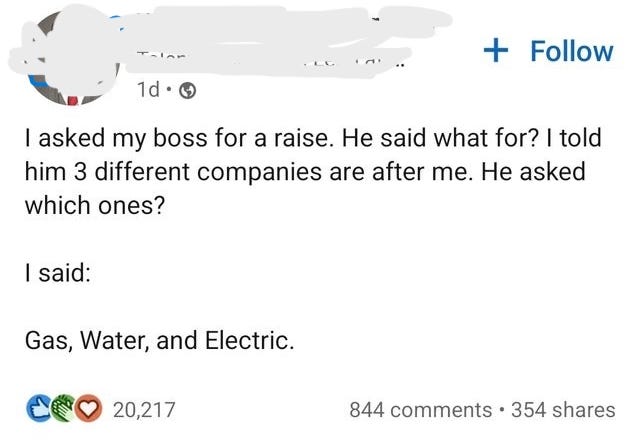
At a minimum, you’ve probably been trapped in the “I’m thrilled to announce…” infinity loop.
It’s a spectacular display of content moderation failure — with no end in sight. So what is going on?
First, there is a technical issue
I suspect LinkedIn has a massive engineering problem.
Imagine you design an algorithm with the sole purpose of surfacing quality content — and only gobbledygook comes out.
You tweak a few lines of code, it gets gobblier. You send in a smarter engineer, it gets gookier. I could see a project manager sending an email in red bold text to their team, “Nobody touches the LinkedIn code until further notice!”
“W-w-wait, who touched the code?!”
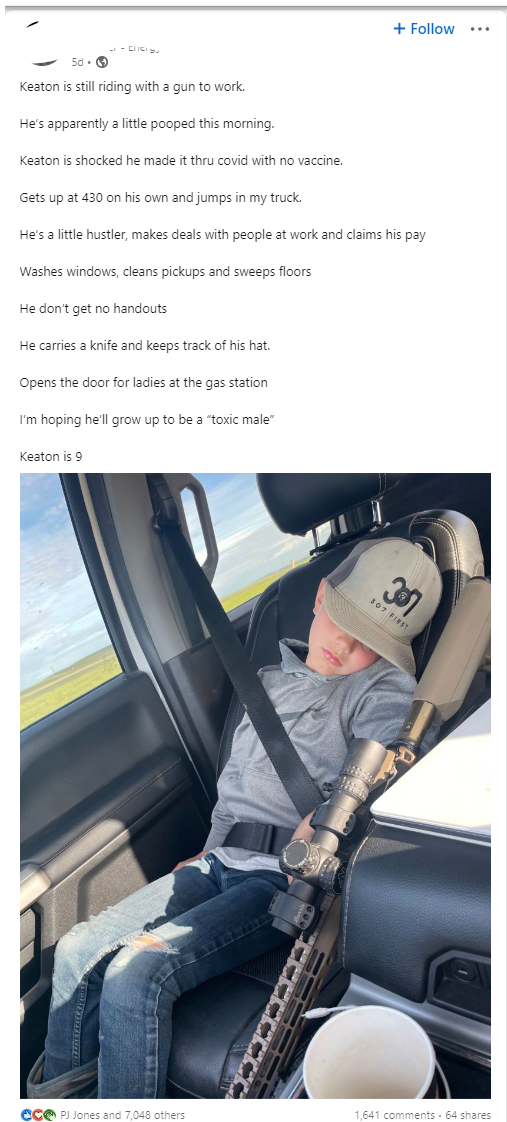
Also — the above dude appears to be driving while taking that photo too. The gun isn’t in a case either.
Low quality virality decoded
The viral shitpost remains a strange phenomenon.
No amount of technical intervention seems to suppress the reach of objectively low-value posts.
But here’s the thing: I can’t stop it either.
I have unfollowed hundreds of people. I have unfollowed hundreds of connections — simply for liking cringe posts and putting them on my feed.
It’s like a rodent infestation.
Every cringe post has 12 babies. And each of those 12 babies has 12 babies within an hour. They are breeding with each other.

The contrarian nature
It’s ironic that LinkedIn is investing so much in creator programs in recent years. The quality curve seems to be turning in the wrong direction.
At this point, I’ll settle for any post where someone isn’t talking about themself in any context. There’s this constant need for validation and affirmation that is fed through the network.
Most people lurk on LinkedIn. They are cautious and don’t want undue attention— which is fair and wise. Yet because so many people lurk, it creates an algorithmic void for people to seize for easy views.
The most remarkable part of the cringe is its variety.
I shudder for a unique reason every time. These posts are like someone else’s children in a waiting room: I hate them all the same, but for different reasons.
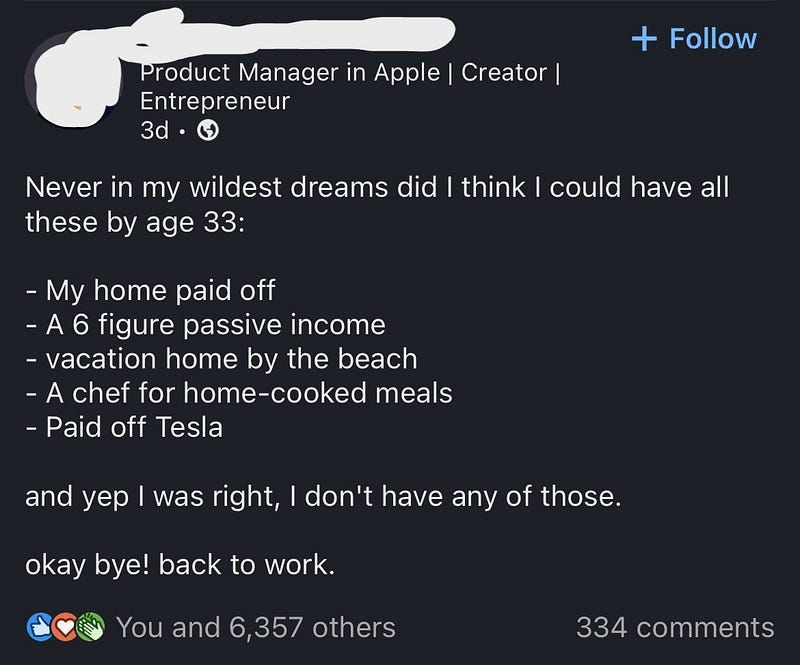
The only thing I seem to enjoy are posts that make fun of the platform:
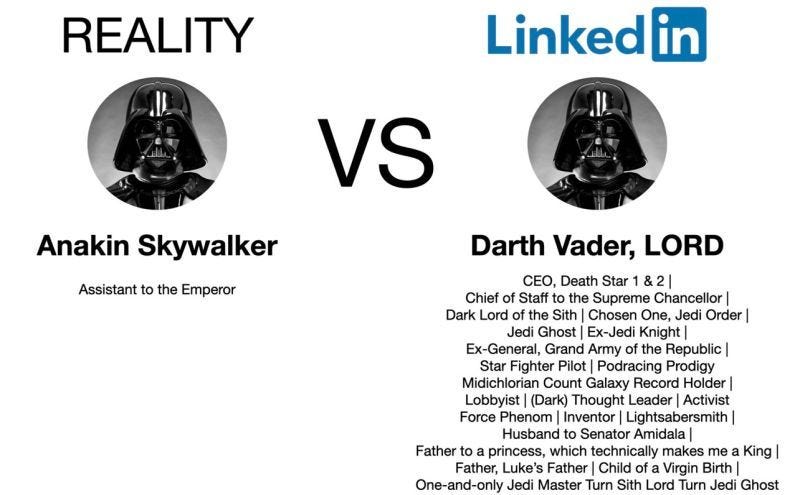
The problem is self-enflaming
The incentive structure encourages bad user behavior.
LinkedIn uses the same dopamine-juking system as every other platform. When people post these awful, wonky updates and get 10,000 likes — which is extremely common — they are signaled to continue doing so.
And in this way, they could well be incentivizing people to hurt their careers. Some users don’t even understand how social media works. They don’t get that even their comment activity is visible. I mean, cmon Aleksei.
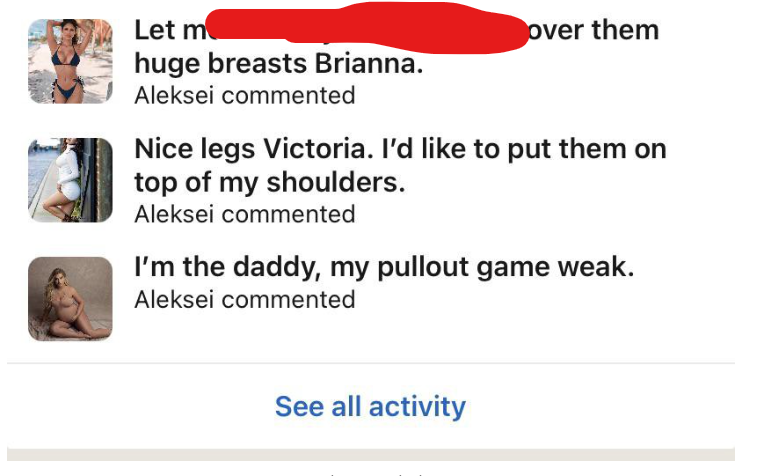
There is a stunning lack of self-awareness that’s reinforced by other users.
I’ve begun to wonder if readers enjoy helping people embarrass themselves.
And look — I write online for a living. I’ve posted tons of cringy stuff. I’ve fallen into the virality trap and equated internet points to quality. I’m sure I’ll fall into it again.
But to keep throwing yourself into the fire, over, and over, and over? To not step back and reflect on your actions? It feels like career suicide.
I keep asking “Yeah, but why?”
I can’t fathom why people think it’s OK to quote themselves online and frame the quote as though it came from a wiseman they met. Or why they just blindly make themselves look bad:
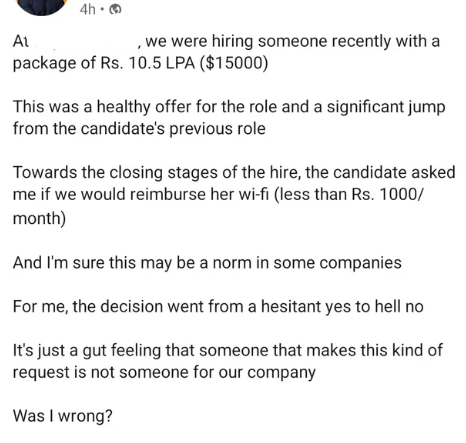
The crazy part? LinkedIn gives awards to some of its worst offenders. In the credentials of these awful posts, you’ll see “Top Linkedin Voice”.
Some knucklehead in corporate probably said, “These Linkedin Voice Awards will synergize our high-impact content creators, integrating a new and robust era that streamlines the reader experience! It’s a win-win!”
There are other, self-inflicted wounds by LinkedIn’s team. I get that coding isn’t a perfect science and that people make mistakes. Yet it feels a bit inexcusable to have this on my feed:
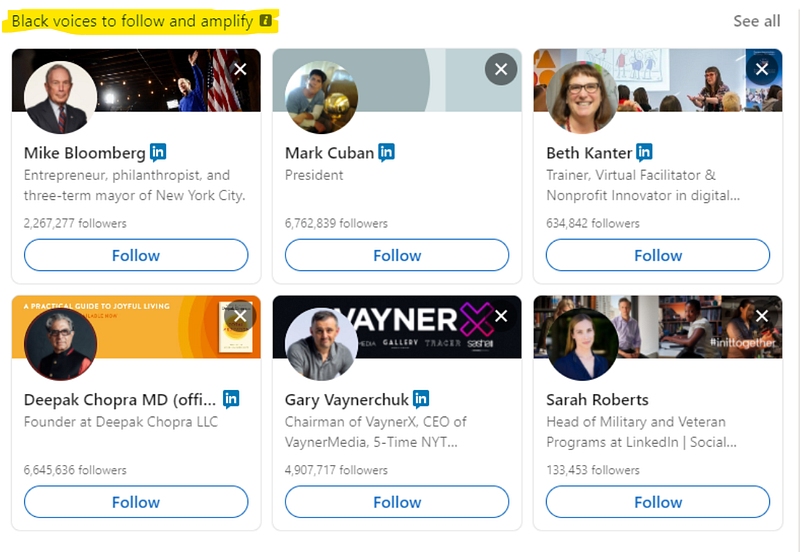
That’s just asking for it.
One last example
The thing is, people are constantly looking for any form of social affirmation on these platforms. To the point that they’ll steal.
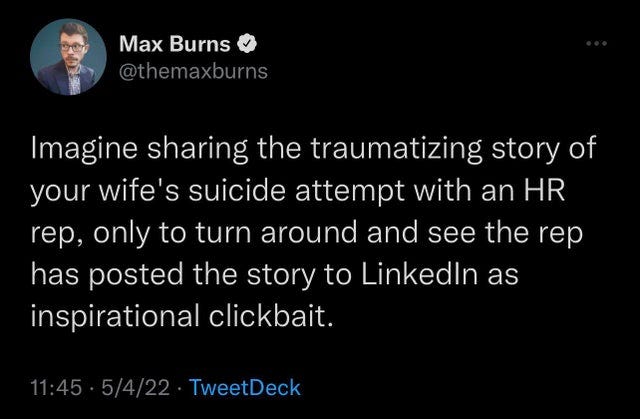
I have seen firsthand, that people I know and worked with — completely lie to tell a cool story in the feed. They radically warp details from what actually happened to make themselves look like some hero.
All for internet points that don’t actually mean anything.
The takeaway
The obvious lesson: Be careful of what you post online —with LinkedIn especially.
Managers and decision-makers are lurking all over the platform.
The platform encourages bad behavior and sends people viral for the wrong reasons. Your reputation remains the most important asset in your career.
Don’t do anything to compromise it. Don’t fall into the trap of over-celebrating yourself and doing “me me me” posts.
In the meantime, I hope the platform improves. I don’t know what I’m looking for on LinkedIn, but I still haven’t found it yet.
Subscribe to Relax and Read for more like this.