5 ways to use Microsoft Copilot in Finance and FP&A
As the world of finance and FP&A (Financial Planning and Analysis) continues to evolve, technology has become an essential tool for professionals in the industry.
One of the technologies we can leverage as finance and FP&A professionals is artificial intelligence.
We have been talking a lot about the use cases for Chat GPT in Finance, which is a tool that can be used to automate processes, create Excel macros, answer questions, language translation, financial modelling and even to teach you Python and how to create machine learning algorithms.
This week, one of the latest advancements in this space is the Microsoft Copilot, an AI-powered coding assistant that can provide significant benefits to those working in finance and FP&A.
In this article, we’ll explore five ways to use Microsoft 365 Copilot in finance and FP&A.
What is Microsoft 365 Copilot?
Microsoft Copilot is an AI-powered coding assistant developed by OpenAI in collaboration with Microsoft.
It combines the power of large language models (LLMs) with your data in the Microsoft Graph and the Microsoft 365 apps to turn your words into the most powerful productivity tool on the planet.
Copilot is integrated into Microsoft 365 in two ways. It works alongside you, embedded in the Microsoft 365 apps you use every day — Word, Excel, PowerPoint, Outlook, Teams and more — to unleash creativity, unlock productivity and uplevel skills.
Microsoft shared some examples of what Copilot can do in Excel:
- Give a breakdown of the sales by type and channel. Insert a table.
- Project the impact of [a variable change] and generate a chart to help visualize.
- Model how a change to the growth rate for [variable] would impact my gross margin.
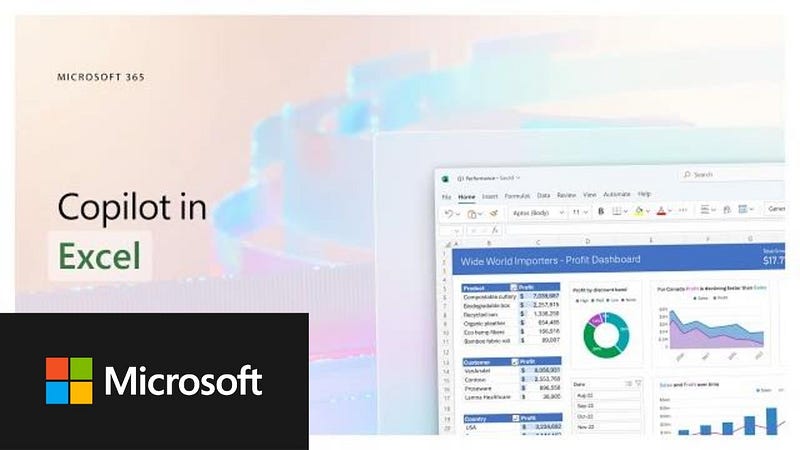
What are 5 ways to use Microsoft Copilot in Finance and FP&A?
1. Automating Financial Modeling
Financial modeling is a crucial aspect of finance and FP&A. It involves using data to create financial models that help companies make decisions. However, it can be a time-consuming and challenging process. Microsoft Copilot can help automate financial modeling by suggesting ways to create models quickly and accurately.
For example, Copilot can suggest code to create financial statements, such as income statements, balance sheets, and cash flow statements. It can also provide you with modeling different scenarios, such as forecasting revenue or analyzing the impact of new products on profitability.
You can even use it to make your Monte Carlo Simulations for forecasting or 3-way models more effective and faster to implement.

2. Speeding up Data Analysis
Data analysis is another essential task in finance and FP&A. It involves collecting and analyzing data to gain insights that can inform business decisions. Microsoft Copilot can speed up data analysis by suggesting ways that can be used to analyze data more efficiently.
For instance, Copilot can create pivot tables, filtering data, and visualizing data in charts and graphs. It can also analyze financial ratios, such as return on investment (ROI) and debt-to-equity ratios.

3. Enhancing Financial Reporting
Financial reporting is a critical part of finance and FP&A. It involves creating reports that provide information on the financial performance of a company. Microsoft Copilot can enhance financial reporting by suggesting code snippets that can be used to create more informative and visually appealing reports.
For example, Copilot can suggest code for creating custom report templates, formatting tables and charts, and adding interactive features, such as dropdown menus or sliders. It can also suggest code for automating the report generation process, saving time and reducing the risk of errors.
4. Streamlining Financial Processes
Finance and FP&A involve many processes, such as budgeting, forecasting, and variance analysis. Microsoft Copilot can streamline these processes by suggesting code snippets that can automate repetitive tasks and reduce manual input.
For example, Copilot can suggest code for creating budget templates, calculating variances, and generating forecasts based on historical data. It can also suggest different tools for automating data imports from different sources, such as accounting systems or spreadsheets.

5. Improving Code Quality
Finally, Microsoft Copilot can improve the quality of code used in finance and FP&A. It can suggest code snippets that follow best practices, reduce errors, and increase the efficiency of code.
For instance, Copilot can suggest code that adheres to coding standards, such as proper variable naming conventions or indentation. It can also suggest code that uses optimized algorithms, reducing the time it takes to run code and improving performance.
In conclusion, Microsoft Copilot is a powerful tool that can provide significant benefits to finance and FP&A professionals and in combination with other AI technologies, it will revolutionize our industry.
It can automate financial modeling, speed up data analysis, enhance financial reporting, streamline financial processes, and improve code quality. By using Copilot, finance and FP&A professionals can save time, reduce errors, and focus on higher-level tasks that require their expertise.
Copilot is in testing right now among 20 customers, including eight Fortune 500 companies. It will be available in preview for more users later this year.