
5 Ways to Revive Old Content and Not Start From Scratch
Swap, update, convert, republish, and more

Recently, I needed to figure out a way to resuscitate my favourite pair of jeans (they had holes in them).
But I couldn’t bear to throw them out. I needed to figure out a way to resuscitate them. So my costume-making friend Tirion offered to patch them up for me.
Awesome!
I scoured Pinterest until I found a gorgeous patch job — white lace.
Tirion did her magic — and now my jeans are even better than new! Take a look:

I’m glad I didn’t dump them — I believe when something is valuable, you’ve got to gain as much mileage as you can from them.
You’ve got to be creative.
Well, the same applies to content.
When you’ve written something valuable, you’ve got to be creative, determined, and intentional to get more wear from it.
How long do you spend on your articles?
You have a reason for writing about a topic. You’ve spent precious time researching, sharing your experiences, choosing your headline, photos, quotes, and stories. You’ve got a powerful message for your reader.
Now, let’s say you didn’t get the overwhelming reception you hoped for.
Firstly, don’t make it mean something it doesn’t. No, your writing doesn’t suck. Yes, you can write. No, writing isn’t pointless. No, you haven’t wasted your time.
There are so many reasons why this could have happened. A few:
- Not many people saw it
- It was hard to read
- Your reader got bored
- The headline didn’t catch your reader
On the other hand, perhaps you got plenty of attention. Your article may even have gone viral.
Whether your article flopped or went viral, it doesn’t mean you need to avoid visiting the article again — especially if you know it’s a topic your readers are interested in.
Like a favorite pair of jeans, you’ve got to revive old content. Piggyback on your time and efforts. Reinforce its value. Resuscitate it so it’s new and improved — perhaps even better than the old!
As a writer and an online communications consultant, I often get caught up in figuring out what new content to write — for myself, and for clients.
I used to get overwhelmed with the idea of thinking of something fresh to write about.
Eventually, I realized all I needed to do was get better at reviving old content — and transform them into new and improved versions.
Here are 5 ways to recycle content — with examples from people that do it exceptionally well.
1. Swap Out
Use new examples, research, stories, quotes, pictures and headlines (draw your own if you dare!).
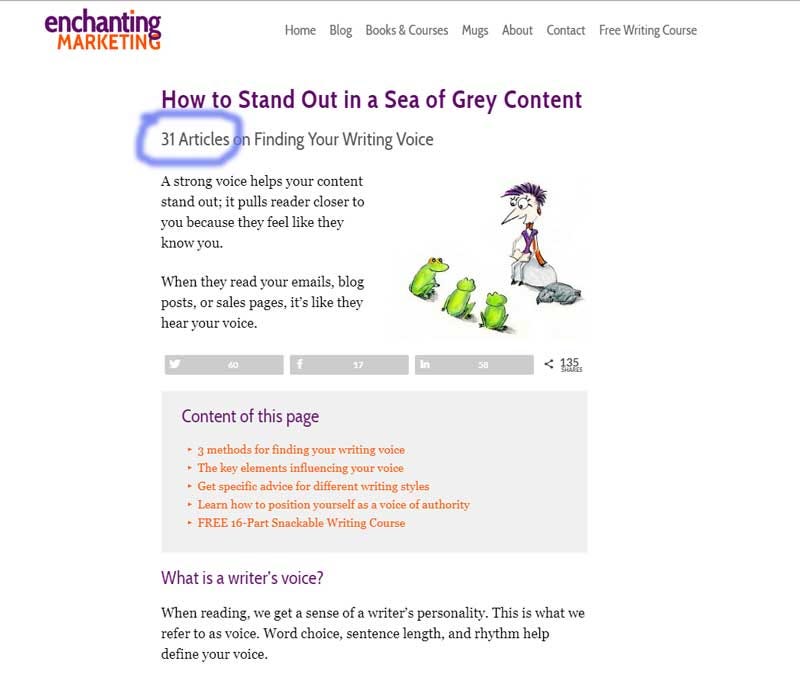
Example: Henneke of Enchanting Marketing
Henneke rewrites the same topic, writing voice, at least 31 times on her blog. How does she do it without boring the heck out of her readers?
Well, she is skilled at taking new angles, drawing clever pictures, and sharing relevant stories and inspiration to make the same topic fresh — while reinforcing her message.
You see, your message may not immediately sink in the first time someone hears it. There’s much research to show how learning can be fast-tracked through repetition. In Repetition is the First Principle of All Learning, Robert F. Bruner explains:
“The learning process is one of slow engagement with ideas; gradually the engagement builds to a critical mass when the student actually acquires the idea.”
Key takeaway: There are many ways to present the same topic. Your readers need repetition to understand your message over time. Get creative.
2. Create Video Content
In their 2019 video marketing research, Hubspot investigated how consumers prefer to learn about new products or services. They found 87% of consumers would like to see more video from brands in 2019, with 68% preferring short videos.

Example: Tom Kueger of Finding Tom
Tom began writing as a writer on Medium where he created a publication The Post Grad Survival Guide. In August 2019, he had 32,000 followers.
He discovered the power of video after he made a video about his time in the Philippines — and it got him 3 million views in 7 days. The results have convinced him to split his efforts between blogging and vlogging about blogging, traveling, and life.

Key takeaway: Create videos (if you don’t already).
3. Create E-books and Courses
Ever thought about writing a book? It can be daunting. But you may already have the makings of a book from the content you’ve already created.
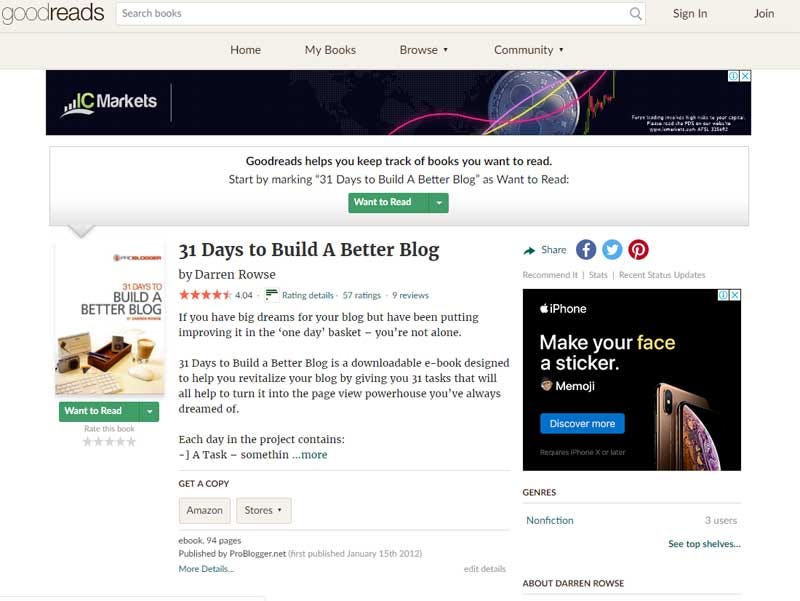
Example: Darren Rowse from Problogger
Darren is a professional blogger. He often gets asked about whether he’s written about certain topics — in particular, how to blog. The problem was he’d written so many articles that readers had trouble finding what they were after.
When he got approached about writing a book, he’d already gathered many posts in preparation for a book to address the topics readers wanted to hear more about.
Darren had all the content needed for the book. He rewrote it, made it flow, and published the book: 31 Days to Build A Better Blog, which later formed the basis of an online course. Check out Blog a Book’s interview with Darren in Darren Rowse on Book Deals and Discovery in the Biosphere.

Takeaway: Create products from old content.
4. Update, Upgrade, and Republish
The saying “Don’t look back. You’re not going that way” (or some version of it), doesn’t apply to old posts. Like my favorite old pair of jeans, it’s worth resuscitating old content.
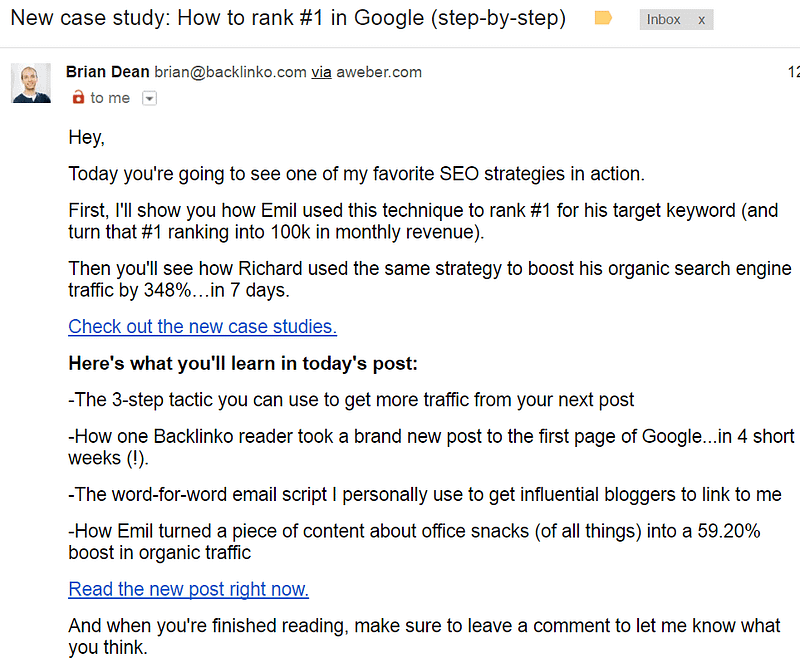
Example: Brian Dean from Backlinko
One of Brian’s readers, Emil, successfully used one of his techniques to rank #1 on Google and turn it into 100K in monthly revenue. Instead of writing a new post, Brian:
- Added it as a case study to an existing post
- Created a new headline, updated images, and added a few new tips
- Repromoted it by sending an email to subscribers
- Shared it on social
This led to a 111.37% increase in organic traffic to the page, as Brian shares with us on 21 Actionable SEO Techniques That Work Great in 2019.


Takeaway: Do more with less. Update, upgrade, and republish content.
5. Republish on Different Mediums
It’s easy to get comfy publishing text and photos on your website. Or to send out only text emails to your mailing list. I know plenty of businesses that run their businesses solely on Facebook and Instagram.
Why not leverage the power of your content by becoming known across multiple channels, communicating in different ways?
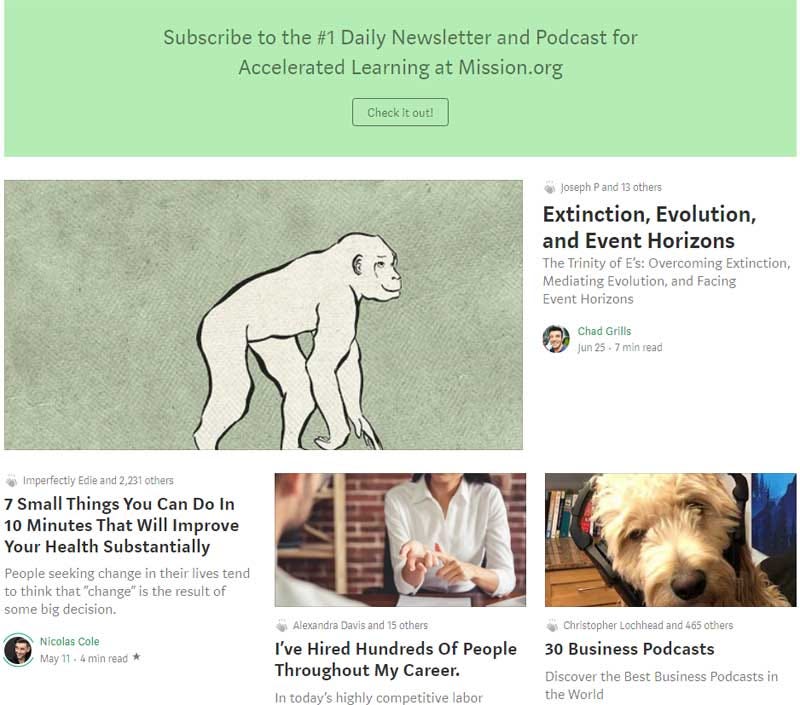
Example: Chad Grills and Stephanie Postles from The Mission
Chad Grills and Stephanie Postles of The Mission run a media company. Their aim is to share business and tech content that accelerate our learning.
They also share helpful information about health, wealth, and wisdom. I first discovered them through Medium, the writing platform. The Mission is one of Medium’s top 5 largest publication (I’m fortunate enough to be a writer for them).
They ran an inspiring series The Story — which told of unknown stories about people who have changed the world. This led me off Medium, onto their podcasts and newsletters. Their podcasts have become a cherished part of my morning drive to kickstart my day.
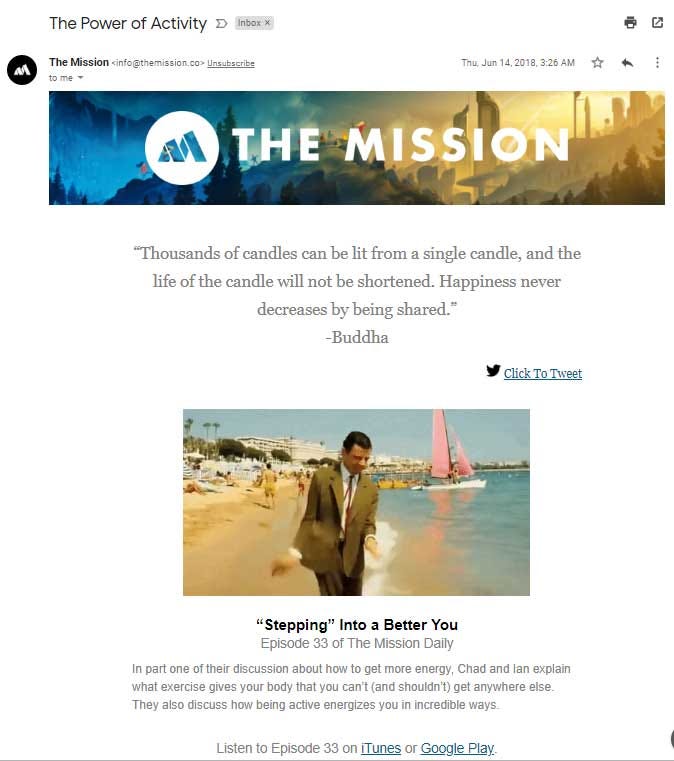
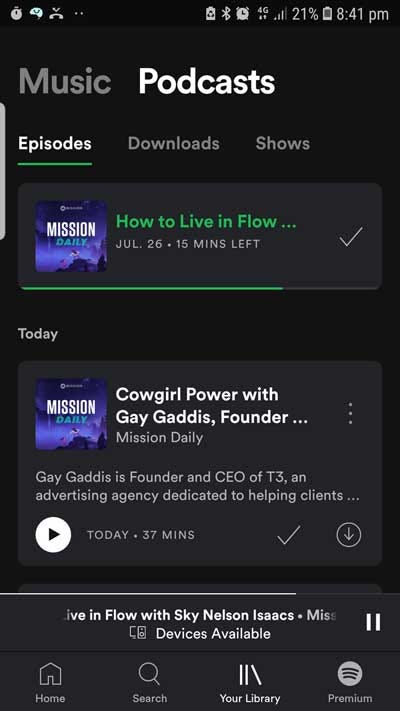
Takeaway: Don’t stick to just one channel. Gain more mileage from your content by sharing it across multiple channels.
Summary
When you’ve written something valuable, you’ve got to be creative to get more wear from it — and transform it into fresh, appealing, as-new content.
Like the pros who have shown us how it’s done, you too can revive your old content. To recap, here are the 5 ways:
- Swap out: use new examples, research, stories, quotes, pictures and headlines (draw your own if you dare!)
- Create video content
- Create ebooks and courses
- Update, upgrade and republish
- Republish on different channels
And finally, if you enjoyed this post, you may be interested to know this is a repurpose of my article Do You Make These Common Writing Mistakes? (Mistakes 6 and 7). Take a look, and see which version you like better.
Which old post will you revive next?


