
5 Ways to Fix a Weak Ending in Fiction
How to avoid the disaster of Game of Thrones

Given its magnificent beginning, no one imagined that it would become one of the greatest clusterfucks in TV history.
Like many, my friend Tochukwu had a love affair with Game of Thrones. He began following the TV show long before it became a worldwide sensation. Not content with only loving the show, he preached the gospel at every opportunity he got — especially in-between lectures at film school. Despite having to be up for school by 5:30 AM, staying up till 1 AM on Mondays became a ritual for him.
He survived this nasty inconvenience just so he could watch new episodes the same time they were being broadcast in Europe and America. So imagine how Tochukwu felt when GOT’s season 8 finale drew to a close.
The time was 2:30 AM and Bran Stark had become King of the Seven Kingdoms. My dear friend looked like a puppy that had recently lost his master.
“I wasted 8 years of my life,” he said.
He went on to swear that he would never invest time and emotions in a new series until it had finished its run with good reviews. A bit of an overreaction if you ask me, but I dared not say anything because I was also affected. In my case, I was more angry than sad.
To be sure, we weren’t the only ones feeling this way. Across the globe, millions of people were just as angry and disappointed as us, if not more so. In some extreme cases, people’s pain drove them to send death threats to the show-runners. Imagine that.
How did something so beloved become so despised? The answer points to the fact that nothing ruins a good story like a bad ending. Like a plague, it infects the overall experience of the story, leaving a bad memory in the minds of everyone who would have loved it. In this article, I pass on all I know about avoiding weak endings so you can avoid GOT’s terrible fate. I cover:
- Why weak endings destroy good stories — lessons from science
- Peak-end rule
- What makes an ending weak
- 5 ways to fix a weak ending
- How to guarantee a strong ending
By the end of this article, you will be able to diagnose weak endings and fix them. You’ll learn some of the methods that have been used by some of the most popular stories of the past decade.
Let’s begin by answering the most important question of all — ‘why’.
Why weak endings destroy good stories — lessons from science
Some participants in an experiment were asked to place their hands in painfully cold water of 14°. In the first trial, they were asked to leave their left hand in the water for 60 seconds. Seven minutes after, they were asked to put in their right hand for 90 seconds. But there was a twist.
During the additional 30 seconds of the second trial, the temperature of the water rose by roughly 1°, just enough for most participants to detect a slight decrease in the intensity of pain. Seven minutes after that second trial, they were asked to try it again. But this time, they were given the choice of which trial to repeat — left for 60 seconds or right for 90 seconds. Guess which trial they chose.
80% of the participants who reported that their pain diminished during the final phase of the longer episode choose to repeat it, thereby willing to suffer an extra 30 seconds of needless pain in the third trial.
The scientists performed many other experiments and found similar results to the cold water test. Daniel Kahneman, one of the lead researchers, explained these bizarre results using the term peak-end rule.
Peak-end rule
Retrospective assessments are insensitive to duration and weigh two singular moments, the peak and the end, much more than others — Daniel Kahneman, Thinking Fast and Slow
What this means is that when you are asked to weigh the quality of an experience, your response is overwhelmingly influenced by the peak and end-points of the experience.
- Peak — the point where the greatest moment of pleasure or pain is derived from the experience
- End — the level of pleasure or pain at the end of the experience
The peak-end rule explains why Tochukwu and I felt the way we did about GOT’s disastrous ending. It also explains why everyone hates a trilogy if the third part finishes on a weak note.
Thus, the end of an experience is the most important moment there is.
Now we know the importance of endings, let’s learn what makes them weak so that we can better avoid them.
What makes an ending weak
There are three reasons I’ve found that makes an ending weak.
1. Dishonest application of knowledge
This mostly happens to writers who let their stories be undone by their storytelling knowledge. For example, you know that the third act needs to have a big showdown between the protagonist and the antagonist, but you can’t find an organic way to make this happen and so you force it.
Another example. Because many writing books teach that characters need to change at the end, many writers create false change. They force their characters to act in ways that aren’t consistent with who they were in the beginning.
The only solution to this problem is honesty. Always ask yourself if what is happening in your story is true and believable. The show-runners and writers of GOT would have avoided that travesty of an ending if they had let this question guide them.
2. Stagnant antagonism
In a good story, the forces of antagonism build in the beginning, increase in the second act, and in the third act, become too strong, forcing the protagonist to overcome them or die. A perfect example is A Quiet Place.
By the third act, all the worst things were happening and fear was all I knew. There was the scene where the pregnant mother, while trying her best to avoid making a sound in mid-labor, stepped on the exposed nail. I nearly died from terror.
Never forget that antagonism that intensifies as the story progresses will have us on the edge of our seats come the third act.
3. Negligible casualties and consequences
This was what I disliked about Black Panther. There was a civil war in the third act and no one dear to the protagonist or audience was killed.
My annoyance came from seeing the possibility of what one strategic death would have done to the story as a whole. If T’challa lost his girlfriend (mother, sister, or friend), his final face-off with Killmonger would have been so much more emotionally engaging.
Loss is one of the deepest emotions there is. If there is a war that kills millions but none of them are close to the protagonist or audience, then the emotional power from loss is left untapped.
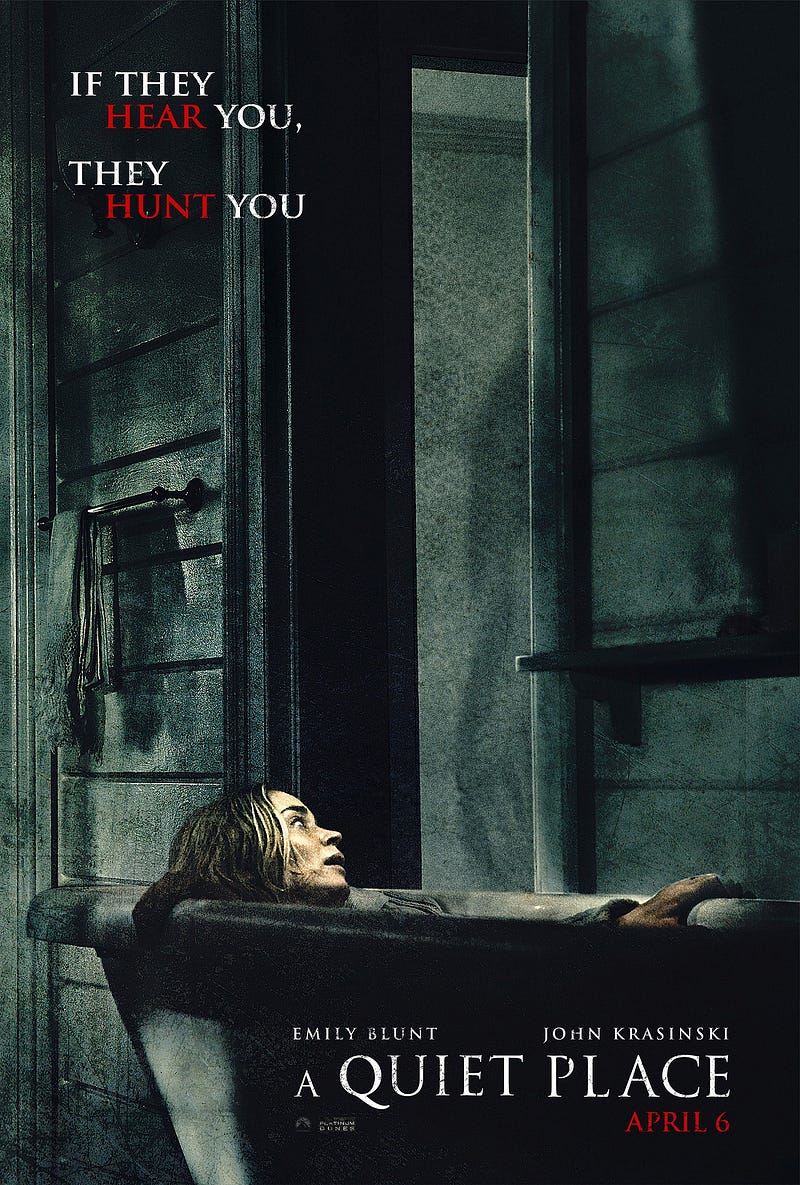
Notice in A Quiet Place, a big character was killed around the third act. When the blind monster killed the father, the emotional stakes got higher and I became more united with the remaining members of the family.
5 ways to fix a weak ending
Below are a few ways of increasing the emotional combustion of your third act.
1. Add genuine loss
When Thanos snapped his finger and half of life turned to ashes, I couldn’t believe what I was experiencing. This was so unlike the first Avengers film where all the chaos was happening to characters we didn’t even know. It was this final loss that made the film more memorable.
Many weak endings, especially concerning superhero movies, will benefit from this path. Genuine loss is the loss that’s felt by the audience, either because we care about the person who is lost or the one who has lost. Adding genuine loss to your third act is important because, when it’s there, the victory that follows will be 100 times sweeter.
Note that loss isn’t restricted to only lives. Human beings can lose many things, ranging from the material to the immaterial — innocence, faith, hope, love, kindness, wealth, fame, etcetera.
For example, in The Godfather, Michael Corleone loses his soul to protect his family and avenge his father. This loss fascinates us even though we don’t agree with it.
2. Add a big revelation
People love surprises and when that surprise is delivered in an already tense scene, the surprise is 1000x more powerful.
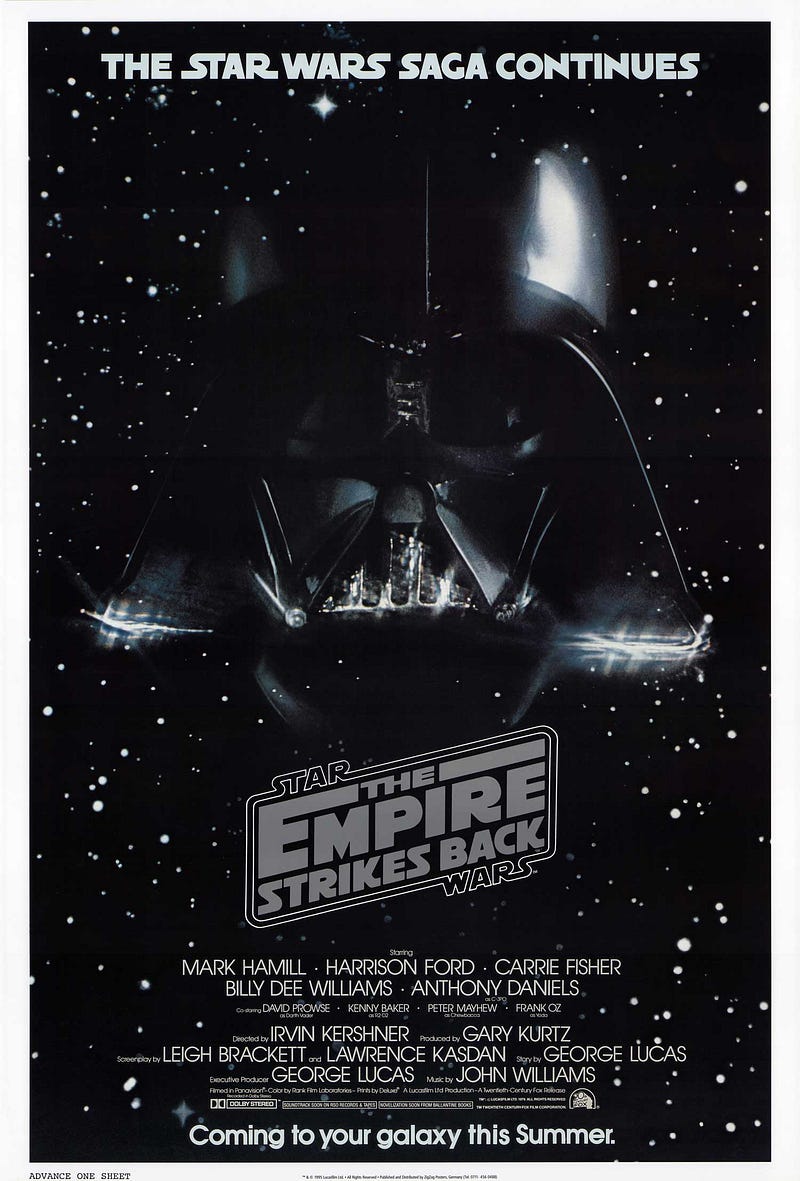
Many times you can make a weak ending stronger by adding a big revelation. Like when Darth Vader tells Luke Skywalker “I am your father” in Empire Strikes Back.
Another example is when we realize that Louis Banks can travel through time in Arrival.
3. Add a new understanding
It may seem curious to put both revelation and understanding on the same list. Well, this is because the two aren’t the same. Revelation reveals information. But information is not understanding.
Understanding is something only a character can do. A character needs to come to a new understanding of his life or world. When this happens, the audience follows along for the ride.
For example, in Arrival’s third act, the information revealed to Louis Banks by the plot is that she can move through time. Specifically, she can visit herself in all the different times she has lived. But this doesn’t classify as understanding, and if the story stopped here, it would have been weak.
Louis’s understanding comes when she realizes that there is no point in changing how her life unfolds. Influenced by this new understanding, she goes ahead to mother a daughter whom she knows will die in less than 30 years. Without that understanding, the story’s most emotional beat won’t land properly — the power of love over pain.
Understanding is usually related to theme, but this isn’t an article for such discussions. To learn more about theme, read this ultimate guide.
4. Add profound and believable change
The best stories work in service of change, and the best endings arc a character’s believable and organic change.
The hardest thing every human being has to do is change. We fight it whenever it comes at us in ways we do not want. For this reason, we are fascinated by people who undergo profound change. Such as from selfishness to kindness, or cowardice to courage, or good to bad.
Todd Philip’s Joker changes a kind-hearted Arthur into the sadistic Joker. No wonder people loved it as much as they did. Or at least, I loved it so.
5. Avoid deus ex machina
Nothing ruins the third act like a writer cheating his way out of problems he created. It’s unacceptable to resolve problems in the third act by using story elements that were not in the story all along. This isn’t only restricted to saving the protagonist but also to loss, change, revelation, and understanding. Do not fake it. Let it be organic to the story.
How to guarantee a strong ending
To guarantee a strong ending, begin with a strong ending. This may seem simple enough, but many storytellers ignore this and I find it both amusing and baffling.
If you consider that a story is supposed to hold our interest and lead us to the payoff at the end, then you will see that starting with the end is the only sensible solution. You may wonder, ‘how do I start with the end’?
Technically, you can’t start a story from the end. I mean, now and then an idea for a story may come to you with the ending first, but in everyday storytelling, this is not normal.
When I say start from the end, what I mean is that you do not start writing your story until you know your ending. I usually spend a lot of time playing with my story in my head until I have an ending that excites me. This way, when I figure out my ending while story-building, I go back and rework the beginning through the middle so that it is all organic.
If you do this, it will ensure that you have a solid story before you write fade-in or prologue.
Conclusion
The only experiences people share with their friends and family are those that draw the deepest emotions from them — loss, pain, victory, joy, understanding, suspense, delight, fear, etcetera.
The key to drawing the deepest emotions is finishing your story on a strong note. The ending is your saving grace towards maximizing your story’s emotional impact. Do not make the fatal mistake of squandering it.
Spend a lot of time to develop it because you can’t have a strong ending without ‘constructing’ a strong ending. I’ll leave you with the words of story-master, Robert McKee:
A finished screenplay (story) represents, obviously, 100 percent of its author’s creative labor. The vast majority of this work, 75 percent or more of our struggles, goes into designing the interlock of deep character to the invention and arrangement of events. The writing of dialogue and description consumes what’s left. And of the overwhelming effort that goes into designing story, 75 percent of that is focused on creating the climax of the last act. The story’s ultimate event is the writer’s ultimate task.
Go on and maximize your story’s power by creating that spellbinding third act. You’re now well-equipped to avoid the disaster of Game of Thrones’ ending.
Gilbert Bassey is a writer, filmmaker, and story consultant dedicated to telling great stories and helping other writers do the same. Subscribe to his Storycraft newsletter and get a free copy of the ‘how to fix a boring story’ checklist + a free in-depth email course on how to transform an idea into a good story.