
5 Ways Social Media Can Help Your Mental Health
Ironically, the very thing that causes loneliness also helps to fight it.

Social media has garnered quite the bad rep, and as a psychology student, I was constantly confronted with the ways that social media and the internet harm our mental health. And it’s true; social media can be linked to an increase in mental illness rates. Mainly because it only shows the good, making us feel like we’re the only ones with bad. As someone who struggles with high functioning depression, I am just as guilty of showing the good and not the bad on social media. I posted photos of myself in a bikini with a cute caption, never mentioning the hours of torture that got me to that size, or the anxiety that stemmed as soon as I posted.
But step by step, that’s changing, and as it does, it allows social media to be a place that can also help our mental health, giving us a platform to grow and develop. I try to fill my social media feeds with people who show both sides, who document their bad days as well as their good days, and I hope to one day join their ranks.
As easy as it is for us to consider the negatives of social media, as there are plenty, why don’t we take a moment to find the silver lining in our online generation? Here are 5 ways social media can benefit your mental health or help against mental illness:
1. Fight loneliness
In a world of screens, reports show that people are feeling lonelier than ever. And before COVID — 19, we would have even called it the pandemic of our time. But ironically, the very thing that causes loneliness also helps to fight it. Because in times of distance, it can bring people closer than ever.
This could be during self-isolation or illness, for the elderly or handicapped. It could be as simple as moving away and speaking to old friends while you settle in. There are numerous reasons why someone could be distanced for a while, and social media allows them to feel closer to others, feel like a part of their lives. Even if it isn’t about physical distance, but perhaps struggling with anxiety or depression, you could feel more involved in your friends’ lives by keeping up with their photos or use Snapchat to receive heartwarming photos.
2. Find your people
And that brings me onto finding your people. In day to day life, it can be hard to find people who understand your mental health struggles, as it isn’t really a topic that comes up easily. You could get lucky, and become close to people who later turn out to have similar experiences or struggles — can I call that lucky? Well, it also happens rarely.
But many find solace through finding their communities online, others struggling with a personality disorder, accounts of eating disorder recovery, groups dedicated to dealing with the loss of a loved one. You can find them and feel less alone. And the root of mental illness can be through exactly that, thinking you’re alone in this. Which is why talking about mental health is so vital. Sharing stories, discussing tips for improving the darker days, and even the amazing feeling of helping someone else.
It helps not only loneliness but also your sense of purpose and your belief in your own struggle. You can feel validated in your struggles with mental health or mental illness, and you should.
Your issues are real; your issues are important.
3. Identity
It’s quite common that people find it harder to share with those closest to them than a bunch of strangers. Whenever I get too personal on this blog, I cringe at the idea of friends or acquaintances reading it, yet feel delighted at the idea of strangers learning my innermost thoughts! There are plenty of reasons why it is easier to talk to a stranger than a friend. And it’s okay. Maybe you find it easier to be yourself in front of strangers than your loved ones for now, and if that gives you the strength to be yourself until you can do it elsewhere, that’s enough!
Develop your identity, understand yourself, so that you can give others that wonderful opportunity to get to know you as well.
Maybe social media helps by giving you a platform, a place of importance, or a place to simply be heard. Maybe you want a Tumblr account about mental health, an Instagram about your eating disorder recovery or a place to share your new blog — I might be able to relate to that last one!
Being yourself, and being at one with yourself, makes coping with your mental health that little bit easier. And sharing your struggles with others? It lets them understand you, and provides them with a platform to be there for you. And maybe not everyone will like it, but who gives a crap about those few?
4. Inspire
A surprising turn of events! Social media can, indeed be quite disheartening. You can spend hours looking at people who are skinnier than you, considered prettier than you, richer than you; the list goes on. That will suck a lot of days. And social media should be more truthful, I fully agree. Make that change and encourage others too.
But don’t focus on jealousy, focus on inspiration. Look at those people working hard, just like you can! Look at that friend who got the job she wanted; maybe she has tips or contacts that could help you? Someone you know sharing their mental health struggle, support them, share with them, look at how far they’ve come since it. You can come that far too.
Take things as a challenge, not competitively, but as an indication of where you can be. I’m not talking about fitspo bikini photos. I’m talking about going to the gym if it makes you feel good about the body you’re in if it motivates you to not crawl back into bed. And you can use it that way too, share your good moments, to feel proud of them.
5. Accountability
And that brings me to the final way social media can help your mental health! For many, social media can provide a sense of accountability that push they need. This isn’t to say you should rely on only social media for this, or that you should focus your sense of satisfaction from it. Merely that if you share something you plan to do with others, it has been shown that you’re far more likely actually to do it!
I’ve struggled with my body and eating habits since the age of fifteen. Even when I was “healthy”, my mind wasn’t, and I couldn’t find the balance of working out and not becoming fixated. So I signed up for a half marathon, which may sound like a crazy way to find that balance. But running a half marathon made me use my body, made me exercise for a purpose that wasn’t losing weight.
These powerful legs I hated for so long took me over 21.1km… twice! And when I first signed up, I shared this on social media. I had told people I was doing it, so there was no turning back now! And when I ran a new distance during training, I shared it. Not with any intention to make people feel bad, and not even expecting responses, but just to show them, and mainly myself, that I did it. I knew I had to do the half-marathon after all that because now people really knew about!
Those small mind tricks can really help, especially at the start. And they help you form healthy habits and ways to keep on top of your mental health.
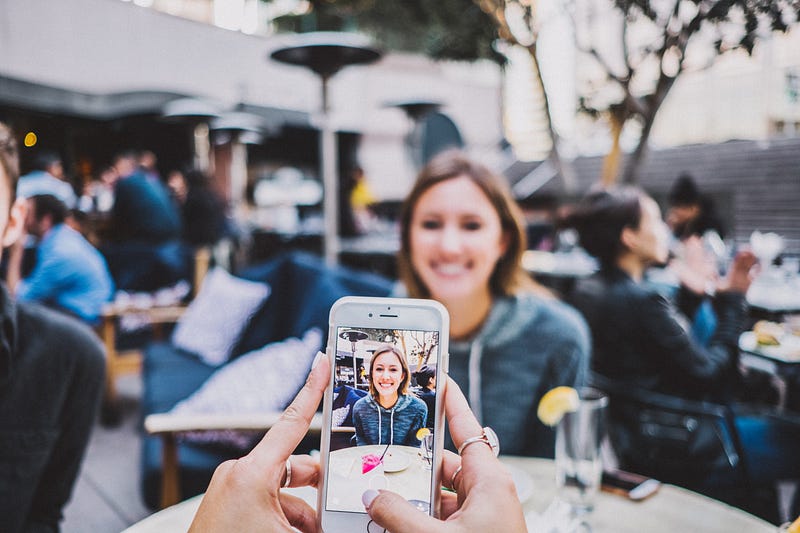
How can I ensure social media helps my mental health?
I wish there were a clear guide; some set rules to follow, and social media will never be an issue. The truth is, it will be at times. There are times when I get onto the wrong parts of Instagram, or when seeing others succeed makes me feel like a failure. Every day is a new day, and take it like that, and try to keep things positive. But these tips could help social media be beneficial for your mental health:
1. Set a time limit
Many phones have a specific setting that lets you time certain apps and blocks you when you run over. I had my boyfriend set this up for my Instagram when I realised how often I was mindlessly scrolling. It can be infuriating, but it’s also so effective. Even seeing the timer reminds me that I have five minutes to go is quite a wake-up. If your phone doesn’t have this built-in, you can download apps like Moment or Apptrack.
2. Consider which social media platforms
It may be that Instagram makes you feel worse about yourself, whilst Facebook lets you stay connected and keep up with your friends. Work out which platforms actually help you and stick to those. Or start with the one you know makes you feel good, and only build up to others when you’re confident it will actually help and not hinder.
3. Put it away
It sounds like I mean the time limit mentioned previously, but this is slightly different. I’m talking about when you post. We are all guilty of posting or commenting, and then waiting, watching. Eager for likes and comments and attention. It makes me feel stressed and insecure. The minute I post, I wish I hadn’t. So then I don’t post, and I wish I had. It is truly exhausting. So let’s both click off, as soon as we’ve done what we want to do.
4. Share with those you trust
A friend recently shared this tip with me, as I have a habit of posting things on Instagram or as my story, and then spending five minutes agonizing over it before deleting it. She suggested I use the Instagram close friends group and share to only them first. And it doesn’t need to be your actual closest friends, but the people you feel comfortable with sharing this content. It can be surprising; I removed people I had known for years and included ones I had met a few months ago, as I felt less judged by them. Build your audience from there as you grow in confidence about yourself and what you have to share. It could also be through making a secret account, for only a select few. It’s your choice who you share with.
5. Stay in real life
Social media can be tempting; it’s shiny and beautiful compared to the everyday grey. But you’ve got to focus on what’s real and keep your priorities on your actual life and sense of wellbeing.
It will never be one or the other. Just like we don’t have good days and bad days. Sometimes social media allows me to share my real experiences with mental illness, and other days I am just as guilty of posting a smile as I sob. Try to decide what social media is for you, and what you help to get out of it. Recognise your limits, and actually act on them.
Do you believe social media can help your mental health? Or do you have experiences with social media worsening your mental illness instead? Be sure to share any tips you have for using social media safely and healthily.
Would you like to receive my top monthly articles right to your inbox?
Originally published at https://symptomsofliving.com.