5 Ways Self-Reflection Can Help You Make Better Decisions

Self-awareness is your competitive advantage in today’s fast-paced world. How often do you evaluate yourself? If you’re the type that hits the road running, then probably not.
I hear you when you say you don’t have time, but we all do; it depends on our priorities. You don’t need to sit on a mountaintop for hours or go to a retreat and switch off.
Things Are Changing Fast
Look around you; what do you see? I see a lot of change. You know as well as I do that things are changing quickly in business and life.
We’re connected too much due to social media, many apps, and other entertaining content. Yet, we’re not getting enough time to do the things these gadgets and devices have been designed to do, which is to give us more free time.
We would never expect our cars/prized possessions to keep delivering at an optimal level without proper maintenance, yet we do this to ourselves repeatedly.
How? When we’re too busy with our daily lives, we sometimes put ourselves at the back of the queue.
10 minutes Is All It Takes
You can carve out 10 minutes each day to reflect on your day, yourself and your learning. Here’s how self-reflection can help you make better decisions:
1. Understand yourself better, especially when you’re up against it. This includes your strengths, weaknesses and potential opportunities.
2. Work out your following best steps
3. Help you build inner resilience by asking better questions
4. Enhance your self-talk by choosing better words
5. Seek help in advance
All it takes is a commitment of 10 minutes a day to turn inward and reflect. Let me go through each one for you in a bit more detail.

Here’s how dedicating time to self-reflection can profoundly impact your decision-making process:
- Deepen Self-Understanding: When you’re under pressure, losing sight of your true self is easy. Regular reflection helps you stay connected with your core — your strengths, weaknesses, and hidden opportunities. This deep understanding is crucial when making decisions in challenging situations.
- Clarify Your Next Steps: Sometimes, the path ahead seems foggy. Self-reflection acts like a lighthouse, guiding you towards your next best steps. It allows you to weigh your options and decide on the action that aligns with your values and goals.
- Build Resilience: Resilience isn’t just about bouncing back; it’s also about asking the right questions. Reflecting on your experiences, especially the tough ones, helps you develop a mindset geared towards learning and growth rather than defeat.
- Improve Your Self-Talk: The words you use with yourself matter. Through reflection, you can become more mindful of your internal dialogue and shift it from critical to supportive. This positive self-talk is a powerful tool in decision-making, as it fosters confidence and reduces self-doubt.
- Seek Timely Assistance: Reflection helps you recognize when you’re over your head and need external input. By understanding your limitations, you can seek help proactively, whether it’s advice from a mentor or support from a colleague, leading to more informed and well-rounded decisions.
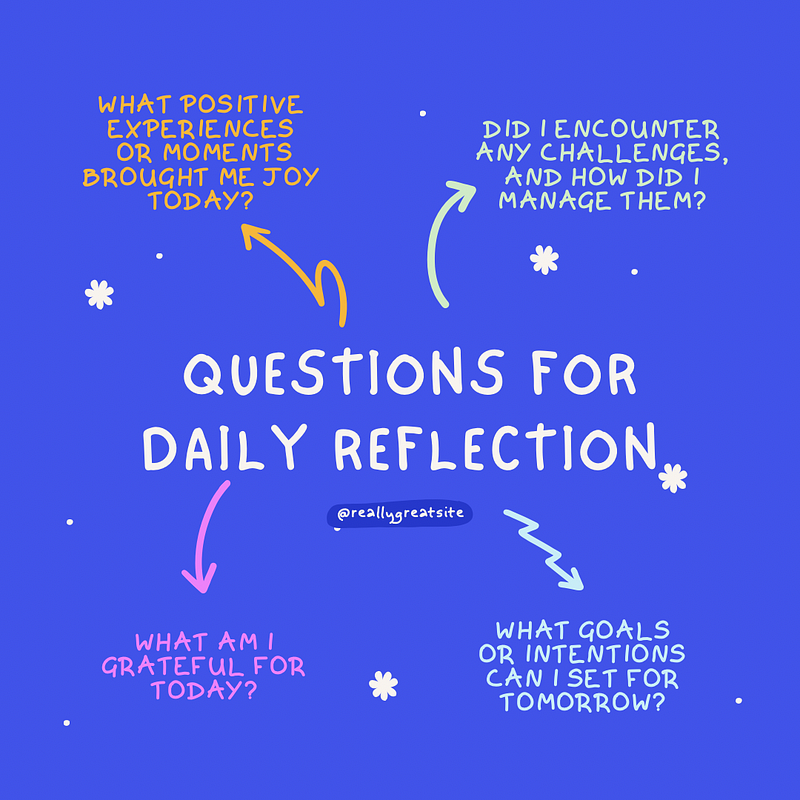
Call To Action
The “Five Minute Journaling” technique is a simple and effective self-reflection exercise. This exercise can be done daily and helps foster mindfulness, gratitude, and self-awareness. Here’s how you can do it:
Five-Minute Journaling Exercise
- Choose Your Time: Ideally, do this exercise either first thing in the morning or last thing at night. Morning reflections set a positive tone for the day, while evening reflections allow you to process the day’s events.
- Find a Quiet Space: Sit in a quiet and comfortable spot where you won’t be disturbed. This could be at your desk, bed, or even in a peaceful corner of your home.
- Set a Timer for Five Minutes: Keeping the time limit makes the exercise manageable, especially if you’re busy or new to journaling.
- Answer These Three Questions:
- What am I grateful for today? (Morning) / What was I thankful for today? (Evening)
- Write down 1–3 things. They can be as simple as a sunny day, a good cup of coffee, or a kind gesture from a friend.
- What would make today great? (Morning) / What went well today? (Evening)
- In the morning, list one or two things you can do to make your day successful. In the evening, reflect on what went well during the day.
- Daily Affirmation (Morning) / What did I learn today? (Evening)
- Morning: Write a positive statement about yourself or your goals. Evening: Reflect on a lesson learned or an insight gained.
- Reflect Briefly: After writing, spend a minute just sitting quietly. Reflect on what you’ve written. In the morning, this sets your intentions for the day. It helps you wind down and acknowledge your day’s experiences in the evening.
- Close Your Journal and Proceed With Your Day/Night: Carry the positive mindset or lessons learned into your day or restful night.
Parting Comments
Self-reflection isn’t about having all the answers — it’s about knowing the right questions to ask.
In today’s world, it’s how much you know; it’s about knowing yourself better to thrive instead of being swayed by external influences.
You do this by getting to know yourself better. Once you use the insights to your advantage, you’ll learn how to position yourself for the right opportunities instead of any opportunities.
Thank you for your attention.
Follow me for more valuable tips.
Pervin
linktr.ee/AimHighLtd