avatarToni Tails

Free AI web copilot to create summaries, insights and extended knowledge, download it at here

3613

Abstract

like you’re whistling. The breath feels cooler.</p><p id="e2d6">One way my son tolerates the heat under a mask is by regulating his breath in this way. He swears by it.</p><h1 id="8e8f">Be A Hero</h1><p id="f41c">When all else fails, Sky remembers that the best heroes wear masks.</p><p id="7a5a">If Batman didn’t wear a mask, bad guys would laugh at him. Can you imagine Bruce Wayne intimidating thugs in his immaculate suits and an appletini in one hand?</p><p id="7dc6">Be a hero for the folks who are most vulnerable to the virus. Wear a mask.</p><p id="75a0">My son would be proud of you, and you may save someone’s life.</p><figure id="fd8c"><img src="https://cdn-images-1.readmedium.com/v2/resize:fit:800/0*GneyGx5mbWNluX2y.jpg"><figcaption>image by Ulkar — purchased by the author</figcaption></figure><h1 id="62ce">How to Help A Kid With Autism Adjust to a Mask</h1><p id="c051">The following advice was shared by <a href="https://findaprovider.nemours.org/details/1804/diane-treadwell-deering-psychiatry-wilmington?FreeText%3ADoctors%20name=treadwell&amp;tab=1&amp;utm_source=khreview&amp;utm_medium=deval&amp;utm_campaign=diane-treadwell-deering&amp;utm_term=psychiatry&amp;utm_content=wilmington">Diane E. Treadwell-Deering, MD</a> on kidshealth.org</p><h1 id="f38c">How Can I Help My Child Understand?</h1><p id="9c4a">Kids with autism may need extra support to understand what’s going on around them, and what’s expected of them in some situations.</p><p id="68f3"><b>Social stories</b> are stories that teach kids what happens in some situations, and explain what kids should do in those situations. Many social stories have pictures to go along with them. Use social stories, pictures, or other visuals to help your child know the steps for:</p><ul><li><b>washing hands, wearing a mask, and other ways to stay healthy and safe</b></li><li><b>staying at least 6 feet away from others who don’t live with you</b></li><li><b>distance learning</b></li><li><b>new routines at home</b></li></ul><p id="3f71">You know how your child learns best, so use learning methods that have worked in the past.</p><figure id="67b7"><img src="https://cdn-images-1.readmedium.com/v2/resize:fit:800/1*g2zCz51JSui6pXEH_TT4Yg.png"><figcaption></figcaption></figure><h2 id="0479">How Can I Help My Child Adjust?</h2><p id="9a66">Routines are comforting for kids with autism, so do your best to keep as many of them as you can. Stick to regular bed and wake-up times, meal and snack times, screen time, chores, and other household routines. But build in new routines to include schoolwork, breaks, and exercise.</p><p id="3d4b">When possible, help your child take control by giving a couple of choices. For example, you could let your child choose what to eat for lunch. When doing schoolwork, you can ask what your child would like to do next.</p><p id="cb2c">Visual schedules and to-do lists can help kids know what to expect, while timers and 2-minute warnings can help with transitions.</p><p id="539e">Having a set routine and clear expectations will help lower the anxiety that can happen when things change.</p><figure id="43a1"><img src="https://cdn-images-1.readmedium.com/v2/resize:fit:800/1*g2zCz51JSui6pXEH_TT4Yg.png"><figcaption></figcaption></figure><h2 id="abe6">How Can I Help My Child Stay Calm?</h2><p id="8cc7">Kids with autism who feel frustrated, worried, or scared may have more repetitive behaviors (like hand flapping or rocking), tantrums, and other challenging behaviors.</p><p id="9ccc">Find ways for your child to express feelings. To help kids work through strong emotions, try:</p><ul><li><b

Options

talking together</b></li><li><b>doing crafts</b></li><li><b>writing</b></li><li><b>playing or acting out fears</b></li><li><b>for kids who are nonverbal, using augmented (or alternative) communication devices</b></li></ul><p id="7987">Also try <a href="https://kidshealth.org/en/parents/coronavirus-calm.html">calming activities</a>, such as deep breathing, music, or watching a favorite video throughout the day. Exercise also can help ease anxious feelings.</p><p id="231f">Limit the time kids spend on social media or watching scary or upsetting news reports. When kids do hear or read something upsetting, talk about it to help ease fears.</p><p id="5fd2">While caring for your child, be sure that you take breaks and recharge too.</p><figure id="4e02"><img src="https://cdn-images-1.readmedium.com/v2/resize:fit:800/1*g2zCz51JSui6pXEH_TT4Yg.png"><figcaption></figcaption></figure><h1 id="10b0">A Note from the Author</h1><p id="52c1">I have permission from Sky to share stories about him. He and I are both committed to sharing our stories to help people understand and embrace neurodivergent minds like his!</p><h1 id="01a5">Glossary</h1><p id="a0ff"><b>Autism Spectrum Disorder (ASD)</b>; <i>a neurological and developmental disorder that begins early in childhood and lasts throughout a person’s life. It affects how a person acts and interacts with others, communicates, and learns. It includes what used to be known as Asperger syndrome and pervasive developmental disorders — <a href="https://medlineplus.gov/autismspectrumdisorder.html">MedlinePlus</a></i></p><p id="9eb4"><b>Neurotypical (NT)</b> <i>means having a style of neurocognitive functioning that falls within the dominant societal standards of “normal.”</i></p><p id="7319"><i>Neurotypical can be used as either an adjective (“He’s neurotypical”) or a noun (“He’s a neurotypical”).- <a href="https://neurocosmopolitanism.com/neurodiversity-some-basic-terms-definitions/">Neurocosmopolitanism</a></i></p><p id="8f3b"><b>Neurodivergent. (ND): </b><i>having a brain that functions in ways that diverge significantly from the dominant societal standards of “normal.” -<a href="https://neurocosmopolitanism.com/neurodiversity-some-basic-terms-definitions/">Neurocosmopolitanism</a></i></p><figure id="8cfb"><img src="https://cdn-images-1.readmedium.com/v2/resize:fit:800/1*g2zCz51JSui6pXEH_TT4Yg.png"><figcaption></figcaption></figure><h1 id="686e">Resources</h1><p id="6eba">¹ <a href="https://www.autism.org.uk/about/behaviour/sensory-world.aspx">https://www.autism.org.uk/about/behaviour/sensory-world.aspx</a></p><p id="06f1">² <a href="https://www.nimh.nih.gov/health/topics/autism-spectrum-disorders-asd/index.shtml">https://www.nimh.nih.gov/health/topics/autism-spectrum-disorders-asd/index.shtml</a></p><p id="4f71"><a href="https://walyou.com/best-superhero-face-masks/">https://walyou.com/best-superhero-face-masks/</a></p><p id="18a0"><a href="https://www.kktv.com/2020/08/13/family-kicked-off-southwest-airlines-flight-after-boy-with-autism-wouldnt-wear-mask/">https://www.kktv.com/2020/08/13/family-kicked-off-southwest-airlines-flight-after-boy-with-autism-wouldnt-wear-mask/</a></p><p id="01a1"><a href="https://www.health.harvard.edu/blog/helping-people-with-autism-spectrum-disorder-manage-masks-and-covid-19-tests-2020061020089">https://www.health.harvard.edu/blog/helping-people-with-autism-spectrum-disorder-manage-masks-and-covid-19-tests-2020061020089</a></p><p id="2597"><a href="https://kidshealth.org/en/parents/coronavirus-autism.html">https://kidshealth.org/en/parents/coronavirus-autism.html</a></p></article></body>

Creativity, Health, Humor

5 Ways My Autistic Son Finds Peace Wearing A Mask

If he can wear one, so can you
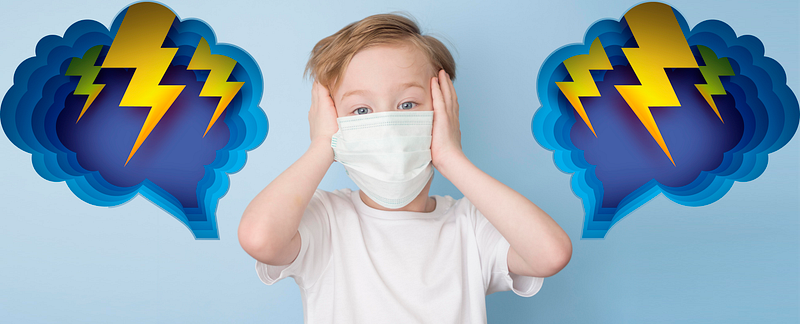
image by Ulkar — purchased by the author

My son, Sky, has always been especially sensitive ¹ to anything touching his face. He once described wearing a plain cloth bandana over his nose and mouth as feeling like “a thousand needles” pricking his skin. Sky has a medical condition, ASD — or Autism Spectrum Disorder, which means he doesn’t have to wear a mask in most places. Yet, he still chooses to wear one.

He has some tips that help him tolerate the discomfort that comes with wearing a mask, and he’d like me to share it with you.

Have Fun With It

There are a lot of mask choices available. Have fun by choosing a mask that reflects your style!

Whether you enjoy a beautiful pattern to offset an outfit or you like to pretend it’s Halloween every day — there’s a mask out there for you.

With the added edition of print-on-demand options — the variations are infinite!
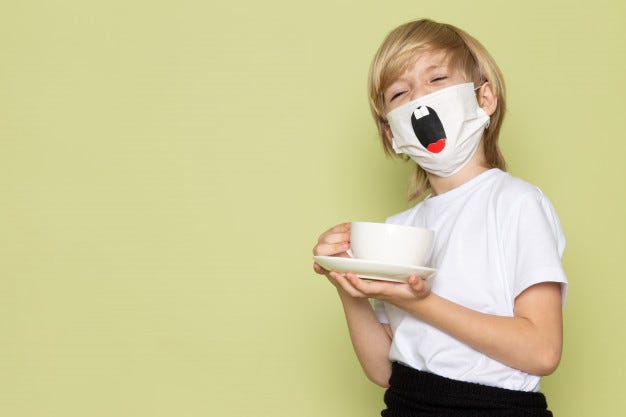
image by Ulkar — purchased by the author

Keep Your Mask Fresh

We use reusable cloth masks with replaceable filters — which are more comfortable than disposable masks. One way my son increases his comfort is my keeping his mask clean and fresh.

Be sure to follow the directions included with your masks before cleaning them. Also, it’s best to use a detergent for sensitive skin. Even if you don’t tend to need it with your other clothing, your face is probably not used to the repetitive friction of a mask.

A fresh, clean mask is much more pleasant than one that has absorbed your bad breath for a day.

Rinse With Cool Water

Before donning his mask, my son rinses his face in freshwater, then pats it dry. While he is in public, he is always on the lookout for a private bathroom so that he can repeat this action.

It helps cool his face. It also helps by giving him the knowledge of a reprieve in his near future.

Quick Tip: Carry around a handheld fan. My son can’t handle the kind with a little spritz of water, but you might love it. (I know I do!)
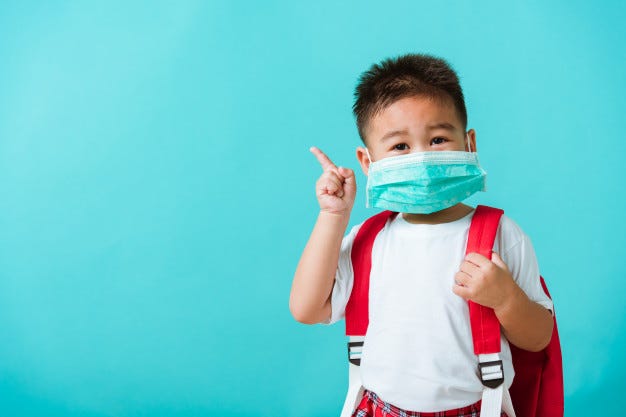
image by Ulkar — purchased by the author

Cold Breathing

One of the worst things about wearing a mask — especially in a hot and humid climate — is the heat. Hot breath, trapped beneath the mask, exacerbates this facial greenhouse effect.

My son combats this with what he calls “cold breathing.” Hold your hand up to your face, open your mouth wide, and breathe out— hot, right? Now try it again with your mouth pursed like you’re whistling. The breath feels cooler.

One way my son tolerates the heat under a mask is by regulating his breath in this way. He swears by it.

Be A Hero

When all else fails, Sky remembers that the best heroes wear masks.

If Batman didn’t wear a mask, bad guys would laugh at him. Can you imagine Bruce Wayne intimidating thugs in his immaculate suits and an appletini in one hand?

Be a hero for the folks who are most vulnerable to the virus. Wear a mask.

My son would be proud of you, and you may save someone’s life.
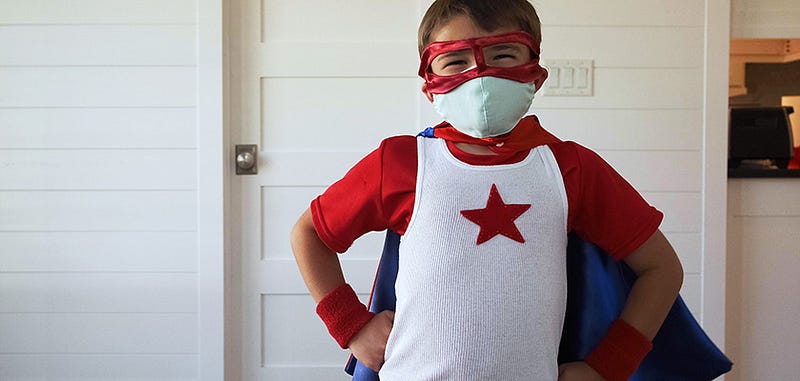
image by Ulkar — purchased by the author

How to Help A Kid With Autism Adjust to a Mask

The following advice was shared by Diane E. Treadwell-Deering, MD on kidshealth.org

How Can I Help My Child Understand?

Kids with autism may need extra support to understand what’s going on around them, and what’s expected of them in some situations.

Social stories are stories that teach kids what happens in some situations, and explain what kids should do in those situations. Many social stories have pictures to go along with them. Use social stories, pictures, or other visuals to help your child know the steps for:

  • washing hands, wearing a mask, and other ways to stay healthy and safe
  • staying at least 6 feet away from others who don’t live with you
  • distance learning
  • new routines at home

You know how your child learns best, so use learning methods that have worked in the past.

How Can I Help My Child Adjust?

Routines are comforting for kids with autism, so do your best to keep as many of them as you can. Stick to regular bed and wake-up times, meal and snack times, screen time, chores, and other household routines. But build in new routines to include schoolwork, breaks, and exercise.

When possible, help your child take control by giving a couple of choices. For example, you could let your child choose what to eat for lunch. When doing schoolwork, you can ask what your child would like to do next.

Visual schedules and to-do lists can help kids know what to expect, while timers and 2-minute warnings can help with transitions.

Having a set routine and clear expectations will help lower the anxiety that can happen when things change.

How Can I Help My Child Stay Calm?

Kids with autism who feel frustrated, worried, or scared may have more repetitive behaviors (like hand flapping or rocking), tantrums, and other challenging behaviors.

Find ways for your child to express feelings. To help kids work through strong emotions, try:

  • talking together
  • doing crafts
  • writing
  • playing or acting out fears
  • for kids who are nonverbal, using augmented (or alternative) communication devices

Also try calming activities, such as deep breathing, music, or watching a favorite video throughout the day. Exercise also can help ease anxious feelings.

Limit the time kids spend on social media or watching scary or upsetting news reports. When kids do hear or read something upsetting, talk about it to help ease fears.

While caring for your child, be sure that you take breaks and recharge too.

A Note from the Author

I have permission from Sky to share stories about him. He and I are both committed to sharing our stories to help people understand and embrace neurodivergent minds like his!

Glossary

Autism Spectrum Disorder (ASD); a neurological and developmental disorder that begins early in childhood and lasts throughout a person’s life. It affects how a person acts and interacts with others, communicates, and learns. It includes what used to be known as Asperger syndrome and pervasive developmental disorders — MedlinePlus

Neurotypical (NT) means having a style of neurocognitive functioning that falls within the dominant societal standards of “normal.”

Neurotypical can be used as either an adjective (“He’s neurotypical”) or a noun (“He’s a neurotypical”).- Neurocosmopolitanism

Neurodivergent. (ND): having a brain that functions in ways that diverge significantly from the dominant societal standards of “normal.” -Neurocosmopolitanism

Resources

¹ https://www.autism.org.uk/about/behaviour/sensory-world.aspx

² https://www.nimh.nih.gov/health/topics/autism-spectrum-disorders-asd/index.shtml

https://walyou.com/best-superhero-face-masks/

https://www.kktv.com/2020/08/13/family-kicked-off-southwest-airlines-flight-after-boy-with-autism-wouldnt-wear-mask/

https://www.health.harvard.edu/blog/helping-people-with-autism-spectrum-disorder-manage-masks-and-covid-19-tests-2020061020089

https://kidshealth.org/en/parents/coronavirus-autism.html

Mental Health
Parenting
Health
Family
Life
Recommended from ReadMedium