5 Ways an Indoor Garden Can Help Regain Balance in Your Life
Learning to embrace slow growth over time
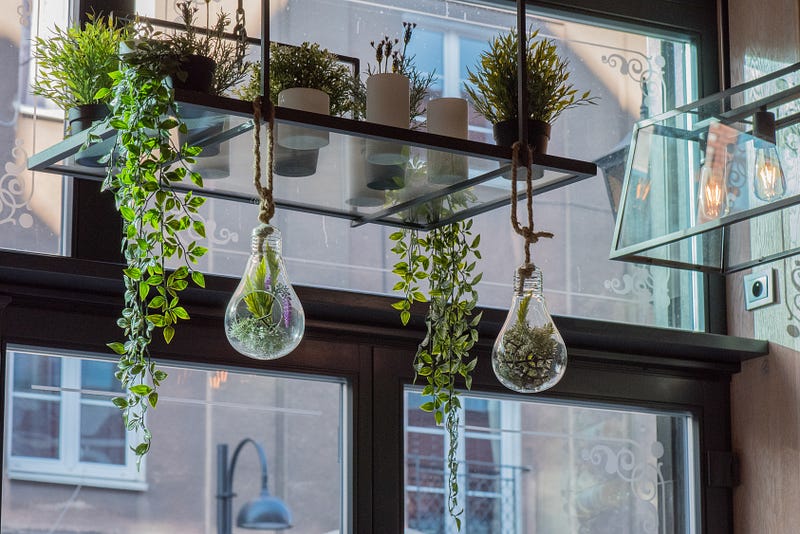
I developed a green thumb slowly, over several years.
At first, I would only buy tiny teacup succulents — tiny cactuses that would survive easily on a windowsill. My reasoning? I didn’t have time to fuss over a houseplant. All I would manage to do was watch the poor thing die.
Besides, I moved around enough in my twenties that I wasn’t even going to keep a sourdough culture alive at that rate.
But…I love my flowers. I worked at a greenhouse briefly during university, just long enough to develop an opinion of which I love (tulips, dahlias), and which I found to be eldritch abominations (lookin’ at you, petunias).
Growing a Greener Thumb
In mid-2016, I rented a basement apartment in the city, where I would stay for four years. The windows faced out onto a brick wall; my bedroom window was often blocked by the garbage bins stored for the house. The only consistent light I had available was the bathroom window- which looked directly onto the busy backyard.
Needless to say, my introverted self got very little natural light in the four years I lived in that apartment. This was compounded by the fact that I was self-employed for the last two years, working remotely.
The city itself though…there was an abundance of tiny grocery stores that would line the sidewalks with plants the instant spring began to peek from the slushy cold of the late Toronto winters. Rows of herbs. Planters of flowers.
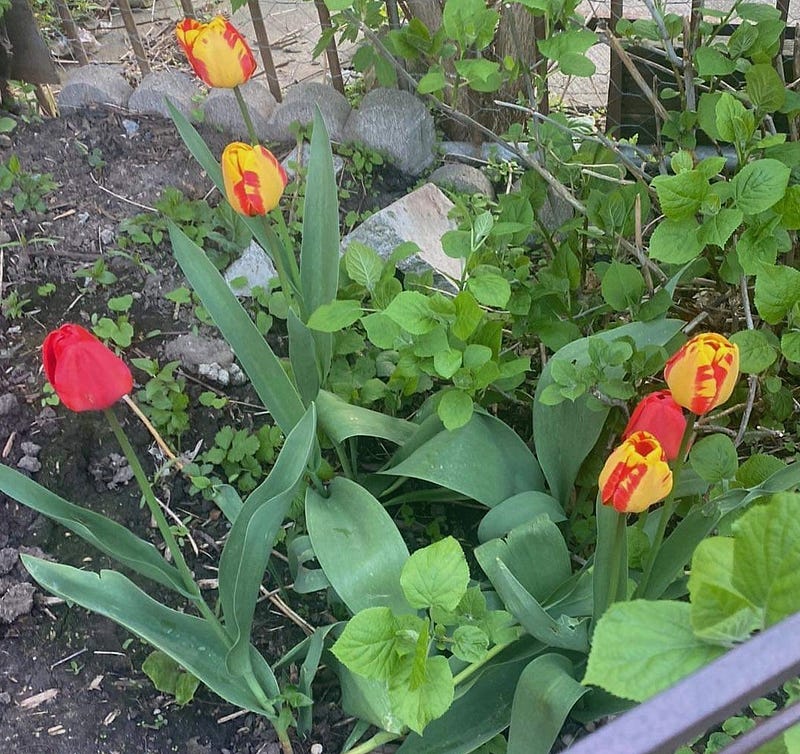
Buckets of tulips. Orange ones, if they had them. It was my tradition to always get an armful of tulips to break the winter monotony.
During this time, I started freelancing as a web developer, then moved into remote contract work. When your work is perpetually remote, your schedule tends to revolve around just a few things: Zoom meetings with clients, and the operating hours for whatever errands I needed to get done that…week. Everything else, including remembering to eat and sleep, was constantly at risk of getting unmoored from a normal cycle. Technology solutions did little to mitigate the issue.
What actually did help was introducing a living thing into my space (that wouldn’t violate my lease) and cultivating it. Doing so made me far more mindful of maintaining a liveable space than anything else.
It wasn’t a magic bullet, but it was a starting point I could build upon. Building up an indoor garden has the potential to take back a small sense of control, and practice an externally-focused form of self-care.
Here are five benefits I discovered once I fully embraced setting up an indoor garden.
1. Manage the Light in Your Space
I live in Canada, where summer days are gloriously long, but the winters have sunset hit at 4:30 in the afternoon. I’ve found, over time, that I get hit with Seasonal Affective Disorder (SAD) pretty hard just after Christmas.
Compound this with working from home, and a situation that a lot of renters can identify with: a limited amount of natural light available year-round. Without input from a natural day-night cycle, my circadian rhythm kept drifting off into night owl territory. It was like living inside a very small, quiet casino.
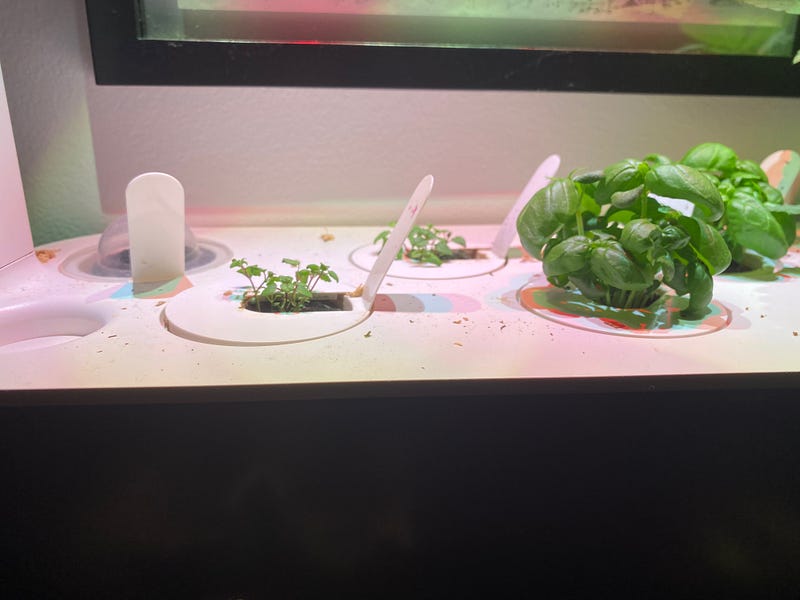
So when I ordered an indoor garden system back in 2018, the grow lights that came with it made a huge difference in regulating my sleep patterns. The one I had was on a 16-hour cycle, as in it would switch off for eight hours each evening to give the plants a chance to rest.
This played a role in regulating melatonin in both myself and the plants. Melatonin, a hormone that your body produces in response to darkness, plays a huge role in your ability to sleep. As you age, your body creates less of it; it also gets disrupted by the presence of light when you’re trying to sleep — a major reason that we often are warned to stop doomscrolling on our phones at night after having gone to bed.
And, yes, melatonin is produced in plants! There have been a growing number of academic studies looking at the impacts of nocturnal light on both flora and fauna, which has led to other studies investigating the roles that melatonin plays in various plants- from promoting rest (as for mammals) to cell protection, to growth promotion.
In my case, I also placed a smart plug on a timer on my garden system, so that I could keep the schedule keyed to an app on my phone. This was a decision made after multiple brief power outages reset the timer to start at the time of the blackout.
2. Purify Indoor Air
Proponents of having indoor houseplants often tout that they have the ability to purify indoor air.
This…isn’t quite accurate. It’s a lovely picture, but it’s the sort of scenario where one would have to cover every available surface of your living space with plants before the scale tip in that direction.
That said, houseplants are a good way to claw back the humidity that gets lost from a home’s heating system, which can improve air quality and mitigate underlying conditions of many dermal and respiratory issues. Having that little boost of oxygenation to your room, even if the amount is small enough to rate as a placebo, really does make a difference.
3. Supplement Your Pantry
When you need fresh herbs from the grocery store, the cost trends towards four to six dollars for a small package of leaves that will rapidly shrivel up and rot if not used immediately.
Having access to a small herb garden — whether it’s in your kitchen or on the back porch — means that you have ongoing access to fresh herbs, something that would be treated as a seasonal luxury in many kitchens.
It’s easy to start small. Basil is a staple in my own kitchen, so I make sure to keep some going as long as they can be sustained. It grows very easily, but it’s also an annual plant- it grows once for the season, and then you have to regrow it from seed.
Rosemary, sage, chives, winter savory, thyme, oregano, and mint happen to be perennials plants — they have the capacity to come back year after year. In a colder climate, I’ve personally found that rosemary, chives, and mint stand the best chance of actually behaving this way.
As a side note, if you’re growing mint (nothing says summer like a mojito), make sure it’s in a container, and not the ground. Mint can send shoots out underground some distance from the main plant once established, and is considered extremely invasive!
4. Natural Pest Control
If you live in a region that has a bad mosquito problem every summer, there are plenty of plants that will deter them from staying in the area. The key is to select plants that have a strong scent.
Marigold, petunias, and lemongrass are high on the list of plants that not only repel mosquitos but often also ticks and aphids.
If you’ve been going for a herb-heavy garden the way I did this year, then mint, lavender, rosemary, and basil all have strong scents that mosquitos dislike, and will avoid.
The really nice thing about getting to know the pest control qualities of these plants is that, if you decide to try your hand at vegetable gardening, you can strategically pair them with herbs that will protect them from pests as they mature.
5. Slow Down and Appreciate the Little Things
Do you know what’s amazing?
Watching something grow from almost nothing over a period of weeks. It’s easy to nod along when hearing about the power of slow for mental health, but keeping plants is a practical, meditative exercise in practicing a slower lifestyle.
It’s a means of reconnecting with the natural world. It’s a way of getting reacquainted with natural cycles.
My own garden has expanded since that little planter system, although I still keep that original planter in my bedroom, a sort of natural light-alarm clock once the winter comes. Going out daily to tend it guarantees that I leave the house to tend to it at least once per day. My garden and my mental health are both in better shape for it.