5 Main Virtues From Confucius To Lead a Successful Life
#3. Trustworthiness — 信 (xin)
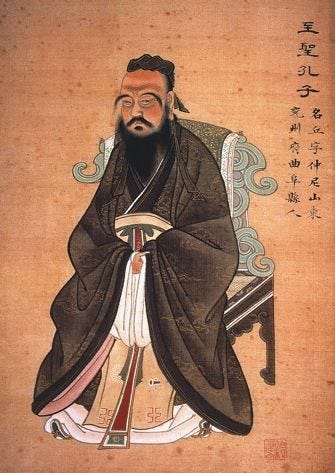
Confucius, the ancient Chinese philosopher, teacher was born on September 28, 551 BC. He was regarded as one of the wisest sage for many people in East Asia.
Confucius’ teachings stressed personal exemplification over certain rules of behaviors. He is considered the most important thinker in East Asian history.
If you’d like to lead a successful life, it is important so start working first on the basics — our own characters. It would be wise to adopt these five integral virtues suggested by Confucius. When you have these 5 virtues down, doesn’t matter where you’ll end up with, you can live happily and successfully.
1. Benevolence — 仁 (ren)
Benevolence is an act of kindness towards ourselves and others without expecting to get anything in return.
Confucius defined benevolence as “wishing to be established himself, seeks also to establish others; wishing to be enlarged himself, he seeks also to enlarge others.” Confucius also said, “Benevolence is not far off, for those seek it has already found it.”
In other words, if we improve ourselves, we are likely to help others improve. If we always act with benevolence and practice it in our daily life, then benevolence is already part of us.
If we don’t treat ourselves well, chances are we are not going to treat others well. On the other hand, if we love ourselves and treat ourselves with respect, chances are we are going to love others and respect other people more. Our inner world directly reflects back the outer world we live in.
Remember to always be kind to yourself, so you can be kind to other people and the world will be a better place for everyone as a result of practicing benevolence in our daily life.
Application: Seek ways to add values to other people’s life. For example, volunteer to do a task for your friend or family member and do it in a cheerful manner because you love, respect him or her, and do it without hoping to gain anything in return.
“Benevolence is the characteristic element of humanity.”
— Confucius
2. Righteousness — 義 (yi)
Righteousness in the literal term means justice, moral and have the ability to choose to act rightfully in any given situation.
Righteousness involves a moral disposition to do good, and also the intuition and sensibility to do so competently.
A behavior of righteousness goes beyond simple rule-following and involves a balanced understanding of a situation, and the “creative insights” necessary to apply virtues “with no loss of sight of the total good. It represents this ideal of totality as well as a decision-generating ability to apply a virtue properly and appropriately in a situation.
Application: Try to understand the full context of a situation before giving judgment or an opinion in a moral and helpful way.
“If there is righteousness in the heart, there will be beauty in the character. If there is beauty in the character, there will be harmony in the home. If there is harmony in the home, there will be order in the nations. When there is order in the nations, there will peace in the world.”
— Confucius
3. Trustworthiness — 信 (xin)
In the Analects, Confucius said: “if one is trustworthy, others will give one responsibility.”
This means if you are trustworthy, others will be more likely to rely upon you.
In the workplace, if you are known for trustworthiness, your manager will take notice and are more likely to give you important tasks therefore you will be compensated better with a higher salary, and get promoted much quicker.
Confucius said “trustworthiness is superior to strength, ability to flatter, or eloquence” He further explained that trustworthiness was superior to either food or weapons, concluding: “If the people do not find the ruler trustworthy, the state will not stand.”
Application: Develop the habit of trust in yourself and other people. Always act with honesty and integrity in everything you do.
“At home, a young man should be a good son, when outside he should treat others like his brothers, his behaviour should be one of trustworthy and proper, and should love the multitude at large and keep himself close to people of benevolence and morality. If after all these activities, he has any energy to spare, he should read widely to stay cultivated." — Confucius
4. Propriety — 禮(li)
Propriety means politeness or the quality of conforming to conventionally accepted standards of behavior or morals.
The teachings of Propriety promoted ideals such as filial piety (the important virtue and primary duty of respect, obedience, and care for your parents and other family members), brotherliness, good faith, and loyalty.
The influence of Propriety guided public expectations, such as the loyalty to superiors and respect for elders in the community.
Propriety should be practiced by all members of society. Propriety involves the superior treating the inferior with politeness and respect. As Confucius said “a prince should employ his minister according to the rules of propriety; ministers should serve their prince with loyalty” (Analects, 3:19).
Application: Start practicing propriety in your family encounter. Give support and assistance to your family willingly. Then we can further apply in other aspects of our life such as in social encounters with other people by being respectful and loyal to the relationships.
“Without an acquaintance with the rules of propriety, it is impossible for the character to be established.” — Confucius
5. Wisdom — 智(zhi)
Wisdom is the characteristics of having knowledge, experience, and good judgment in any given situation.
A person is considered intelligent and has wisdom when he/she can make a sound decision based on his/her prior knowledge and learning experiences.
In the Analects, wisdom is related to being able to appraise people and situations rightly. “Wisdom allows a gentleman to discern crooked and straight behavior in others (12.22)” Confucius explains the virtue of wisdom as “knowing others”. And knowledge is the basis for properly “selecting” others, defining wisdom as the virtue that is the basis for selection. But it is also about judging the situations correctly.
Application: Embrace learning and expanding our knowledge by reading more books. Learn the experience of other successful people we admired. Internalize what we learned and being able to form the wisdom in our own mind to make good judgment in any given situation.
“The person who asks a question is fool for a minute, the person who does not ask is a fool for life.” — Confucius
Final Thoughts
Let’s review the 5 integral virtues from Confucius and make sure we practice them on daily basis.
They are:
- Benevolence — 仁 (ren)
Application: Add values to other people’s life. Show love and respect for yourself and others.
2. Righteousness — 義 (yi)
Application: Understand the full context of a situation before giving judgment or an opinion in a moral and helpful way.
3. Trustworthiness — 信 (xin)
Application: Develop the habit of trust in yourself and other people. Always act with honesty and integrity in everything you do.
4. Propriety — 禮(li)
Application: Help your family readily. Be respectful and loyal to any relationships you are in.
5. Wisdom — 智(zhi)
Application: Enjoy learning and reading more books. Learn the experience of other successful people you admired. Internalize what you learned and being able to form the wisdom in your thoughts to make good judgment in any situation you encounter in life.
If you adopt and apply these 5 virtues as part of you, you will lead a much fuller and successful life.
“Wheresoever you go, go with all your heart. — Confucius”


