
5 Universally Accepted Ideas About Wine That Are Dead Wrong
They’re stopping you from living your best wine-life

There’s a running joke among my wine trade friends that if there is a widely accepted idea about wine, the opposite is probably true.
As a Somm, this saddens me because it’s these “truths” that:
a) stops you from enjoying wine as much as you could
b) gives license to more unscrupulous wine professionals to rip you off and
c) peddles the myth that wine is snobby and rule-based.
Today, I’m going to teach you which of these widely accepted ideas about wine are total BS.
And what to do instead.
Wine corkage isn’t ripping you off — it’s incredible value
Here’s the dirty little secret many restaurants and bars don’t want you to know.
Most restaurants and bars work on a percentage markup model and that percentage can be high. Typically it’s between 2x (if you’re lucky) and 4x the retail price of the wine.
Corkage on the other hand — when an establishment charges you a fee to drink your own bottle or one of their retail-priced bottles in their bar or restaurant — is a flat charge.
This fee is likely to be between $20 and $25 (in Europe, it’s often much less)
This means that, unless you’re drinking a cheapie bottle from the bottom supermarket shelf, corkage is far better value.
This is how it works:
Say you’ve got an $80 bottle of wine in a restaurant that marks up 3x. In a retail setting that bottle would be $26. In a place that charges $20 corkage, that same bottle would only cost you $46 to drink it in their establishment.
Or you could stick to your $80 budget and drink a bottle that would be worth $60 retail.
In America, it might piss you off that a BYOB (Bring Your Own Bottle) establishment charges you a fee for opening a bottle on-site. In Europe, people complain that enotecas (wine shop and bar hybrids) charge a fee for drinking wine in-store that you could buy cheaper to take home.
I once had a woman refuse to leave my wine bar until she had written a bad TripAdvisor review (oooh, I’m quaking in my boots) about our corkage model.
In reality, corkage is the best value way to drink wine out and about.
I’ve seen corkage as low as €5 in Europe. In fact, I know of one place (and I’m not telling you where) that offers zero, truly making it the best value place in the world to drink wine other than your living room.
In my hybrid wine store and bar, I offered a $15 markup. That barely covered the extra costs that come with people drinking in-store — extra staff, kitchen setup costs, extra bills, and the like. But we offered it because we wanted to be the best value we could possibly be.
The next time you think corkage is just a way to rip you off, you might want to think again.
The second-bottle-on-the-wine-list rule isn’t real
This widely accepted rule says that the second bottle on the wine list is the most heavily marked up because restaurants know people get embarrassed ordering the cheapest, so they plump for the second.
Research has proven this is total crap.
Generally speaking, a restaurant or bar will mark up their wine one of the aforementioned two ways — a flat fee or a percentage.
And yes, that percentage can widely vary which means you won’t know what’s good value unless you have serious intel into the local wine scene.
Alas, this doesn’t make it easy for you. But this research suggests, mid-priced bottles tend to be marked up the highest and that would jive with my professional experience.
My advice? If you don’t know or care, go for the house wine. If you do, go to a place that offers corkage.
Alternatively, just drink whatever you like the sound of regardless of if it’s good value or not. Experience is worth a lot, after all.
If you like rich reds and light whites, you’re at odds with most of the wine trade
Most of my punters wouldn’t go near light reds and rich whites. They would think the former thin and watery and the latter too buttery.
Think of the ABC (Anything But Chardonnay) crowd.
In the wine trade, the opposite is generally true, largely thanks to the French wine region Burgundy.
Here, light Pinot Noirs and rich Chardonnays rule the roost and some bottles command thousands of dollars a pop. The most expensive wines in the world are indeed Burgundian Chardonnays and Pinot Noirs.
The region has influenced countless winemakers across the world to lighten up their reds and beef up their whites.
Thank our Lord Bacchus for that.
These styles are where truly interesting and skilled wines are made. It’s easy to whack an over-extracted 15% red wine in new oak or age a white wine in stainless steel. It’s much harder to make a light but concentrated red and to balance oak barrel flavors in whites.
You can, of course, like any sort of wine you want. But most of us Somms would LOVE it if people gave more of these light reds and rich whites a try.
Most of the time people are surprised with how much they love them.
Dump your Champagne flutes
I’ve not used a Champagne flute in nearly 10 years.
They’re so annoying. Not only do some of them look absolutely ridiculous (no one needs a foot-long stem) they actually stop you from being able to smell anything from that tiny little opening.
And smell is up to 95% of taste.
The better way is to use glasses that look something like this:
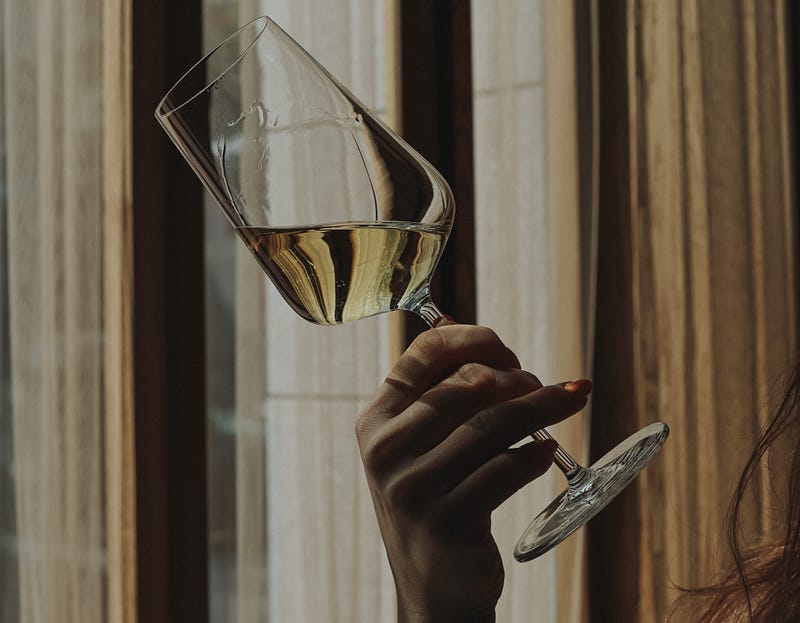
These allow enough room for the wine to release its aromas without losing the bubbles.
In fact, these are the only sort of glasses you will ever need. Forget the fancy flutes and the huge bowl-like red wine glasses, keep your glass medium-sized and tapered for everything you drink.
It makes a difference. Promise.
Spitting wine is not an affront to Bacchus (nor is it often required)
If I had a dollar for every time someone asked me if I as a Somm spit all my wine, I wouldn’t have to write for a living.
Similarly, I was at a public tasting event the other day when friends of mine refused to spit. They felt it was offensive to the winemaker.
Both of these are wrong.
Spitting, whilst perfectly acceptable in all wine circles (as is dumping a wine into the spit bucket), is generally only required in two situations.
One, if you’re at an event or dinner and want to try lots of wines and two, if you’re not able to drink, for instance, if you’re the designated driver or even pregnant.
That’s it.
The rest of the time, drink your damn wine.
I don’t know where half these weird-ass ideas come from but there are SO MANY that are total BS.
This list is just the tip of the iceberg.
It bothers me because as someone who cares a whole lot about this industry and wine as a cultural touchstone, I want to see more people make better, more informed choices about how they drink.
It’s why I write what I write.
It’s why I do what I do.
As always, if you have any wine questions, feel free to stick them in the comments.


