
How To Create a Kick-Ass Product Manager Resume
We’ve all been there, scrolling through your LinkedIn feed after a boring day of work. “I need a new challenge,” you thought to yourself.
*Ding* a notification popped up: “Product Manager at Unicorn X”. Even the AI agrees.
You click through. It’s a more senior role, in a growing industry, and free food at their infamous kitchen.
Fired up, you dust off the resume you created 3 years ago. You have so much to update.
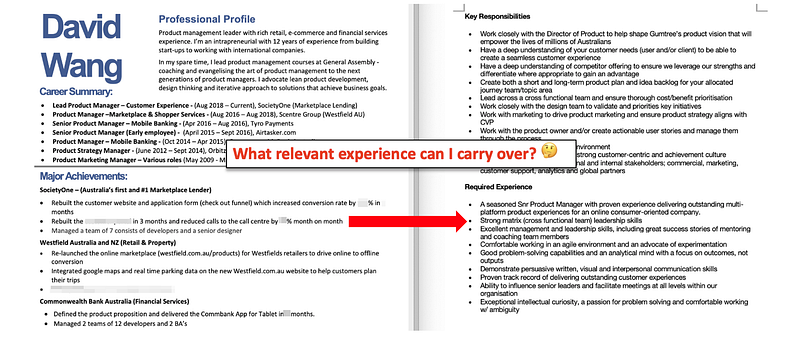
- What should I include in my new resume?
- Where do I start?
- How long should a product manager resume be?
- Is my template good enough to get me noticed?
- And for folks who are not PM’s: how do I break into the industry with little to no PM experience?
Don’t worry. I can help you answer all of these questions, let’s get right to it!

Step 1: Distill Your Resume into 1 or 2 Pages
Your resume is your brochure, not your autobiography. Think of it as a dating profile. Including too much information may give the impression you are too desperate for a date, which generally raises questions.
The goal of your resume is to highlight your key selling points so you get the interview
During the interview, you can showcase all the details of where you’ve been, what your values are, and how you work with others.
User experience is a crucial skill for PMs, this is the first opportunity for you to demonstrate it.
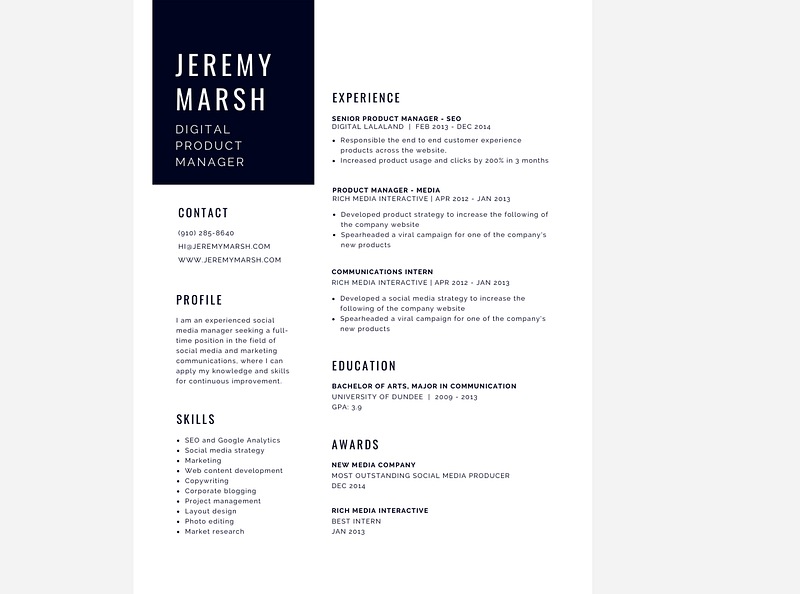
In terms of design, head to Canva.com for free templates
Select something elegant, sensible and crisp. Don’t select a template that has a lot of colours and a complex design. Unlike a dating profile, photos are generally not encouraged.
Step 2: Tailoring Your Resume To Fit The Job
Tailor your resume for each job. It’s a little bit of work, but here is a trick to make it much faster.
First, study the job description and copy and paste the Key Responsibility and Required Experience section into your favourite word processor.
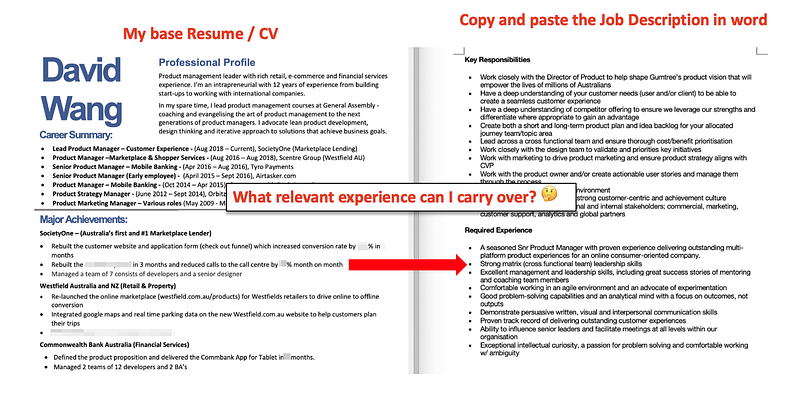
Using your base resume as an open book, answer each of the sections of the Job Description.
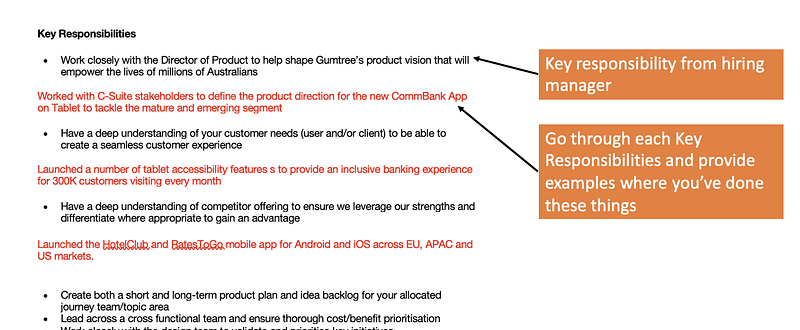
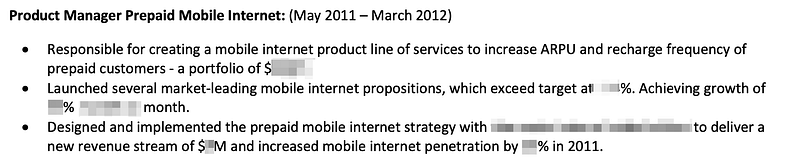
Hint: Start with a verb, include a metric, then end with a time frame.
For example:
Rebuilt the consumer loan application form (check out funnel) which increased conversion rate by 120% in 3 months
Step 3: Add in a Major Achievements Section
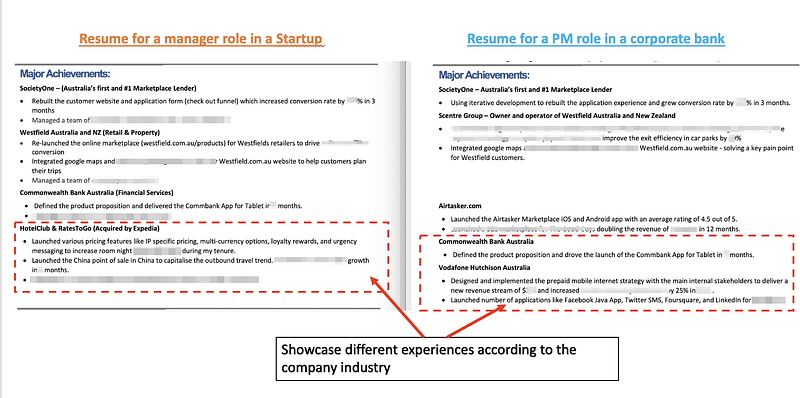
You can use this section as an executive summary to showcase relevant experience for the role.
Here are some common examples to include:
- Banking or consulting generally requires examples with an analytical mindset, market approach, compliance, and risk reduction.
- Startups or corporate ventures require a culture of innovation, greenfield projects, and ideas that resulted in hyper-growth.
- E-commerce and retail appreciate examples around seasonality, segmentation of customers, past campaigns, and the online/offline experience.
Step 4: Don’t Spam Keywords, Weave Them Into Your Achievements
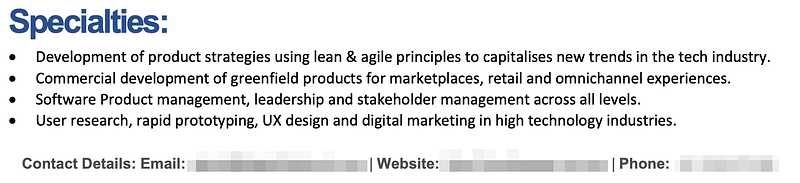
Weave one of these essential elements in your CV: Strategy, Delivery, Leadership, and Customer Experience
Include Business Strategy Examples
Examples of strategy work could be: carrying out user or market research, providing a strategic vision for the business, building a product roadmap using data, commercial negotiation, identifying and solving problems in past jobs.
Include Examples of Agile Delivery
Talk about using Kanban or Scrum to manage a project delivery while playing the Product Owner role.
Include examples of how you’ve managed a backlog and prioritised with an agile team. If you haven’t been in an agile environment before, consider signing up for a 1 or 2 day course to learn about it. This is an essential skill in technology companies.
Include Leadership Stories
Product managers are like a conductor in an orchestra; they influence the players without changing the notes.
For your resume, highlight any experience where you’ve rallied a team towards the goals you’ve created. If you are at the beginning of your career, include University clubs, hackathons, sports teams, and any volunteer work.
Add UX / Design / Customer Research
Having the ability to empathise with the customer is an essential attribute of a great product manager.
For your resume: Highlight your work with UX designers to perform UX research, create wireframes, and facilitate usability testing. Talk about supporting customer enquiries on a regular basis.
Step 5: Create a Personal URL Link to Blog or Linkedin
Most hiring managers google potential candidates.
You want to SEO yourself by having your own website, like www.davidwang.com.au. Then link it to a professional-looking LinkedIn page, a personal website or a blog.
Wix, Squarespace or One Profile are excellent options for creating a website. Web hosting costs are around $10 a month and you can get a domain name as part of the deal.
If you want to try a different route, you do what I do by blogging on Medium for free.
If you’re not comfortable having a large digital footprint, you can create an alias so you can stay anonymous. Add this alias to your resume.
Bonus tip: If You Need Experience, Become a Freelance PM
If you’re looking to get into PM but don’t have prior experience, you’ll need to start hustling. Here are some ways you can get some PM experience:
- Create a side project: create Wireframes, Blogs, Website, a Shopify Store, or some kind of business that showcase your problem-solving skills.
- Volunteer to help small businesses to help them build products.
- Participate in hackathons and document your experience.
And that’s it. This is how you create a PM resume that can land you jobs! 🙌
So in Summary, Do the Following To create a Kick-Ass PM Resume:
Step 1: Simplify your CV into 1 to 2 pages and only include information that is required in the job description.
Step 2: Answer the job description. Start with a verb, include a metric, end with a time frame.
Step 3: Don’t reinvent the wheel, start with a template, then add your flair.
Step 4: Don’t spam keywords, weave them into your achievements.
Step 5: Create an online presence.
Lastly, Be a freelance PM if you need to build experience.


