
5 Things You Need To Know If Investing For The First Time
Anyone can invest with this knowledge
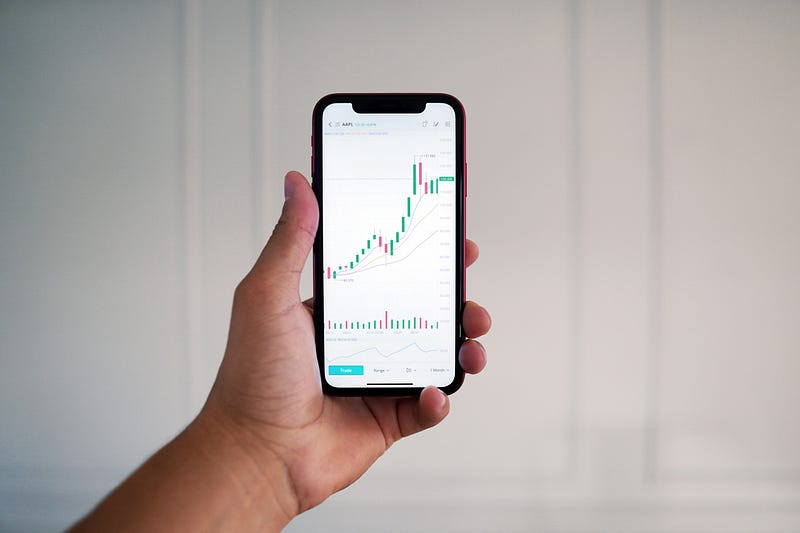
If you want wealth you’ll need to invest.
Investments grow your wealth whilst you are busy with other things. This is a very powerful feeling.
But so many people don’t invest. Because…
- they are fearful
- it seems too complicated
- they don’t want to lose their money
- they think investing is for rich people
I’ve discovered that anyone can invest. You make money without taking big risks. And it’s not complicated.
It’s sad that ordinary people are locked out of the game.
I want to unlock the door and invite you in.
Here are the 5 essentials you need to know before you invest for the first time.
1. Understanding the real meaning of risk
Risk doesn’t mean what you think it does.
Risk is a key concept in investment. But what it means to you and what it means to the professionals is not the same.
You think something is risky if you might lose all your money.
Risk to the professionals means volatility. The value of your investment going up and down.
This might surprise you. There are investments that give you a very high chance of making money. And a very low chance of you losing money (more on these later). But if the value varies on the way up this is ‘high risk’ for the professionals. Even though an ordinary person would consider this low risk.
But the only value that matters is when you withdraw your money. In a marathon, it doesn’t matter who is leading after mile 1. If racing positions change a lot during mile 5 it is irrelevant. What matters is mile 26.2. Nothing else.
The same is true with your investments. You need to focus on the value when you want the money, not the changes that happen before then.
But how can you invest for a high return with low risk?
Glad you asked.
2. Why you need to diversify and how to do it
If you want to have a low chance of losing your money you need to diversify.
Some recommend diversifying across a range of investments. For example property, gold, bonds and shares. This is dangerous unless you understand each of them. A new investor should focus on one type of investment.
The stock market is the simplest place to start.
And it is easy to diversify with an index fund.
Index funds are an incredible investment option. They buy a small piece of lots of companies in a country, region or even the whole world. The fund aims to copy the whole market. Rather than select a few companies you can invest in the whole market. You can’t diversify much more than that.
This means the odds of losing all your money are virtually zero.
3. Time is your best friend
There are 3 ingredients that combine to give you wealth:
- The rate of return (how much it goes up each year)
- How much you put in
- How long you invest for
The easiest for you to influence is time. It is hard to grasp how powerful time is. Look at this mind blowing example.
Assume you invest $50/month and get an 8% return.
After 10 years your investment would be worth $9,172. Not bad.
Now if you invested for 20 years. How much do you think you’d have? 20 years is twice as long so it is easy to assume twice as much.
$18k instead of $9k.
You’d be very wrong.
After 20 years you’d have $28,866. Triple your money not doubling it!
This is the power of compounding. You gain off your gains. It’s like a snowball that grows slowly at first but after a while gets huge.
Let’s add another 10 years and invest for 30 years. And see what happens.
20 years = $28,866.
30 years = $71,383
More than double in value for 50% extra time.
Invest for 40 years and the numbers get ridiculous.
40 years = $161,176
Time is your investment superpower. Start as soon as you can. Invest for as long as possible.
4. Make more by paying less
When I started my investment journey I made a shocking discovery.
You can lose a lot of money if you choose an investment with high fees. Paying 1.5% extra in fees doesn’t sound a lot. But over time this can cost you $10,000’s.
High fees tend to come with managed funds. This is because you pay an expert to choose the best stocks. Passive index funds have low fees because they match the market. Managed funds tend to perform worse than index funds.
So choosing an index fund costs less and performs better.
I use Vanguard but there are plenty of other options. Check your % fee. Aim for 0.4% max.
5. You are the biggest risk
The biggest cause of losing money is you.
It is normal to be concerned about value of your investment. The fees. Risk level. The rate of return. But the riskiest part of any investment is your behaviour.
What you should do is invest for the long term and ignore what happens in the short term or even the medium term.
Sounds easy enough.
When the stock market crashes. The media love it. They have hysterical headlines. And dramatic stories. Inexperienced investors panic and driven by emotion sell.
This is the worse thing you can do. You don’t lose money until you sell. Selling after a crash guarantees a loss. But if you wait you will be ok.
Before investing. Be honest with yourself. Will you be able to ignore the short-term dips? If this will cause you anxiety and sleepless nights. Investing may not be for you.
The other danger is being seduced by the big tip, the hunch. Believing you can time the market or predict which stock will do well. You can’t. Don’t do it.
Put your money in. Ignore it. And you’ll realise many years later you’ve done very well for yourself.
(This article does not constitute financial advice)
…


