5 Things You Can Do To Make Your Self-Talk Work For You
Do you recognise the voice in your head right now? It’s your self-talk. Trust me, you’re not losing your marbles.
What Is Self-Talk?
Self-talk refers to the internal dialogue that we have with ourselves. It includes our thoughts, beliefs, and attitudes about ourselves and our world.
Self-talk can be positive or negative, significantly impacting our emotional state, behaviours, and overall well-being.
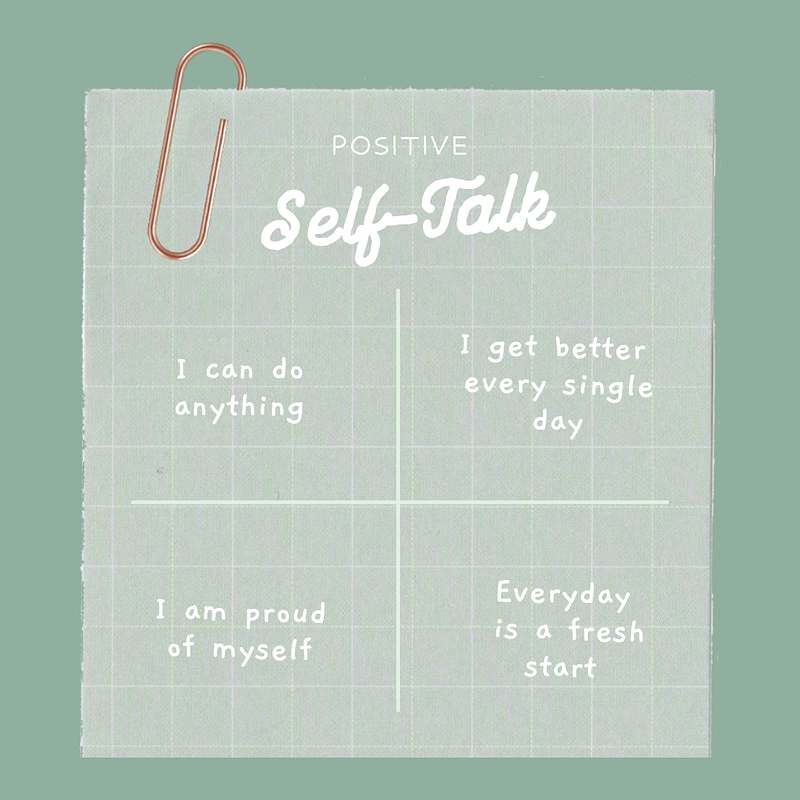
Positive self-talk involves talking to oneself in a supportive and encouraging way. It can help boost self-esteem, reduce stress, and improve overall well-being.
Some examples of positive self-talk include:
- “I am capable and worthy.”
- “I can handle challenges and setbacks.”
- “I am learning and growing.”
- “I am strong and resilient.”
On the other hand, negative self-talk involves talking to oneself in a critical or self-defeating way. It can lead to feelings of low self-worth, anxiety, and depression.
Some examples of negative self-talk include:
- “I am not good enough.”
- “I can’t do anything right.”
- “I am a failure.”
- “I am worthless.”
Building Your Dream Life
Guess what? So many people have beautiful dreams, but they never turn those dreams into reality. Why? Their Self Talk plays a significant role in preventing them from achieving their goals. How? They want to move forward, but a voice keeps pulling them back.
Over time, the motivation starts dimming, life takes place, and they settle for whatever is on offer.
Self-Talk Can’t Be Switched Off
If left unchecked, self-talk goes on autopilot, and it’s a big blur in the background.
You can’t switch it on and off during waking hours, but you can make it work by learning to control the volume. It requires effort on your part, and over time and with a bit of patience, you can turn your self-talk to work for you instead of against you.
Learning From The Tennis Greats
I don’t know about you, but Tennis is a beautiful sport where self-talk makes or breaks a match. For example, Pete Sampras would say
‘Everything is okay”, “I need to let go of that last point and focus on the next point”, “I need to stay focused on the present and prepare for the next point”, “I need to get aggressive with my feet”.
Roger Federer
‘Just relax, man. The comeback is so remarkable already. Let it fly off your racquet and see what happens in the final match against Wawrinka in the 2017 comeback match.
His self-talk helped him shape his attitude — ‘A man who wins is a man who thinks he can”. This attitude helped Federer win countless matches and competitions.
So, how do you make self-talk work for you?
Here are five things you can do to make your self-talk work.
- Choice of words matters — The way you speak to yourself matters. Are there Positive or negative words you use?
- Watch the thoughts — are they negative or positive?
- Don’t procrastinate — the voice says, ‘I’ll do it later, but turn it around and do it now.
- Do something new
- Audit your circle — is your social circle (family and friends) positively influencing you or not?
Let me expand on each one.
- Choice of Words Matter: Our language in self-talk can significantly influence our mindset and actions. Positive words can boost confidence and motivation, whereas negative words can do the opposite. For example, instead of telling yourself, “I can’t handle this,” try saying, “I will find a way to manage this challenge.” This shift in language can lead to a more positive outlook and effective problem-solving.
- Watch the Thoughts: Awareness of the nature of your thoughts is crucial. Are they predominantly negative or positive? Negative thoughts can spiral into stress, anxiety, or depression. To combat this, practice mindfulness or meditation to become more aware of your thought patterns. When you think negatively, try reframing the thought in a positive or realistic light. For example, if you think, “I always fail,” remind yourself of times you’ve succeeded.
- Don’t Procrastinate: Procrastination often starts with self-talk like “I’ll do it later.” This can lead to a cycle of delay and stress. To break this cycle, challenge procrastination with action-oriented self-talk. For instance, when you catch yourself saying, “I’ll do it later,” respond with, “No, I’ll start now, even if it’s just a small step.” This approach can help build momentum and reduce the habit of putting things off.
- Do Something New: Engaging in new activities or hobbies can be invigorating and positively influence your self-talk. When you try new things, your self-talk often shifts to problem-solving and learning, which can be more positive and empowering. This can also help break the monotony and bring new perspectives and confidence in handling unfamiliar situations.
- Audit Your Circle: The people you surround yourself with can significantly impact your self-talk. It might reflect in your internal dialogue if you’re constantly around negative or critical people. Assess your social circle and spend time with those who uplift and support you. Positive relationships can lead to more positive self-talk, as encouragement and support from others can boost your self-esteem and outlook.
Parting Comments
Self-talk can significantly impact our mental and emotional well-being, and we must pay attention to the messages we’re giving ourselves.
By being more aware of our self-talk and shifting towards a more positive inner dialogue, we can improve our mood, increase confidence, and feel more motivated and energised.
It can also help us to problem-solve and cope with stress more effectively. In short, cultivating a positive inner dialogue can benefit greatly.
Thank you for your attention.
Follow me for more valuable tips.
Pervin
linktr.ee/AimHighLtd


