
5 things you can do to avoid procrastination and get going
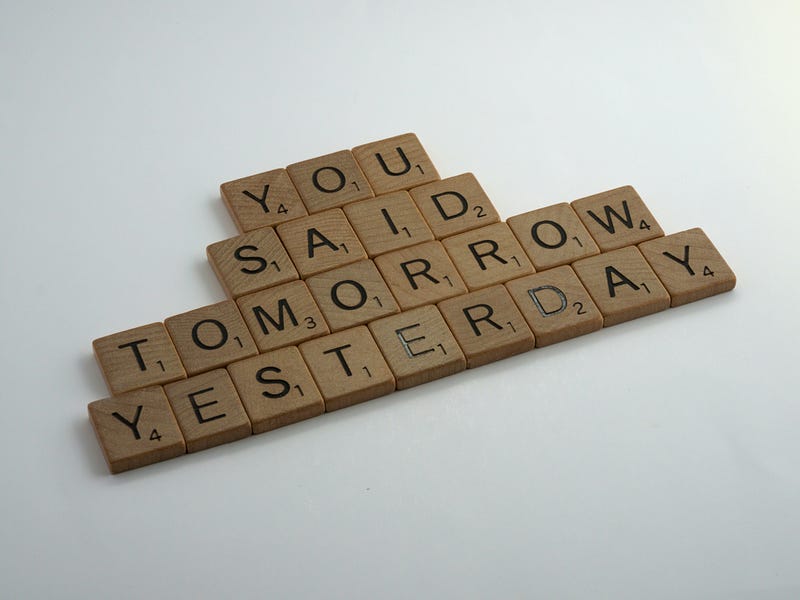
Whatever it is that you want to do, or should do;
If you don’t start, you won’t do it
It’s that simple. You cannot do anything you never started doing. It’s simply not possible. Many of us have a lot we want to do and accomplish, and even intentions of actually going through with them as well.
Writing that book or article? Not right now, while work is so demanding. Later, we tell ourselves.
Taking those piano lessons? Cash is a little tight right now, and we don't have time anyway. Nor the space for a piano.
Dancing, singing, exercise, meditation — they all require that time we don’t have (right now). Except we do. We are just damn good at making excuses for why we don’t. (Or we procrastinate. Just one more episode…)
We postpone, and life gets in the way
We are all busy with our own lives, and we often end up mixing what is urgent, with what is important.
We see it at work, where the inbox consumes most of our work days sometimes, and we might have to work overtime to actually get the job done. We skip the gym too many days in a row and tell ourselves we did it to get back to our significant others or family in due time. Legitimate reasons make for excllent excuses.
I’m not saying that we should come home late and prioritize ourselves everyday at the expense of the ones we care about. I’m just saying that life happens to us if we don’t plan it, and we might end up heading in a direction that strays from our original course if we don’t correct it along the way.
A friend of mine said to me not long ago “I’ve felt as if I’ve lived my life as a backseat passenger for a while now”. He realized this, and actively made an effort to change some things in his life to get more aligned with himself. I think its a great analogy, and sometimes we have to actively put ourselves back in the driving seat of our own lives.
How to get back on track
We will all stray from our path occacionally, we are only human. What we can do, however, is realizing that we have edged slightly off our desired course and adjust accordingly.
- Set a goal. The first thing we need to do in order to get back on track, is identify where we want to end up. Without a goal or desired end state, it is very hard to realize that we’re off course in the first place. A proper goal gives us direction, motivation and outlines the neccessary knowledge to obtain or actions to be performed. Make sure your goals are SMART.
2. Make a plan. Figure out what you need to do, how you can obtain the needed knowledge/skill and most importantly when to do it. Then focus on this over time. Good goals are timely, so make sure the plan includes a way to reach the goal within the timescope. For goals that are far into the future, it’s important to keep at it for an extended period of time. When you’ve started a Marathon, you don’t quit after 10k, you keep running even when it hurts.
3. Create good habits that help you on your journey and work towards your goal. Making good habits stick is really hard at first, but immensely helpful once in place. Daily habits will soon start to compound, and the compund effect is the most powerful in the world.
4. Stick to it. The more consistent you are, the better your results will be. Results are a combination of time spent on something multiplied with the efficiency of which the action is performed. Results = Time x Efficiency. And the more you do it you increase the time variable, and as you get better you increase efficiency as well. Bottom line, stick to it, and you will improve.
5. Smile. During it all — SMILE. The journey ahead may be long and troublesome, but if you just smile when you start, your brain will make a positive assosiation and it will be easier to continue. It will also make your existence a tiny bit better along the way.
Summary
Start, or you won’t do it. Life gets in the way, and we postpone or procrastinate. Realize this and know where you’re heading to make the neccessary corrections. Get back on track by; setting a goal, make a plan, create good habits, stick to it — even when it’s hard, and SMILE along the way!
You will create a memorable journey.
Let me know if you have thoughts, comments or reactions — I’m still learning and appreciate all feedback