
Technology Trends
5 The Most Exciting AI & IoT Trends of 2021
… holographic meetings sound pretty cool
Every industrial revolution is a change and an upgrade of traditional/ industrial practices.
The 1st industrial revolution has brought us mechanization, steam and water power. The 2nd one — mass production and electricity. The 3rd revolution has brought us electronics and IT systems and was the starting point of automation. The current industrial revolution is in the process of bringing cyber-physical systems.
Each of these revolutions bears a global societal transformation at large. Even from the 1st industrial revolution, the new technologies have reformed society. It has changed not only how we work and how we live. It also reshaped the way we think, rest, communicate and how we perceive ourselves as human beings.
In the next year, we will see more and more Tech For Good applications that will bring more purpose and value to technology. Here I would like to cover 5 of the most exciting AI and IoT trends and innovations that will drive 2021 and the fourth industrial revolution.
Ethical AI

While AI is not in the first stages of its development and adaptation anymore, organizations are working towards bringing more value, responsibility and purpose to it. The rapid increase in AI adaptation has brought a large gap in AI regulation and ethical questions that society has to answer. The range of regulatory questions include, but not limited to:
- Who is responsible if AI makes a mistake?
- How to control AI and how to keep it under control?
- How humans should treat AI?
- How to help prevent job loss due to tasks automation in different societies?
Responsible AI
AI Responsibility is an AI ethics add-on subject. Compare to the previous concept, Responsible AI is a sort of umbrella that covers more regulatory issues. Among these subjects are AI governance, value, risk, trust, transparency, safety, accountability and compliance. PwC identified 5 key dimensions of AI challenges. These include governance, ethics and regulation, interpretability and explainability, robustness and security, and bias and fairness.
This Responsible AI Framework helps companies identify, focus on and address the key elements of ethical AI.
Holographic meetings

Forrester (2020) predicts that next year the boldest companies will ‘push AI to the new frontiers’. By adopting holographic meetings these companies will move into intelligent edge experiences. The three-dimensional imaging is a revolutionary implementation that can be used in a variety of areas. For example, it can definitely bring your regular online Zoom meetings to the next level. Or significantly upgrade the remote healthcare services. According to Forrester (2020), next year and further we will see more and more industries that will adopt 3D meetings.
AIoT — Artificial Intelligence of Things
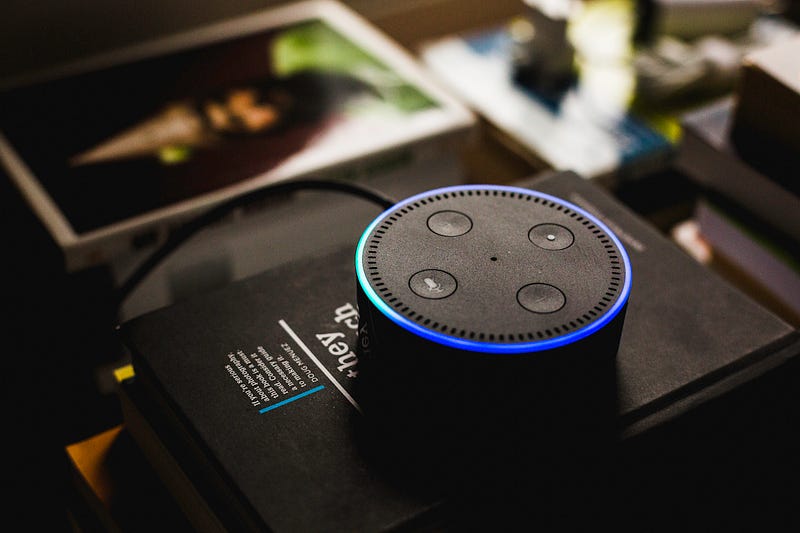
The simple explanation of IoT refers to interconnected devices. But the researches went further and coupled IoT with AI. AIoT (Artificial Intelligence of Things) is a combination that will ‘redefine the concept of industrial automation’.
AIoT provides a mutual benefit for both AI and IoT.
This combination enhances the capabilities of IoT. It will not only require less human maintenance but also it will improve decision-making processes, data management and analytics. In other words, IoT will get more value through ML systems and will be able to analyse, predict and in some cases make autonomous decisions. In turn, AI gets connectivity, signalling and data exchange. The application of AIoT will be vastly popular as consumer appliances and smart home industry. Apart from AIoT, next year we will see more foundations for future combinations with IoT, such as IoT Data as a service (IoTDaaS).
IoB — Internet of Behaviors

The Internet of Behaviors (IoB) captures the “digital dust” of people’s lives from a variety of sources, and that information can be used by public or private entities to influence behavior. (Gartner, 2020)
Another extension of IoT is the Internet of Behaviors (IoB). IoB is a combination of three fields: technology, data analytics and behavioural science. These three fields, in turn, break into 4 areas to consider while using the technology. The four areas are: emotions, decisions, augmentations and companionship.
The IoB has many applications. For instance, it can track behaviour and health and safety compliance of employees upon their return to the office.
Equipped with computer vision, the system can collect all of the required information. Another application of IoB can determine and track individuals location and facial recognition. Based on this data, it can connect the data and map people to behavioural events. During the next 5 years, Internet of Behaviors will become vastly popular as it will get more and more applications within society. In terms of statistics, Gartner (2020) predicts that by 2025, half of the world’s population will be subject to an IoB commercial or government program.
I have a question to discuss in the comments:
Do you think that what we saw in the Netflix documentary ‘The Social Dilemma’ is another application of IoB?


