
5 Terrifying Books Without the Gore
Spooktober 2020 Entry
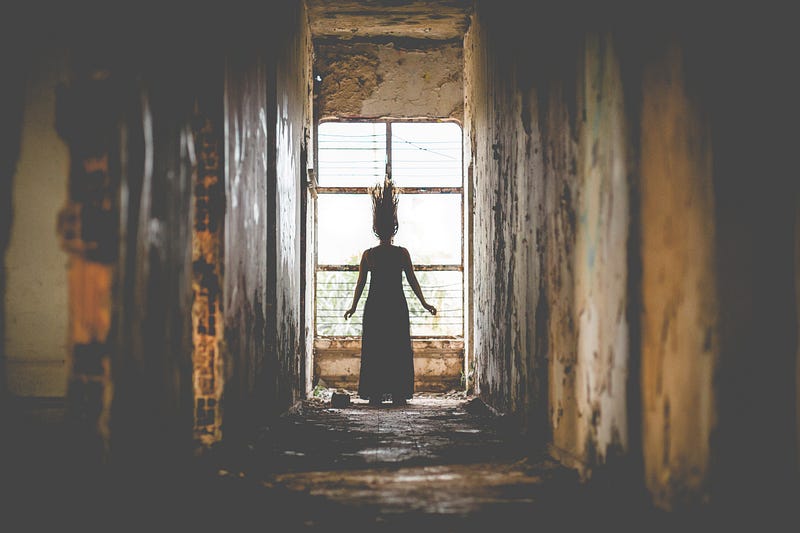
There is nothing more terrifying to me than the pounding of my heart as the stories of ghosts, spirits, and demons come alive through the pages of a book. There is also nothing more offensive to me than the gruesome depictions of blood and gore that are becoming a staple of the horror genre these days.
In my opinion, the best horror books don’t have to resort to the cheap thrills of violence to instill fear in their readers. In fact, I notice that my fear is more pronounced when the horror is unknown and takes on the form of the supernatural. In this case, it is not the physical violence that is scary as much as the hauntings, the curses, and the things that go bump in the night.
Supernatural horror tends to manifest itself in the guise of ghosts, demons, and evil spirits. The supernatural do not follow the rules of the real world that we live in and as such they can be an unknown and unidentifiable entity that can incite fear in all those whom they encounter.
Psychoanalysis has taught that the dead — a dead parent, for example — can be more alive for us, more powerful, more scary, than the living. It is the question of ghosts. — Jacques Derrida
Books about the supernatural can be truly terrifying with spooky settings, dark moods, wicked characters, and intense plots. Many horror authors such as Stephen King write about the supernatural but I have often found that his stories tend to veer towards the morbid and macabre.
In compiling a list of 5 books to celebrate the supernatural, I chose to focus on books which relied more on crafting a horrifying atmosphere to elicit fear rather than centering on physical violence. In all these stories, the supernatural element is either a ghost, a demon or an evil spirit. Each of the books also represents a different sub-genre of supernatural horror to suit the tastes of discerning readers. In the spirit of Halloween, here are 5 terrifying books without the gore.
1. The Haunting of Hill House by Shirley Jackson
Classic Horror
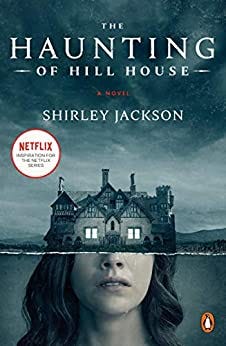
The Haunting of Hill House by Shirley Jackson was first published in 1959. It is considered to be a classic and has served as an inspiration for famous horror authors including Stephen King. It is also the inspiration for a popular Netflix TV series. The book is considered to be a benchmark for haunted house novels.
What makes it terrifying
The horror is subtle and more psychological. Hill House is a haunted mansion associated with tragedies as well as ghostly apparitions and noises. The plot follows a team of paranormal investigators who visit the house to study its hauntings. The house affects the psyches of the investigators and the book details their struggles to pull away from the hold of the mansion. There is always a sense of apprehension about the house until we get to the final chilling end.
2. The Woman in Black by Susan Hill
Gothic Horror
The Woman in Black by Susan Hill was first published in 1983. It is written in the style of a late 19th-century novel and hence it falls in the gothic horror genre. The Woman in Black was also made into a Hollywood movie starring Daniel Radcliffe.
What makes it terrifying
I would describe this as a dark and spooky ghost story. The plot follows the story of a young lawyer who visits a remote town for a case he is working on. He ends up staying in a secluded and desolate mansion called Eel Marsh House. There he encounters a ghostly woman in black who is also a malevolent spirt. This story is hauntingly beautiful and also tragic.
3. A House by the Sea by Ambrose Ibsen
Contemporary Horror
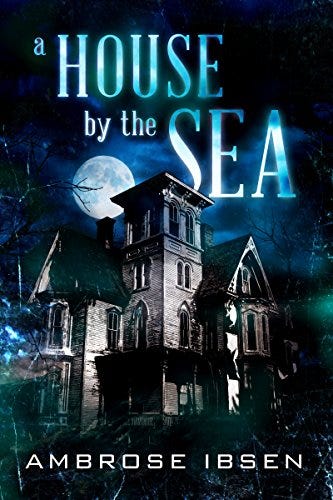
A House by the Sea by Ambrose Ibsen was first published in 2016. Ambrose Ibsen is an up-and-coming horror author who is a part of the Kindle Unlimited platform which is how I first discovered his books. This is the type of horror fiction that would work very well for a movie and definitely has the feel of a contemporary novel.
What makes it terrifying
A child is exposed to the horror. The plot follows a family with two young children who move into a haunted house. The events start out at a slow burn with small, unsettling hints of the presence of the supernatural in the house. Later, the young daughter in the family is haunted by a mysterious man who only appears to her. The supernatural element here is different because it isn’t just about an ordinary ghost or demon but something that seems much worse.
4. The World’s Most Haunted House: The True Story of the Bridgeport Poltergeist on Lindley Street by William J. Hall
Non-fiction Horror
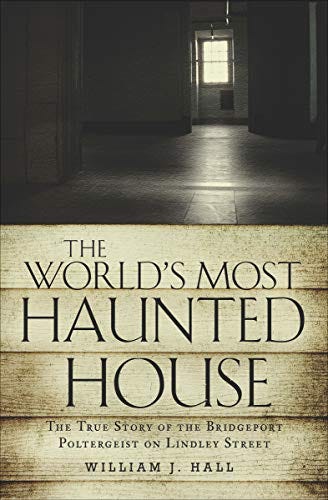
It is easy to think about the supernatural as something only found in horror fiction and movies but what if it were all real? The World’s Most Haunted House by William J. Hall was published in 2014 but this is a real-life account of a haunting that occurred back in 1974 at a Bridgeport Connecticut home.
What makes it terrifying
This is simply scary because it is about real-life events and the book documents eye-witness accounts of the police and media as they experienced the poltergeist activity. The book talks about supernatural events inside the house such as movement of furniture, levitation of items, and religious crosses being pulled from the wall. What is worse, is that the young adopted daughter of the family is suspected of causing the poltergeist activity either by telekinesis or through demonic possession.
5. The Curse of the Blue Figurine by John Bellairs
Children’s Horror
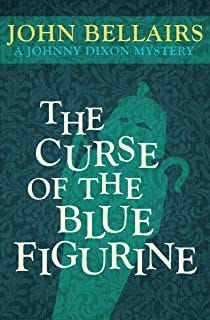
Before there was R.L. Stine for children’s horror, there was John Bellairs. The Curse of the Blue Figurine by John Bellairs was first published in 1983. Even though, the book is titled as a mystery, the plot is actually based on horror.
What makes it terrifying
I first read this book when I was 11 or 12 and I was honestly blown away by how scary it was. I expected it to be a regular mystery for kids but was very surprised that it involved a demonic priest and a religious artifact. The plot follows a young boy living in the 1950s who unwittingly becomes possessed by evil. Although, the book might seem dated and meant for children, there are some genuinely frightening scenes here.
More from Anita Durairaj in Books Are Our Superpower:


