
5 Surprising Facts About the Moon That Few People Know
Even though the Moon is the closest celestial body to Earth, it still hides many secrets from us. In this article, we’ve gathered 5 of the most interesting facts about the Moon.
1. Project A 119
At the height of the Cold War, the U.S. Air Force developed a secret project to detonate a nuclear bomb on the Moon. The Americans wanted to demonstrate their military power, as at that time, the USA was significantly behind in the space race with the Soviet Union. They believed that such an experiment would promote patriotism among the American people.
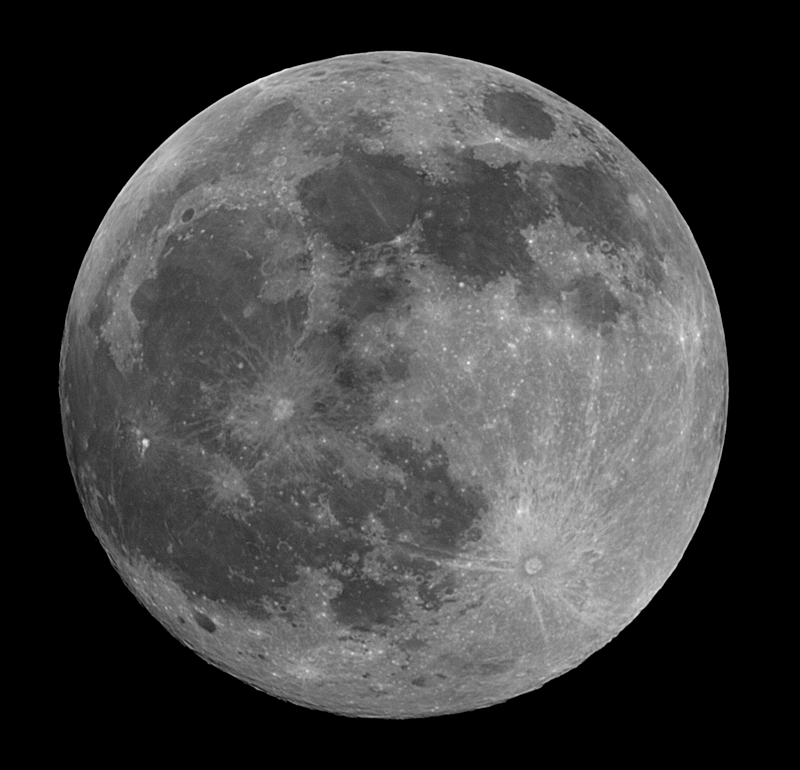
The explosion was supposed to occur on the visible edge of the lunar disk so that the sun-illuminated mushroom cloud would be visible from Earth.
The project was canceled in January 1959. The official reason for the cancellation was never announced, but it is believed that several factors coincided:
- Project A119 posed a danger to the population in the event of a launch accident and could provoke public disapproval.
- A nuclear explosion on the Moon could contaminate large areas with radiation and interfere with future research and flights.
- Landing a man on the Moon was a higher priority, and funding was more likely to be allocated.
2. Moonquakes
In the 1970s, as part of the Apollo mission, scientists learned about the existence of earthquakes on the Moon. Seismographs installed on the Moon’s surface registered about 30 tremors originating beneath the lunar surface over seven years. The most intense tremor registered was estimated at 5.5 on the Richter scale, more than enough to destroy buildings of a future Lunar base.
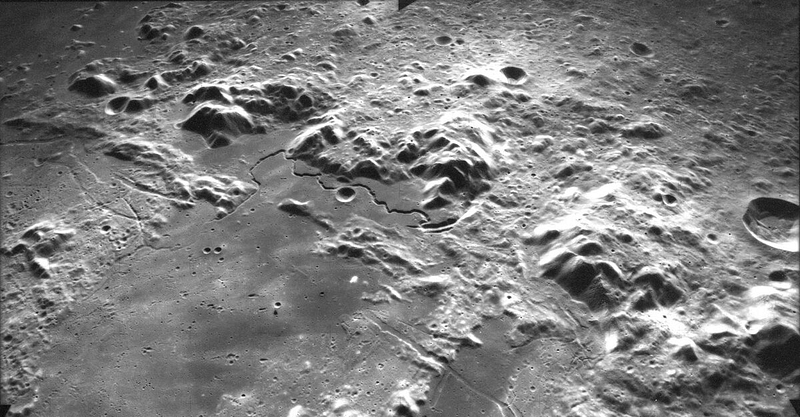
The causes of various moonquakes include:
- Temperature fluctuations during sunset and sunrise.
- Meteorite impacts.
- The effect of tidal forces of the Earth and the Sun.
- The release of tension in the lunar crust.
3. Water on the Moon
2009, the LCROSS (Lunar Crater Observation and Sensing Satellite) was sent to the Moon to observe lunar craters. That autumn, at the Moon’s south pole, after dropping a booster stage there, 92.2 liters of water, most of which was in a frozen state, were discovered.
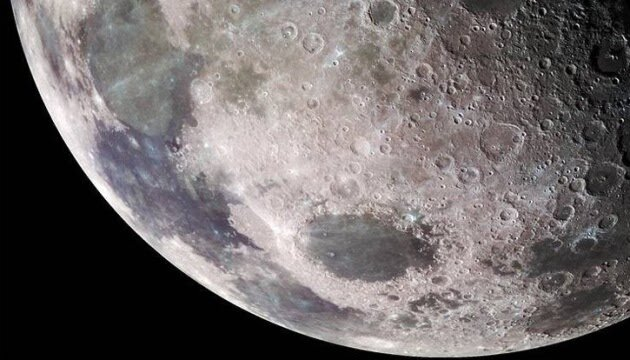
In the north pole area, the Chandrayaan-1 spacecraft discovered no less than 600 million tons of water. Scientists believe that asteroids and comets could have brought water to the Moon.
4. Librations
As is well known, the Moon is always turned to Earth with one side, so 50% of the Moon’s surface should always be visible from Earth. But in reality, we can see not 50%, but up to 59% due to the effect of libration.
Libration is a slow oscillation of one astronomical object relative to another. Libration is caused by small periodic changes in the Moon’s rotational speed around its axis, caused by the tidal forces of the Earth. The amplitude of these librations is about 57' (arc minutes).
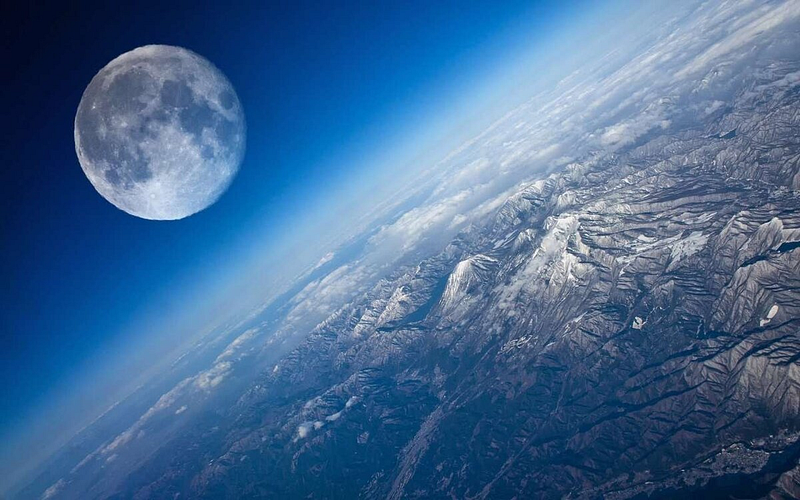
There is another way to see part of the “dark side of the Moon”. Two observers in different hemispheres of the Earth at the exact moment can see different parts of the lunar surface. This is due to the relatively small distance between the Earth and the Moon and the possibility of looking at it from different directions.
5. The Lunar Sky
Many people, watching videos or photos of the Apollo missions’ astronaut landings on the Moon’s surface, are struck by the absence of stars in the sky. This is one of the arguments of the conspiracy theory of the “Moon hoax,” which claims that the Apollo programs and everything associated with them are a forgery. Skeptics believe that in the absence of an atmosphere on the Moon, stars should be brighter than we see them from Earth and be visible in the photos. All this is true, but conspiracy theorists overlook one detail — the contrast between the surface, illuminated by bright sunlight, and the dark sky.
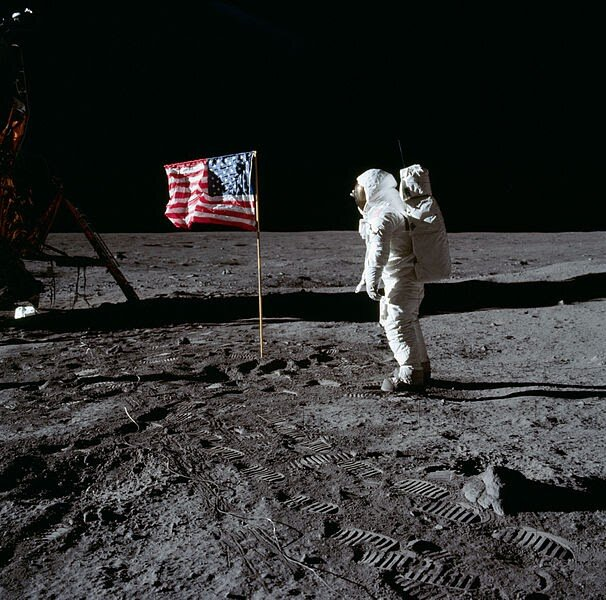
A short exposure is required to photograph an astronaut on the Moon’s surface so the shot is not overexposed and does not turn into one white spot. Because of the short exposure, stars are not visible in videos and photographs from the Moon; cameras did not have enough time to collect enough light from them to make the stars appear on the film.
Clape if you want to see more articles about space in your feed!
Subscribe to our channel and ask your questions, which I will answer in the following articles.
If you like my work, you can support me by becoming a medium member using this link. It will cost only $5 monthly and help us create even better content.


