
5 Strategies for Jump-Starting Your Dying Writing Practice.
If the pandemic ate your focus and productivity, here’s how to get back in the game.
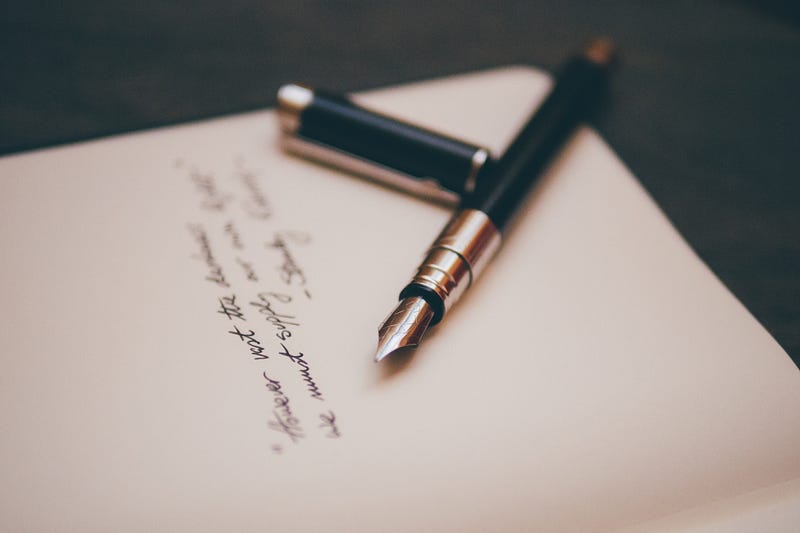
When the books are written about the collateral damage wreaked by the coronavirus, next to scary home hair cuts will be the shot to our focus and productivity.
For many months, I made excuses to myself about why I’d slipped from my daily writing practice to writing less and less until I gave up almost entirely. After all, I was the daily writing queen. Or, at least coach. That’s the name of my editing business and website.
So how would I ever show my face to my writing community if I didn’t get back on the stick? Until I found out I wasn’t alone trying to poke my muse into doing her job.
Every creative person I know has had an uphill battle these last months maintaining any kind of disciplined approach to the work they love.
While, like COVID-19, the disease is the same, the symptoms vary widely. From lethargy to anger to a complete lack of inspiration, artists and writers have hit the wall.
Interestingly, though, we’re starting to come out of it around the same time. Whether, like me, we’ve stopped waiting for a magic bullet to end this nightmare and decided to adapt to life as it is, or for some other reason, the planet has shifted, the stars have aligned, or the bank account has screamed bloody murder.
So, with our new motivation, we’re sitting down and facing our screens again, but now we feel like newbies. What happened to our years of practice and discipline that allowed us to churn out daily pearls of wisdom and humor and poetry at the drop of a trochee? Don’t ask.
If crying in our beer that we can no longer drop and give our readers a thousand words on cue like we used to, we’d all be Medium all-stars. But it doesn’t work that way.
Yes, the muscle that we worked so hard to develop to spew out ideas and metaphors each morning has atrophied to the size of a toothpick. But boohoo. If we’re not on a ventilator or stuck in the hallway of an ER waiting for one, we should count our blessings and get to work.
But it’s hard. Ask me why I’m an authority on that subject, me who’s been silent lo these many months. But I’ve been around the block a time or two in my 81 years, and while life as we knew it might be over, it’s not the end of the world. Reinventing ourselves is what longevity is all about. Ask me how I know that little trick.
For those of us who have to rebuild our writing practice, I offer a few strategies to help you get your mojo back.
1. Don’t stop writing in the first place.
Yeah, why didn’t they tell us that in March.? Well, actually, I’ve been preaching that mantra for a quarter of a century. You’d think I’d follow my own advice.
I’ve written every day through stress and illness for more than twenty-five years, except for a short period when a failed marriage took up all my focus. So, I know it has to be something really, really, big to take my eye off the prize, and likely yours, too.
But here’s the lesson to learn for the future. This pandemic isn’t over. In the US, we may face more lockdowns, more uncertainty. We have to get a grip, and no matter what, not let everything go again.
At least, not the things that keep us above water. No matter how hard it is to put words on the page, we have to hold on to our belief in ourselves, our writing, our creativity, our reason for living. And if it puts a few bucks in our pocket, at the same time, so much the better. It’s easier to write a hundred words every day, than trying to herd cats after a few months of using the laptop as a footrest.
2. Trick your muse to get back to work.
If your old routine isn’t working for you, start a new one. Getting through this pandemic is largely a head game, that is if you’re healthy enough to work. I used to sit down first thing in the morning and rip off an article and publish it before 9 a.m. When I’d try to work these days, I’d wander off topic and reach the midpoint, not knowing where the piece was going.
New routine. I start an article, and if I think it has legs, I do the finishing work. I add the articles I want to tag at the end, adding three published stories from my backlist. I add my CTA at the end and list my five tags and the publication where I’d like to publish.
When I look at the screen, I fool my brain into thinking the piece is almost finished, or more organized than when I started. It seems easier now to keep going to the end, a trick I never needed in the before times.
What is it you need to change up to get back in the game? Do you need to work in a different room? Do you need to listen to music before you sit down at your computer or take a break every fifteen minutes because working is harder than it was before?
Try different tricks to get yourself going. And then do it again tomorrow and tomorrow and tomorrow.
3. Try a different genre.
If your brain refuses to open up to the familiar type of story you used to ace, don’t give up writing. If you can write a dynamite paragraph on family dynamics, use that skill to write about parenting challenges, or the dating world, or changes in business now that the economy is in flux.
Write about the travel you hope to take in the future or the trips you loved when you were in college. With so many of us at home, take us on a virtual holiday, or teach us the skills you’ve been learning as you’ve had to find new ways of earning a living or entertaining your family during your sheltering in place.
If we’ve paid attention, we’ve learned about ourselves these past traumatic months. Tell us about your struggles, your successes. Tell us how to follow in your shoes.
4. Find new publications.
Nothing gives a boost to inspiration and motivation like finding an audience for your work. Search around the platform for new publications or ones that have been around but you’ve missed them. New publications means new readers and potentially new friends and new inspiration.
5. Set a goal.
I tell my writing students who are starting out to set a goal of writing for 15 minutes a day. The time is a small enough bite out of their day that they won’t get overwhelmed.
Also, at 15 minutes, they are amazed at how much they can produce. Often, enough that after a few weeks of this daily practice, they have hauled in an idea or project that keeps them working for longer than 15 minutes a day. Then, they are off and running.
The same brain trickery works for jump-starting a flagging writing practice. If you’re trying to get back to daily writing after a dry spell, don’t set yourself up for failure by trying to produce the same volume as you did in normal times.
Set a small enough goal that you give yourself a chance of meeting it under our very non-normal stresses: write at least one more article this week or month than you did last week or month. Write 100 words more than usual. Write an article a week. Write an article about not being able to write.
And then tell someone your goal so you are accountable.
Find a FaceBook group, a Medium buddy, your spouse or friend with whom you can share your goal whether or not you meet it.
6. Don’t quit.
Life is hard now for a lot of us. We may be recovering from the virus, figuring out how to find a new income, or worried about the sky falling. I totally get that. But if writing is your thing, then you have to just do it.
Sadly, life isn’t always about feeling good. We can’t always quit when it’s hard. There was a time for many of us when we did that. Back in March and April and May because we were too overwhelmed that our brains wouldn’t function, our psyches rebelled at the pressure we were under.
That was then; this is now. No one is coming to save us. We have to live the life we’ve been given. Which is writing under pressure we didn’t ask for and don’t want.
I’ve wanted to quit writing this piece at least 20 times. I’ve wanted to get up and make cookies, turn on the news and check the numbers for today, see what the awful president is doing. Call my daughter and see if she’s okay.
I can’t tell you how hard it has been to get to the end without doing any of those things. I’m giving you the advice I take for myself to get back to where I need to be, where I want to be.
I’ve written an article every day this week for the first time in months using these strategies. I’m more humbled than proud of that, by the toll this crisis has taken on all of us. But I’m trying to do better, to recover from the shock of all this.
I have more to say about all this, as I know you do. So let’s write about it. Let’s jump-start ourselves, our spirits, our writing. That’s what it means when we say, we’re all in this together.
I’m dedicating this article to Natalie Frank, Ph.D. She’s a hero of mine who has written that she’s also struggling. She lost her Medium income and following her infection with the virus and battle to recover. Natalie is a very talented and generous writer whose articles helped me tremendously when I first started out. Natalie wrote from the hospital during her delirium, which continues to amaze and inspire me. For more practical advice on managing a Medium career, I advise you to look to her large body of work in her own publication and others.
Stay safe and don’t give up.
I’m an editor and writer on Medium with Top Writer status. I’m also an editor for the publication, Rogues Gallery. I’ve published 55 titles on Amazon and edit for private clients. If you’d like to hire me as your editor for fiction, non-fiction, or business writing, please contact me here. If you’d like to read more of my work on Medium, click here to sign up for my newsletter. Thank you for reading.


