avatarJesper Mount

Free AI web copilot to create summaries, insights and extended knowledge, download it at here

1693

Abstract

xate on it regularly. It might even keep you up at night.</p><p id="f72d">It could be money issues, a stressful job or a toxic relationship.</p><p id="34f8">Write down all the thoughts that comes to mind when you think of this situation.</p><p id="d6ca">This step is like a mental inventory of the stressful topic.</p><h1 id="9d9a">Step 2: Group your thoughts by level of control</h1><p id="41bf">Now that you have a complete mental inventory, you can start applying the Stoic dichotomy of control.</p><p id="9ae4">Grab a piece of paper and make two columns with the headers:</p><ol><li>IN my control</li><li>NOT in my control</li></ol><p id="1432">Transfer everything from your mental inventory into the two columns.</p><p id="333c">At this step you have to differentiate between <i>things in your control</i> vs <i>things <b>not</b> in your control</i>.</p><h1 id="d4d3">Step 3: List out your next steps</h1><p id="c90d">Now that you have everything listed out into two columns, focus on the first column.</p><p id="33c0">For everything within your control, list out what you can actually do. Actionable things in your control will make up your new to-do list.</p><p id="5101">Simply listing out what we need to do makes us less anxious.</p><figure id="e9d9"><img src="https://cdn-images-1.readmedium.com/v2/resize:fit:800/1*1j84Jc1HIPV3PlbJoeTWqg.png"><figcaption>This is your Stoic To Do List</figcaption></figure><h1 id="7630">Step 4: Accept things outside your control</h1><p id="2f4a">With the final items that we can’t control, we need to learn to accept them.</p><p id="52ff">This concept is know as <i>Amor Fati</i> or <i>love your fate.</i></p><p id="3f1c">There’s a lot we can d

Options

o in this world but…</p><h2 id="5ef5">We need to learn to live in harmony with the world around us.</h2><p id="acd0">We can’t control everything. We need to focus on things within our control.</p><p id="fd94">Everything else just happens. We don’t need to have an opinion about it.</p><p id="5542">After all, some things seem great at first but turn out terribly. And vice versa.</p><h2 id="7218">The Hercules Argument</h2><p id="10b5">If Hercules hadn’t battled monsters, he probably would have spent his free time drinking wine on the sofa.</p><p id="deb2">And he wouldn’t have been the Hercules we know today.</p><p id="dc42">Every cloud has a silver lining and every rose has its thorn. That’s why we shouldn’t judge things as they happen.</p><p id="1da8">There’s always good in the bad and bad in the good. That’s life.</p><figure id="bab5"><img src="https://cdn-images-1.readmedium.com/v2/resize:fit:800/1*e2xUr6N1Xn3NnYUSfst_8A.png"><figcaption></figcaption></figure><h1 id="81c8">Step 5: Check yourself & Repeat</h1><p id="fd82">This framework is incredibly simple. The most important thing is that you actually apply it when you need to.</p><p id="7bde">That’s why it’s important to be aware of any stress you might be experiencing.</p><p id="9dd7">Once you notice anxiety creeping up, you can apply this framework to any situation:</p><p id="8795">And as the great Ice Cube once said…</p><blockquote id="be4b"><p><b>Come on and chickity-check yo’ self before you wreck yo’ self</b></p></blockquote><figure id="2ea8"><img src="https://cdn-images-1.readmedium.com/v2/resize:fit:800/1*V2cel0OmsygxNjFc-EYI8Q.gif"><figcaption>Peace out, homies ✌</figcaption></figure></article></body>

5 Steps to Relieve Stress & Anxiety with a Simple Strategy from Ancient Stoicism

Epictetus was a Stoic philosopher who lived 2000 years ago. He taught that it’s not things that harm us, but our judgment of these things.

The Stoic philosopher, Epictetus

The simple strategy to relieve stress is focusing on things within our control.

The Stoics developed the Dichotomy of Control as a way of reaching tranquility. It’s just as relevant today in helping us achieve inner peace.

So what’s the Dichotomy of Control?

Stoicism teaches us to group our anxious thoughts into two buckets:

  • Things we can control
  • Things we can not control

This dichotomy teaches us to place less value on things outside our control.

The framework is so useful that it’s also become the foundation of modern Cognitive Behavioural Therapy.

In simple terms, we’ll make our greatest impact by focusing on things within our control. But that might seem easier said than done.

These are the 5 steps you can take right now to find peace with the things that currently stress you out.
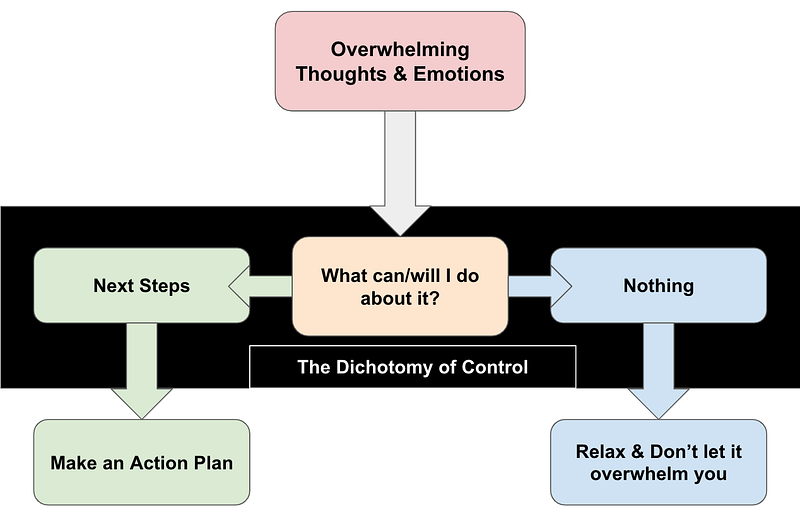
Step 1: Think about something that causes stress

This should be something that makes you anxious. You probably fixate on it regularly. It might even keep you up at night.

It could be money issues, a stressful job or a toxic relationship.

Write down all the thoughts that comes to mind when you think of this situation.

This step is like a mental inventory of the stressful topic.

Step 2: Group your thoughts by level of control

Now that you have a complete mental inventory, you can start applying the Stoic dichotomy of control.

Grab a piece of paper and make two columns with the headers:

  1. *IN* my control
  2. *NOT* in my control

Transfer everything from your mental inventory into the two columns.

At this step you have to differentiate between things in your control vs things not in your control.

Step 3: List out your next steps

Now that you have everything listed out into two columns, focus on the first column.

For everything within your control, list out what you can actually do. Actionable things in your control will make up your new to-do list.

Simply listing out what we need to do makes us less anxious.
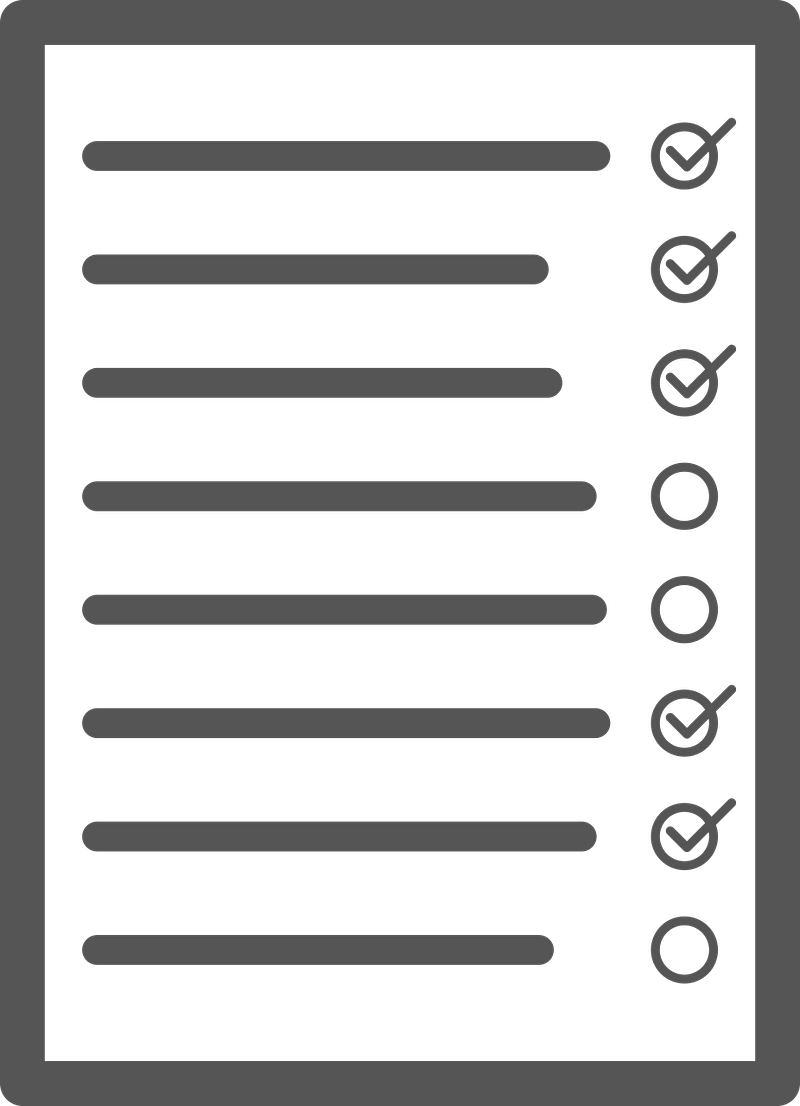
This is your Stoic To Do List

Step 4: Accept things outside your control

With the final items that we can’t control, we need to learn to accept them.

This concept is know as Amor Fati or love your fate.

There’s a lot we can do in this world but…

We need to learn to live in harmony with the world around us.

We can’t control everything. We need to focus on things within our control.

Everything else just happens. We don’t need to have an opinion about it.

After all, some things seem great at first but turn out terribly. And vice versa.

The Hercules Argument

If Hercules hadn’t battled monsters, he probably would have spent his free time drinking wine on the sofa.

And he wouldn’t have been the Hercules we know today.

Every cloud has a silver lining and every rose has its thorn. That’s why we shouldn’t judge things as they happen.

There’s always good in the bad and bad in the good. That’s life.

Step 5: Check yourself & Repeat

This framework is incredibly simple. The most important thing is that you actually apply it when you need to.

That’s why it’s important to be aware of any stress you might be experiencing.

Once you notice anxiety creeping up, you can apply this framework to any situation:

And as the great Ice Cube once said…

Come on and chickity-check yo’ self before you wreck yo’ self

Peace out, homies ✌
Stress Management
Stoicism
Stress Relief
Anxiety
Life Lessons
Recommended from ReadMedium