
‘We Are Not Even Beginning to Be Over This’
The 5 stages of the coronavirus pandemic
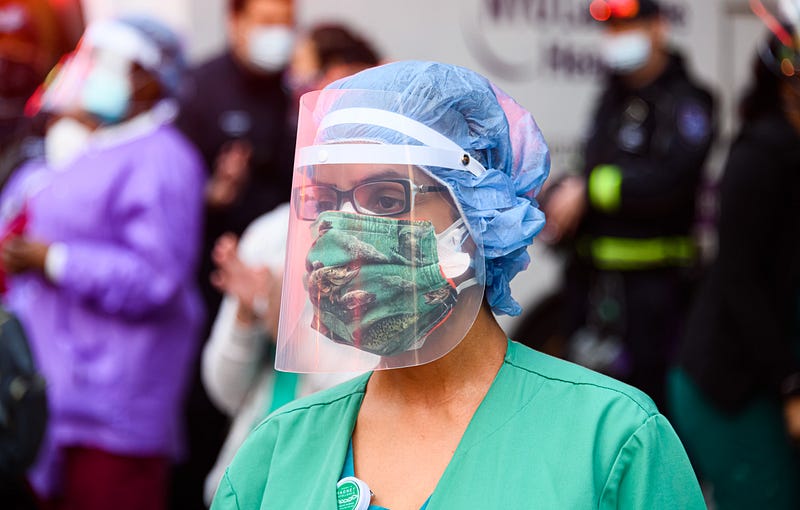
The explosion in Covid-19 cases across much of the United States is no surprise to the scientists who study infectious diseases and how they spread.
The coronavirus is just doing what viruses do, hopping from one human to another however it can in order to keep reproducing. And this one is doing it exceptionally well. It infects all ages, kills older people at higher rates, and leaves many, especially younger people, without symptoms so they’ll continue an unwitting spread.
By easing lockdowns too early and abruptly across all sectors of the economy, without sufficient requirements for face masks or physical distancing, governors in several states played with fire — fire that the scientists fully predicted — and now their fires are out of control.
New cases of Covid-19 are increasing in 35 states, with more than 2.6 million total confirmed cases and over 126,000 deaths, exceeding the number of total deaths from flu outbreaks or any other infectious disease outbreak in a single year or season since the 1918–19 influenza pandemic.
And, crazy as it sounds, it’s only just begun.
While Covid-19 deaths had been declining since a peak in mid-April, they leveled off in recent days and are expected to begin climbing soon.
“This is really the beginning,” Dr. Anne Schuchat, principal deputy director of the Centers for Disease Control and Prevention, said yesterday. “I think there was a lot of wishful thinking around the country that, ‘Hey it’s summer. Everything’s going to be fine. We’re over this,’ and we are not even beginning to be over this. There are a lot of worrisome factors about the last week or so.”
At this point, the pandemic can be thought of in five potential stages, four of which are well underway in the United States.
Stage 1: Infections are rising
The new cases being counted in recent weeks involved infections that occurred several days and up to two weeks prior, starting when, for example, Arizona reopened its economy May 15. (The coronavirus incubates for anywhere from two to 14 days before making itself known.)
Stage 2: Number of confirmed cases are surging
New cases of Covid-19, after dropping to around 20,000 per day following a peak of about 36,000 in late April, have spiked to above 40,000 per day. “I would not be surprised if we go up to 100,000 a day if this does not turn around,” Anthony Fauci, director of the National Institute of Allergy and Infectious Diseases and the nation’s top infectious disease expert, said in congressional testimony Tuesday. “And so I am very concerned.”
Stage 3: Increasing hospitalizations
Roughly two to three weeks after people get sick, some of them end up in the hospital. Arizona is closing in on ICU bed capacity, as are Dallas and Houston. “Hospitalizations now are going up in 12 states,” CDC Director Robert Redfield said at the hearing. Others will surely follow — it’s just math.
Stage 4: More deaths
While Covid-19 deaths had been declining since a peak in mid-April, they leveled off in recent days and are expected to begin climbing soon, according to epidemiologists who study these patterns. They’re already rising in Arizona and Texas.
Stage 5: Potential conflagration in the fall
If serious measures aren’t taken to extinguish the Covid-19 fires across the country, and cases climb as Fauci fears, fall could be a viral conflagration unlike anything we’ve seen so far this year. The virus has not exited Northeast states, even where new cases are declining, and there’s nothing to suggest it won’t resurge if prevention efforts are relaxed too much. Meanwhile, infection risk will increase as people move indoors in cooler weather, and the pandemic, whatever its status, will collide with flu season this fall, worsening the burden on hospitals.
No vaccine likely this year
“How the country will respond in the next seven to 10 days will have an impact,” said Michael T. Osterholm, PhD, director of the University of Minnesota’s Center for Infectious Disease Research and Policy. “But there are going to be lots and lots of cases, and we as a country have to make a decision of what we are going to do to get through the rest of the pandemic… Are we going to try to minimize as many infections as possible until we get a vaccine? Or are we going to say we have to accept these infections, and we can’t lock down the economy and damage society? If that’s the case, how do we avoid overrunning hospitals and the painful impact this will have on health care workers?”
How many Americans might ultimately die from Covid-19?
“I can’t make an accurate prediction, but it is going to be very disturbing, I will guarantee you that, because when you have an outbreak in one part of the country, even though in other parts of the country they are doing well, they are vulnerable,” said Fauci. “We can’t just focus on those areas that are having the surge. It puts the entire country at risk.”
“I would optimistically estimate that the final number [of U.S. deaths] will be closer to 1 million, if we are lucky.”
Taking into account many Covid-19 cases that have not been diagnosed, some 7% or 8% of the U.S. population has likely had the disease, Osterholm says. That’s nowhere near the roughly 60% to 70% needed to create what’s called “herd immunity,” at which point the transmission is slowed or ended due to lack of people to infect. (However, for now we have no idea how robust or long-lasting any immunity will be from a Covid-19 infection, so that 60% figure could be low or even moot.)
“I would optimistically estimate that the final number [of U.S. deaths] will be closer to one million, if we are lucky,” says William Hanage, associate professor of epidemiology at Harvard T.H. Chan School of Public Health. He bases that calculation on current deaths-per-infections and a generous assumption of reaching herd immunity at just 50%, rather than 60%.
Bottom line?
“Someone you know is likely to die from this,” Hanage says. “Going forward, how do we stop more of that happening? Easy. Stop transmission. Stop blowing on the embers. It’s epidemiology, not rocket science.”
Meantime, don’t count on a vaccine anytime soon. Vaccine creation is incredibly difficult, and many experts have been saying since the outset of this pandemic that it’s not a given one will ever be developed for Covid-19.
“There is no guarantee, and anyone who’s been involved in vaccinology will tell you, that we will have a safe and effective vaccine,” Fauci said Tuesday. “But we are cautiously optimistic… that we’ll at least know the extent of efficacy sometimes in the winter or early part of next year.”
To be clear: That means no vaccine until 2021, after the fall, whatever it may bring.


