
5 Simple Rules to Make Your Email Stand Out
Adapting to a new rulebook in a world sans in-person interaction
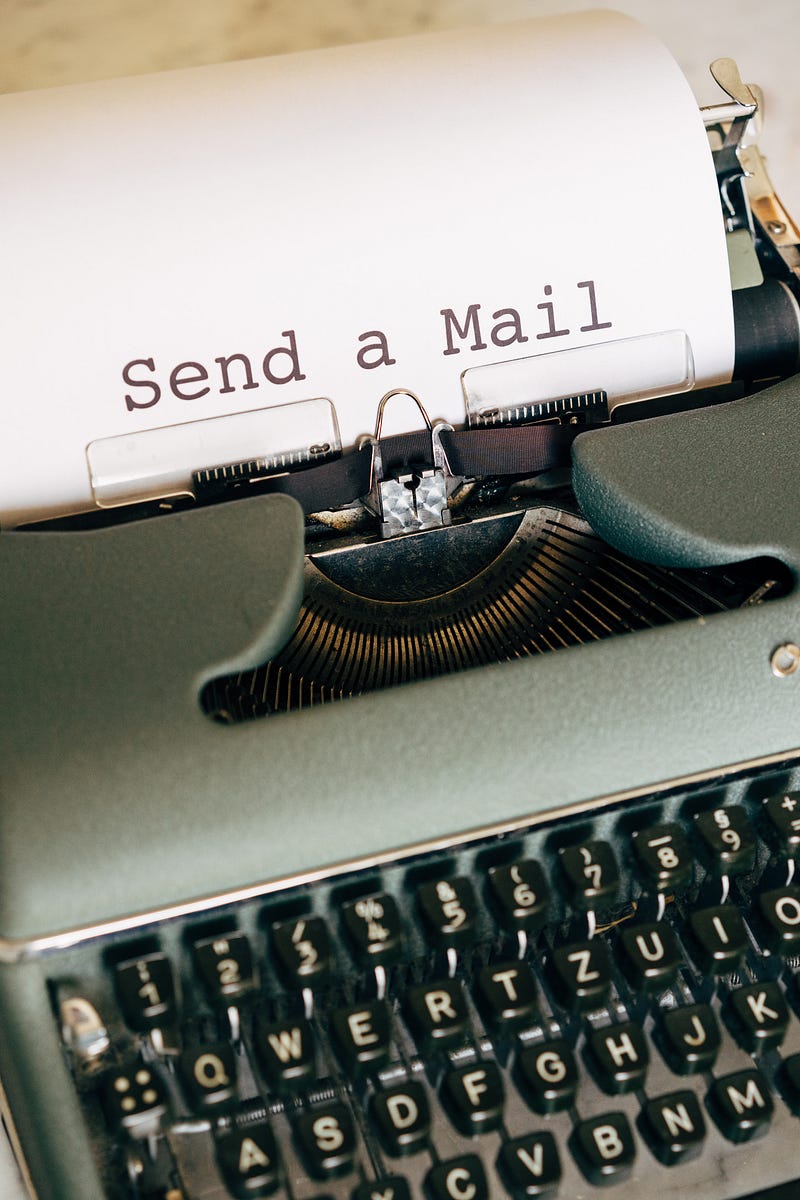
Despite all the new ways of communication, the Email, first created in 1971, still remains a preferred mode of communication at the workplace.
Yet, writing a good email remains a skill that only a few have gotten close to mastering. There is a lot of subjectivity around what a perfect email should look like, and chasing that perfection would be a fool’s errand.
With the current pandemic-driven situation, where working remotely is the new norm for the past few months as well as the foreseeable future, employees need to adapt. An important part of this is reinventing your style of communication.
A large number of people rely on “face-time” with their bosses and clients to establish that connection and show how they add value to the job. With that major element taken out of the picture, we’re in a very different, and much more level playing field. The introverts finally have an equal chance to impress the boss as the extroverts!
This, however, does not mean there aren’t ways to differentiate yourselves from others. Conscious change in your style of communication, and keeping certain factors in mind will help you achieve positive results in terms of presence, recognition, efficient communication, and stronger teamwork.
Rule # 1 — The Subject Line — Getting Read
“A subject line is like a newspaper headline, a title on a book’s spine, or the key slogan of a print media ad. It tells the user what this is all about. And it should do so in sparkling style — seamlessly channeling your brand.”
— Win Goodbody, senior product manager, Sitka Technology Group
There is a reason why the subject line exists. The reason is simple — to draw the attention of the reader to the contents of the email and help them decide if it is one they must read, or should it be skipped.
We’re all inundated with a barrage of emails every day, and the situation is even worse in a world where all communication is virtual.
This puts all the more importance on a subject line to alert the intended recipient that this is something that demands their attention and time.
The subject should clearly state the purpose of the email, and possibly even call attention to a specific user/task if needed. Adding <> with a call-to-action in your emails can be useful. Also, personalizing emails where a response is solicited from a particular person or set of people is a good idea. Some examples of a thoughtful subject line:
Welcome Jane Doe to XYZ, Inc. - Hi John — Invitation to Speak at Alumni Gathering
Changes to Dallas Office work arrangements Submit Your Tax Claims - Hi Mary — Did you get a chance to review my draft yet?
Each of these email subject lines clearly states the purpose of the email and the intended recipient(s) who should pay attention.
Rule #2 — The Opening — Add Your Personal Brand
This one is extremely important. I can’t emphasize enough the importance of the opening of an email on the reader’s psychology for the rest of the email.
This may be the first time you are interacting with a person, and without a chance to establish rapport via a physical meeting, your first email is essentially your first impression. And we all know what they say about first impressions!
There are some very simple ways to get this right, and some major blunders to avoid.
- Get the name right — A very common, and quite unacceptable error that is made most frequently is a misspelled name. It can’t be so hard. A lot of us communicate with people from different countries and ethnicities. But if you spend that extra few seconds to cross-check the names, you’ll do yourself a huge favor. Don’t misspell, don’t use last names for first names, or you lose credibility before even starting your message.
- Know your audience — The salutation you use at the start of an email is a small but important part of your message. Using the right salutation and tone shows thoughtfulness. Americans usually are good with a first-name basis, the Japanese are extremely respectful and prefer a certain style, Indians may often be more traditional, and so on. There are also differences in how well you know the recipient, seniority levels, frequency of communication, and general comfort level. Dear Sir, Hey Brian, Hi Ms. Jones, Hi Tanaka-san — these are all common ways of starting an email, and each right in the right context. Think through the salutation and get it right. If in doubt, play it safe.
- Don’t underestimate the introduction — A brief introductory comment is always appreciated and allows the reader to ease into the message. Read the below samples and you’ll see one is clearly better than the other. Option 1 Hi Jane, I wanted to invite you as a guest speaker to our monthly team huddle next week to talk about the importance of resilience in these difficult times. Option 2 Hi Jane, Hope you are doing well! As a brief introduction, I am Bryan and I work with Kelly, who you know well, on the product marketing team. As part of our monthly team huddle next week, we wanted to provide a unique perspective on the importance of resilience in the current challenging times. With your tremendous experience as a people leader and expertise in behavioral psychology, we would like to invite you to join our meeting and speak to the team. There are a couple of things to keep in mind here: a) Pleasantries or Ice Breakers — “Trust you are well / hope you are well.” “How are you? Hope you have been keeping safe and well.” “It has been a long time since we last met/spoke.” These are all good icebreakers and help the recipient get in a “virtual” conversation mode before you get to the business end of things. b) Introduction — If this is the first time you’re reaching out to the recipient(s), be sure to quickly introduce yourself and provide context. “By way of introduction / As a quick introduction, I am…. ” Establishing context and providing some background is important for the recipient to process the message that is to follow. Also, building a common connection can often strengthen your chances of getting a favorable response.
Rule #3 — Message Body— Punchy, Yet Complete
Now that you’ve gotten through the basics and ensured a good start, let us get to the meat of the communication. We tend to all have short attention spans, and the average reader usually scans through emails, rather than reading each word.
In a real-world setting, we have all heard of the “elevator pitch” — which is exactly what your email body should be. Cambridge defines an elevator pitch as “a short but effective explanation that is intended to persuade someone to buy a product or accept an idea.”
This is exactly what your main body should do — effectively but succinctly communicate the intended message of your communication. Following are some of the key characteristics:
- Clear and Concise — It should convey the message in a succinct and clear format without any ambiguities that are open to interpretation. Use bullets, or break the message into multiple lines/paragraphs to avoid long wordy chunks. Less is more — the shorter you can keep your message, without compromising the integrity of the communication, the better it is.
- Highlight Action Items — If your message has a call to action, don’t hesitate to use text tools at your hand — bold/underline/italicize the text that needs attention.
Rule #4 — Closing Out the Email — Opportunity to Engage Further
- Summarize and Close — Use the last couple of lines to briefly summarize the message, and remind the reader of any CTA elements.
- Offer up an alternate mode of connection — Emails are good to start communication or summarize the minutes of a meeting, but often you need a call/meeting around it for most discussions. “Happy to discuss more details over a call.” “Would love to catch up over a coffee when you are in town next time.” “Please let me know if you need further details.” Also, with the lack of social in-person interaction, there are limited avenues of creating genuine conversation — so use your emails as a hook to get the recipients into a more engaging form of communication i.e. a phone call, or a video call, etc. Calls / interactive communication methods are also more efficient and get a lot more done in a lot less time.
“A five-minute call replaces the time it takes to read and reply to the original email and read and reply to their reply… or replies. And I no longer spend 20+ minutes crafting the perfect email — no need to.”
- Signing Off — Having a standard email signature with your name, title, and contact details is usually a good idea. But it is also useful to sometimes add a personal touch by adding a word or two depending on the recipient/context — a simple “Best, Mary” or “Thanks, John” or “Regards, Jen” (each with a line break) works fine.
Rule #5 — One Final Check — Emails Are Permanent
Unlike the spoken word, an email is something that will go into the records (most often public) forever. So read and analyze everything you’ve communicated.
If you’re upset over something and are using an email to vent anger, drop the thought, take a break and return to it later. Work emails are not the place to vent anger, discuss inappropriate things, or say anything that you wouldn’t want to be associated with. If you want to pick a fight, vent your frustration, pick up the phone, and speak to the person instead.
Enough people and firms have faced disciplinary actions or negative media due to the contents of emails. Try to steer clear from anything controversial. Don’t write anything on an email that you would not like to be associated with. I’ll leave you with Michael Moore’s useful advice.
“I assume everything I am saying on an email or saying over the telephone is being looked at.”


