
5 Self-Help Books That Have Changed My Outlook on Life and Relationships
I used to recoil at the term self-help. These books have helped me embrace the genre and improve my life.
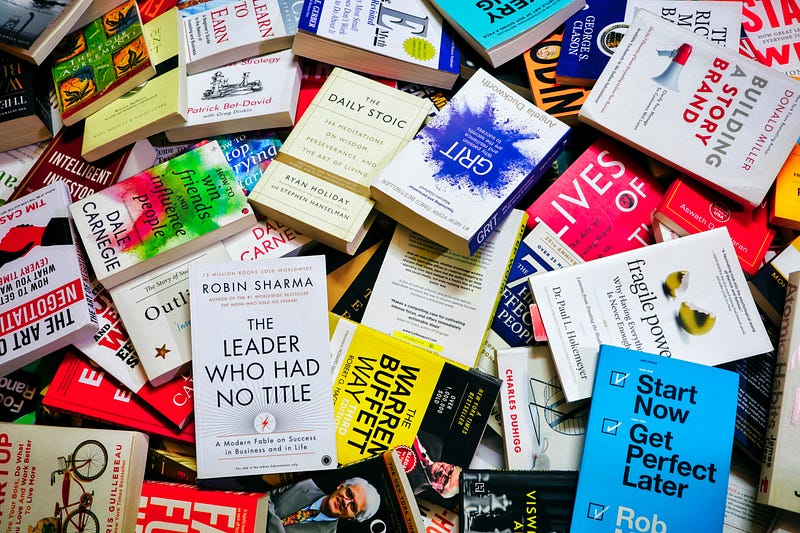
Over the years I have softened to the idea of reading self-help books. One reason for this is that the genre has changed. Many of the books published in the past years are backed by facts, science, and rigorous research. The content has evolved from tepid life advice to self-improvement guides that can truly help.
The authors are now usually scientists who have spent their lives researching the subject they’re writing about and working with patients, instead of spirituality gurus or pop psychology aggregators.
At the same time, the target audience for the self-help genre has changed, and I’ve become part of it. Millennials are replacing baby boomers as the main consumers of self-improvement literature. With that comes a new recipe for the self-improvement genre that I can get behind.
The Body Keeps the Score — Bessel van der Kolk
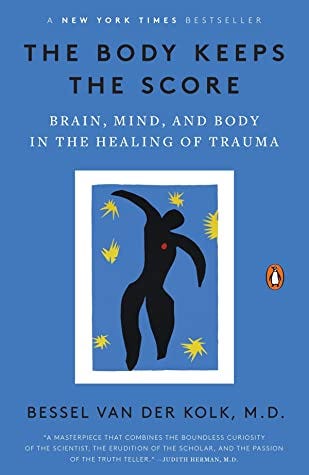
“One does not have be a combat soldier, or visit a refugee camp in Syria or the Congo to encounter trauma. Trauma happens to us, our friends, our families, and our neighbors.”
This is a transformative book about trauma. Van der Kolk weaves clinical experience with neuroscientific explanations and practical methods for healing trauma. The book talks about the effects of traumatic stress, as researched by the author and his colleagues at the Trauma Centre.
This is a seminal work in trauma research and treatment. Its scope is broad and the prose is memorable. It contains accessible yet comprehensive explanations drawn from neuroscience and compelling stories from van der Kolk’s work with patients. He explains how trauma sets itself like memories in our bodies, wreaking havoc on our nervous system, and he outlines avenues for treatment.
What I found most interesting about this book is that it does not advocate any one approach for the treatment of trauma. Much of the focus is on bottom-up approaches, where the body is allowed to have experiences that contradict the emotions and physical sensations of the trauma. This includes dancing, yoga, choir singing, and massage. However, van der Kolk writes that in his practice, most people require a combination of approaches to heal from trauma.
My biggest takeaway from this book was that the causes of trauma are many and the symptoms diverse, sometimes not as obvious as we may think. Don’t let the word trauma dissuade you from picking up this book. Everyone who has experienced an event that caused emotional or physical pain can gain insight from van der Kolk’s work.
Attached — Amir Levine & Rachel S.F. Heller
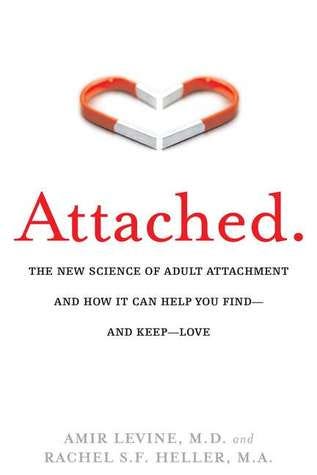
This book takes the science of the three attachment styles (anxious, avoidant, and secure) and applies it to adult romantic relationships. It includes a questionnaire to help you find your attachment style, as well as one to help you figure out your partner’s or date’s style.
The authors then explore the workings of the anxious and avoidant attachment styles. While the anxious style is activated by thoughts and feelings that compel you to seek closeness to the partner, the avoidant style uses deactivating strategies to keep the partner at arm’s length. The authors use engaging stories to illustrate the styles and how they interact in the context of a relationship.
People who belong to the third attachment style, the secures, are the ones whose emotional system doesn’t get riled up in the face of threat and doesn’t shut down either. The ones that might initially be dismissed as boring and taken for granted, but who are the most attuned to their partners’ cues.
Levine and Heller also warn about the anxious-avoidant trap, a “storm-tossed” voyage, but also offer tools to escape the trap, such as the relationship inventory.
The lovely thing about this book is that it is hope-inspiring, whether you are currently in a relationship or looking for love. If you are anxious or avoidant, there are ways to shift toward a secure attachment style. By learning about your attachment style, you can find ways to recognize your undesirable relationship patterns and avoid them.
Eight Dates — John Gottman & Julie Schwartz Gottman
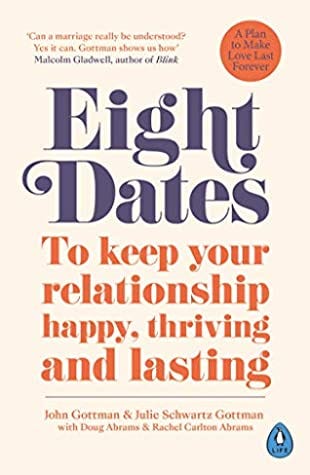
I keep on going back to this quick read because it is full of golden nuggets. John and Julie Gottman (of the Gottman institute), have spent decades studying couples and their habits. Apparently, they can predict within 10 minutes of meeting a couple whether they will have a happy future or part ways, with 94% accuracy.
Eight Dates is a book about the most important conversations to have with your partner— whether you are at the beginning of your relationship or have already spent many years together.
The book is structured as recommendations for eight dates, including conversation topics, locations, and what to bring. Each date is organized around one of eight themes: trust and commitment, addressing conflict, sex and intimacy, work and money, family, fun and adventure, spirituality, and future dreams.
For each topic, the authors provide tools for you to identify what your views are and where these views come from. For example, for the chapter about work and money, there is an eye-opening exercise about what enough money means to you.
The authors also explore practical communication skills for intimate conversations and include a multitude of open-ended questions to better know your partner.
Whether you choose to go ahead and have the eight dates or not, this book is worth reading for its rigorous research, original exercises, and practical conversation starters.
Adult Children of Emotionally Immature Parents — Lindsay C. Gibson
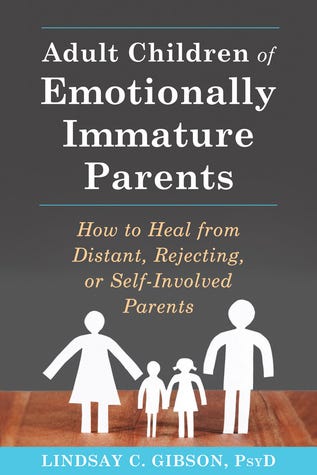
Do you remember when you first realized that your parents are simply humans, and not the superheroes you imagined them to be? This book helps you deal with just this: the fact that our parents are flawed humans that are sometimes emotionally immature.
It’s not a book about vilifying your parents or holding them accountable. The purpose of the book is to help you identify and heal the wounds inflicted by having an emotionally immature parent.
Lindsay Gibson first outlines the four types of emotionally immature parents:
- emotional parents, who are run by their feelings
- driven parents, who are compulsively goal-oriented and busy
- passive parents, who avoid dealing with anything upsetting and have a laissez-faire attitude
- rejecting parents, who don’t enjoy emotional intimacy and don’t want to be bothered by children
She then explores how different children cope with having emotionally immature parents by either externalizing or internalizing their problems, and the aftermath of these coping strategies. The book includes practical exercises throughout, such as journaling prompts and questionnaires to help you understand your role-self, the role that you identified with as a child because it fit your parent’s needs.
I truly enjoyed how the book ends with a chapter about what it feels like to live free of the roles created in order to relate to a parent. This final chapter also includes a series of subchapters on giving yourself the freedom to be human and imperfect, to set boundaries with your parents and to have self-compassion.
It Didn't Start With You — Mark Wolynn
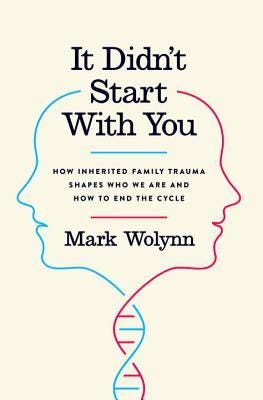
A very thought-provoking read about healing inherited family trauma, It Didn’t Start With You provides interesting information about the role genetics and epigenetics play in our lives.
The first few chapters of the book outline research around epigenetics. From Holocaust survivors to survivors of the 9/11 attacks, Wolynn explains how the children and even grandchildren of these survivors are affected by their family history. This family history can be transmitted in one of two ways. The first is in the womb, where cellular memory is transferred from the mother to the unborn child through hormones generated by the emotions the mother is experiencing. The second is in infancy when the child forms bonds with the parents, especially with the mother.
Wolynn gives practical tools and exercises to help you discover your core language map, a tool to help put words on the trauma inherited from your ancestors, understand this trauma and release it. This language map includes the core complaint, which describes your deepest worry or struggle, your core descriptors, which describe your parents, and your core sentence, or your worst fear.
After helping you discover your core language map, Wolynn offers steps to creating the language of healing. I found these healing sentences and images profoundly touching.
One criticism this book has received is that some readers feel that Wolynn pushes reconnecting with parents in order to heal. However, my understanding of his writing is that this reconciliation can happen in the literal sense if that is possible, but that it is ultimately an internal process.
Wolynn ends the book with a series of chapters on becoming aware of how our family histories can affect our romantic relationships and even our financial success, as well as ways to continue healing and releasing our family history.
Out of all books presented here, this one was by far the most eye-opening and transformational. We spend a lot of time considering how our own experiences and thought patterns affect us, but we often miss the connection to our own ancestry and how we might unconsciously identify with our family history. This book allowed me to feel held by something bigger than myself and to be able to welcome all the fragments of my family history.
Have you read any of these five books? What were your thoughts? Do you have a favourite self-help book that you keep returning to?


