
5 Secrets to a Tortoise's Long Life
Exploring the scientifically proven facts
Turtles and tortoises are some of the most long-lived members of the reptile family. Even small species that are typically kept as pets, like box turtles and terrapins, live between 30 and 40 years if they’re kept healthy. Larger species such as sea turtles are estimated to live about 80 years. The giant tortoise, the largest of all land turtles, typically lives at least a century. Some have even been known to live for more than 200 years.
The oldest living giant tortoise known to science (and the oldest animal in the world) is Jonathan, a 184-year-old that lives on St. Helena Island. Unofficially, there have been claims of older tortoises, including one believed to have been 255 when it died in 2006. Researchers have not been able to pin down exactly what keeps them around for so long, but their slow-motion lifestyle may have something to do with it.
1. Slow metabolism
One of the most widely accepted hypotheses regarding the longevity of turtles has to do with their slow metabolism. For the uninformed, metabolism generally refers to the chemical and physical processes that go on inside a living being in order to keep it alive. If you want a slightly more precise definition, metabolism refers to the processes that generate energy out of the food that you eat to ensure that you don’t drop dead.
Giant tortoises have very slow metabolisms, which means they burn energy at a slower rate than smaller and faster animals. In 1908, physiologist Max Rubner introduced the rate of living theory, which suggested an inverse correlation between metabolism and lifespan (the faster the metabolism, the shorter the life). Scientists have had some issues with the theory over the past century (some argue that metabolism is a “poor measure of energy expenditure”), and it has largely been discredited, but it did spawn the phrase “Live fast, die young,” and it serves as the basis for expanded research on the topic.
The link between metabolism and longevity is still not understood, but some scientists believe that metabolism is linked to the creation of free radicals, unstable molecules that damage cells, and that increase as more energy is burned by the body. According to this theory, tortoises live longer because their slow metabolisms burn less energy, which means less harm to the cells in their bodies.
2.Gradual Growth
Another reason turtles are believed to have such long lifespans is their slowness. Turtles continue to grow very slowly throughout their lives. This prevents them from aging in the same way birds and mammals do. Thanks to their slow metabolisms, they can survive long periods without food or water, which also gives them a greater chance of survival in harsh conditions.
3.Reproduction
Another explanation is that the long lives of turtles and tortoises give them an evolutionary advantage that aids in effective reproduction. Wild turtles tend to live in harsh environments that aren’t always conducive to breeding. Their long lifespans provide them with more opportunities to procreate.
4.Lifestyle
The longest-lived of all the turtle species, the Galapagos giant tortoise, eats a strict vegetarian diet that’s full of greens and free of fat and cholesterol. These slow-moving gentle giants are extremely docile and peace-loving creatures that generally live stress-free lives. This combination of calm and healthy living is likely another explanation for their extreme longevity.
5.Protection from predators
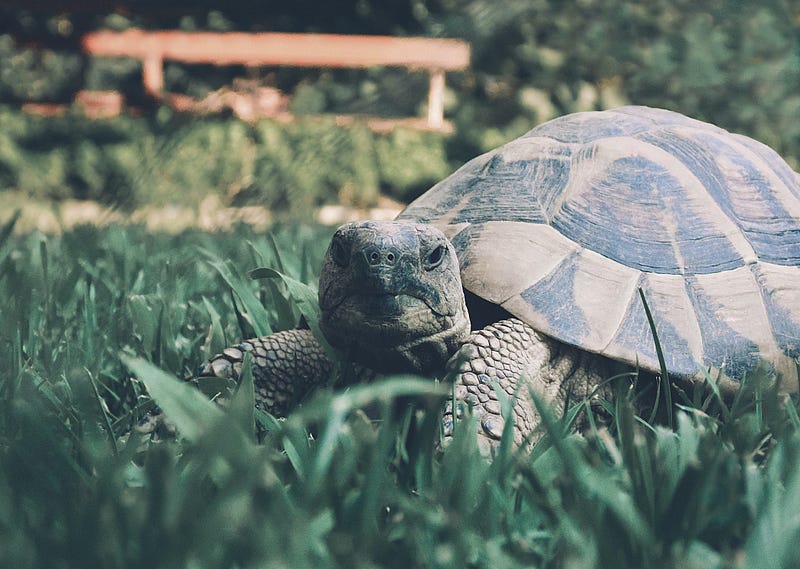
No discussion about the longevity of tortoises can be complete without mentioning the enviable armor that covers almost their entire body — the hardened shell.
When it comes to protecting themselves from attackers in the wild, a tortoise’s first line of defense is their shell. Once fully developed, the toughened shell keeps them safe from most predators. However, baby turtles are highly susceptible to attacks, as their shells are not fully developed.
Each theory has its flaws and unanswered questions, but scientists believe that some combination of biological and evolutionary factors is what keeps giant tortoises alive for so long. There is no magical gene that humans can harvest and exploit, but that hasn’t stopped us from looking.
References
www.theguardian.com
www.mentalfloss.com
animals.mom.me/turtles-tortoises-live-long-3134.html
https://www.scienceabc.com